
Best Best Standing Office Desks: Top Picks, Features, and Buying Guide
Standing desks let people alternate between sitting and standing to reduce sedentary time and improve posture and energy during the workday. Adjustable standing office desks come in many styles—manual crank, electric lift, and converter tops—that let users change height to fit different tasks, body sizes, and seating arrangements.
Buyers should focus on stability at standing height, the desk’s weight capacity and height range, the speed and noise of any motorized lift, and the durability of the frame and tabletop material. A stable mechanism with an appropriate height range and sufficient weight capacity provides the biggest impact on comfort and long-term use.
This guide compares top adjustable standing office desks and explains what features matter most, so readers can choose a desk that fits their workspace and work habits.
Best Standing Office Desks
Below is a curated list of the best standing office desks suited for different needs and budgets. The selection emphasizes stability, height range, and ease of adjustment to help users create a healthier, more productive workspace.
ErGear 48″ Electric Standing Desk
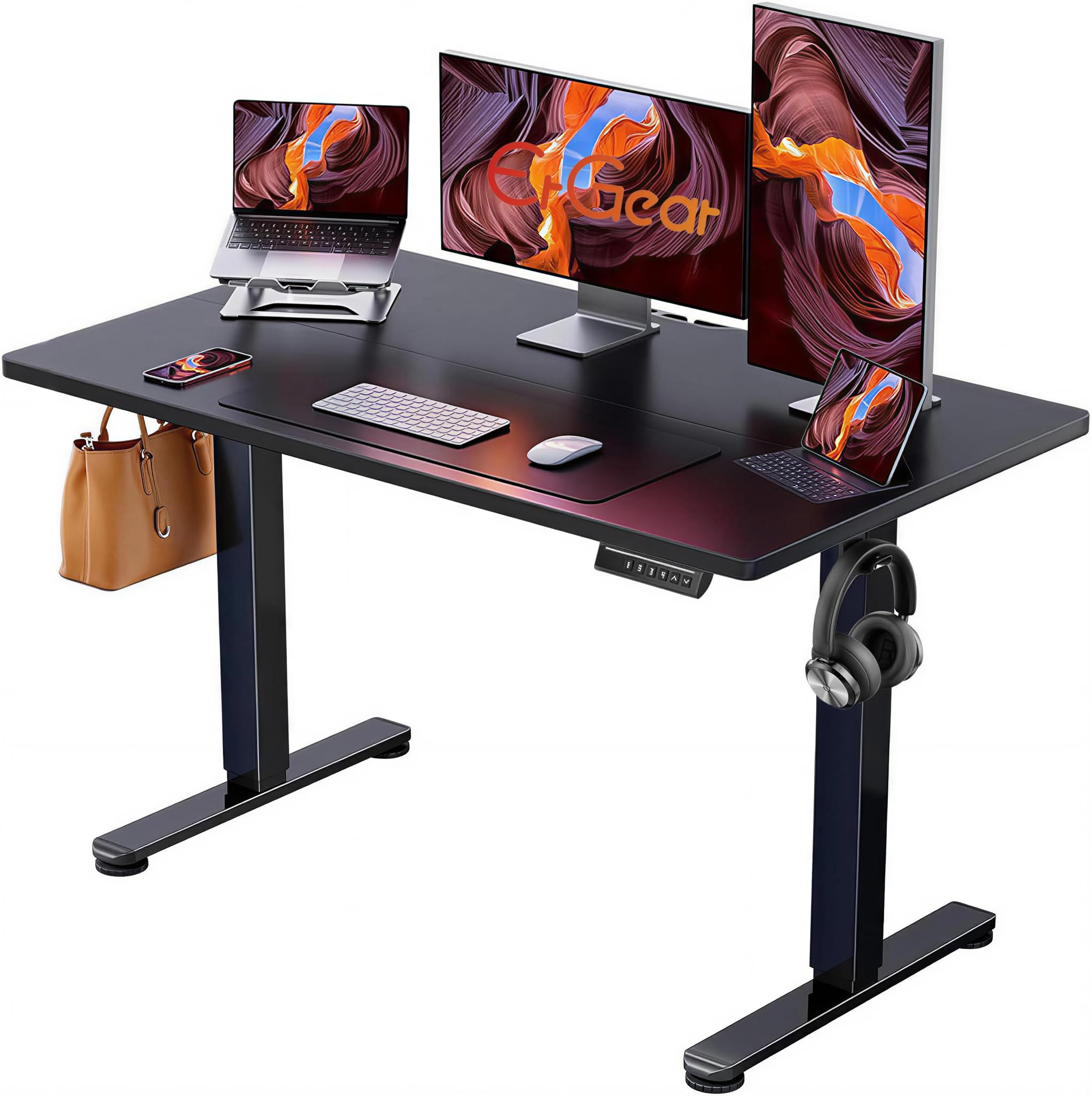
It’s a solid buy for someone who wants a reliable, easy-to-use sit-stand desk with quiet motorized lift and memory presets.
Pros
- Smooth, quiet electric lift with useful memory presets.
- Feels stable at full height thanks to a heavy alloy steel frame.
- Straightforward assembly and clean, low-VOC finish.
Cons
- Tabletop is laminated engineered wood, not solid wood.
- Screws can be fiddly; a power driver speeds assembly.
- Limited to three saved height positions.
They designed the controls so switching positions becomes automatic after a few days of use; the motor glides without rattling and the four-button memory saved his preferred sit and stand heights reliably. The frame held dual monitors, speakers, and a laptop without noticeable wobble, even when fully extended.
Assembly felt like a typical two-person job but moved quickly when parts were sorted first. Some fasteners required patience and an electric driver made the process much cleaner; the included hardware and instructions are generally clear but not foolproof.
The surface cleans easily and the low-VOC laminate kept odors minimal during setup, which helped when placing it in a small home office. For someone who values durability and quiet adjustment over premium tabletop materials, it performs very well.
FEZIBO 48×24 Electric Standing Desk
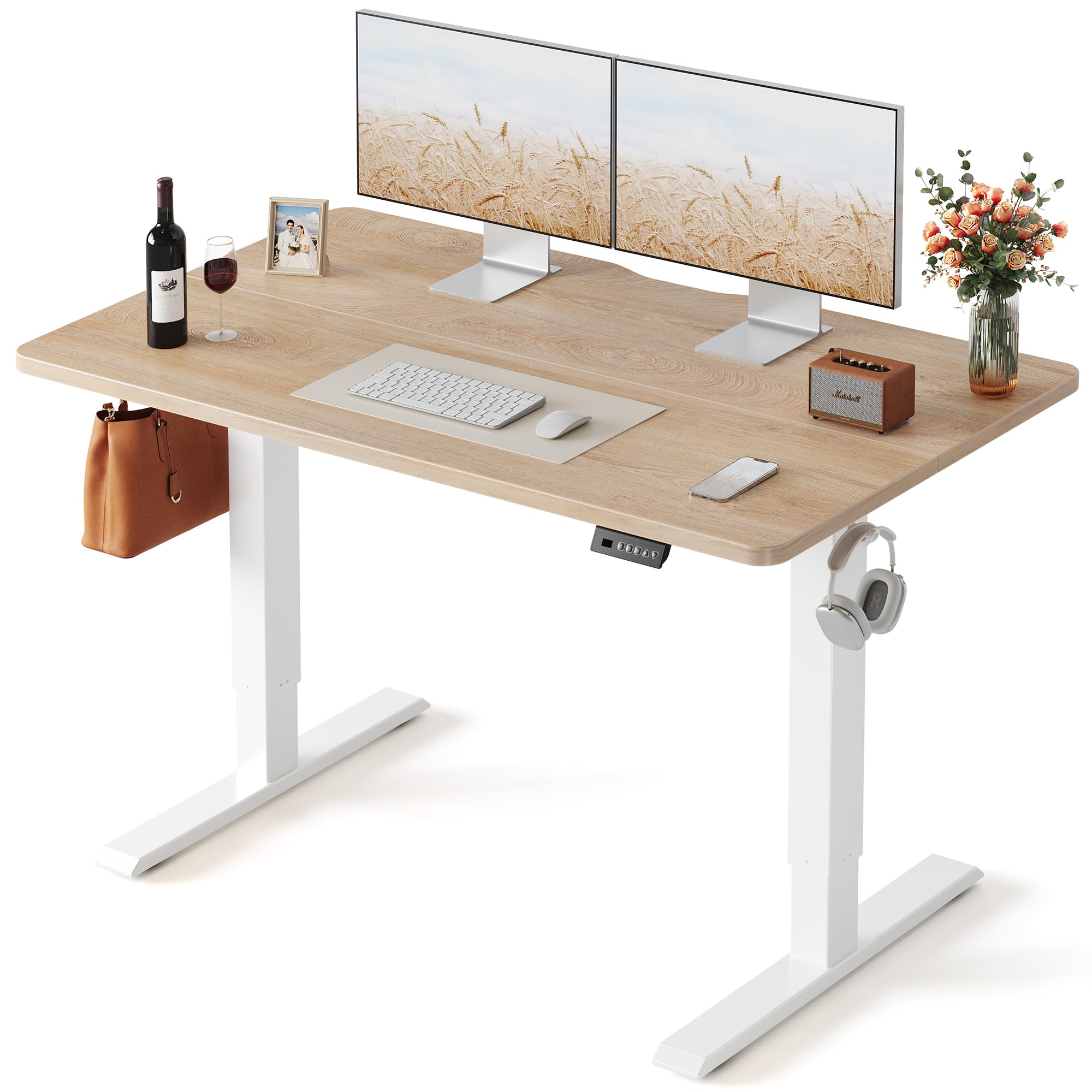
This desk is a strong buy for someone who wants a stable, quietly powered sit-stand surface at a reasonable price.
Pros
- Very stable frame with little wobble even at full height
- Smooth, quiet motor with useful memory presets
- Preassembled parts make setup quicker than average
Cons
- Desktop comes in splice pieces that can show seams or finish variation
- Heavier packaging and parts make solo assembly slow at times
- Weight limit may restrict very heavy multi-monitor or equipment setups
They built this desk to feel solid right out of the box — the packed unit is heavy and the steel frame gives confidence when typing or leaning. Adjusting between sitting and standing felt effortless; the motor runs under 45 dB and the three memory presets saved frequent positions.
The surface is roomy for a laptop and a monitor, and the FSC-certified laminate has a clean look that matched the reviewer’s home office. Expect visible seams where the splice board joins, which bothered one user who prefers a seamless top.
Assembly mostly involves attaching legs and securing the two-piece top; having parts preassembled cuts the time, but tightening many screws still took under an hour. The desk supports typical home-office gear comfortably, though users with very heavy setups should note the 176 lb recommendation.
FLEXISPOT EN1 Standing Desk
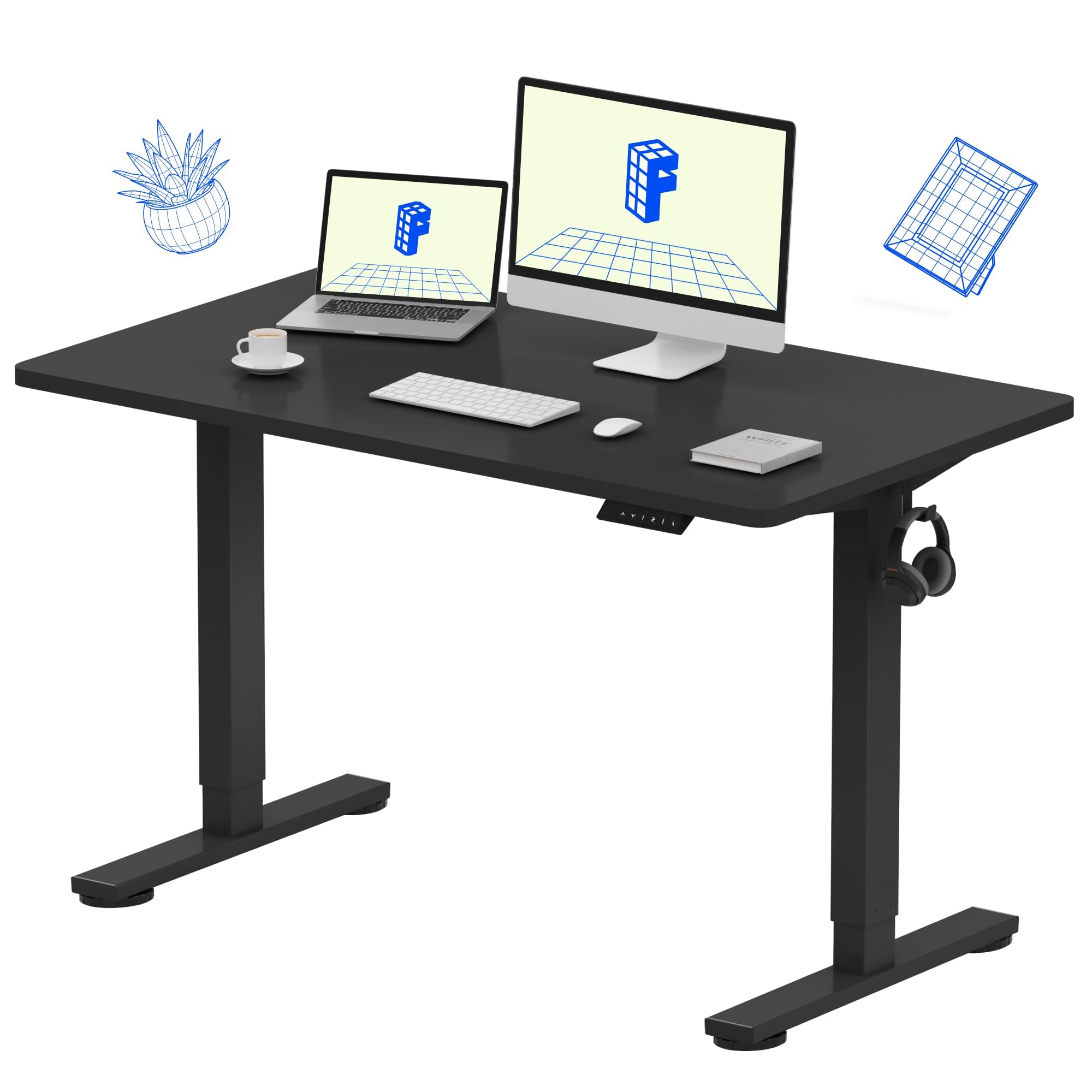
It’s a solid budget electric standing desk that feels stable, lifts smoothly, and suits dual-monitor home setups.
Pros
- Rock-solid one-piece top reduces wobble under monitors.
- Quiet, reliable motor with four memory presets for quick height changes.
- Easy solo assembly with included tools.
Cons
- Heavier than expected to move around once assembled.
- Minor wobble at maximum height with very heavy loads.
- Limited top thickness feels modest compared with higher-end models.
The desktop felt reassuringly rigid during use; attaching two monitors and a lamp left little flex and the whole surface stayed steady while typing. The lift motor moved quietly and the memory presets made switching between sit and stand hassle-free.
Assembly took about 45–60 minutes alone and the instructions matched the parts — expect some heavy lifting when positioning the finished desk. Color and finish options looked true to photos, and the included headphone hook added a handy touch.
Height range worked well for different users in the room, and the 176 lb capacity handled dual monitors plus accessories comfortably. At taller heights there was a slight give under very heavy setups, but overall performance impressed for the price.
SHW 55″ Electric Standing Desk — Maple
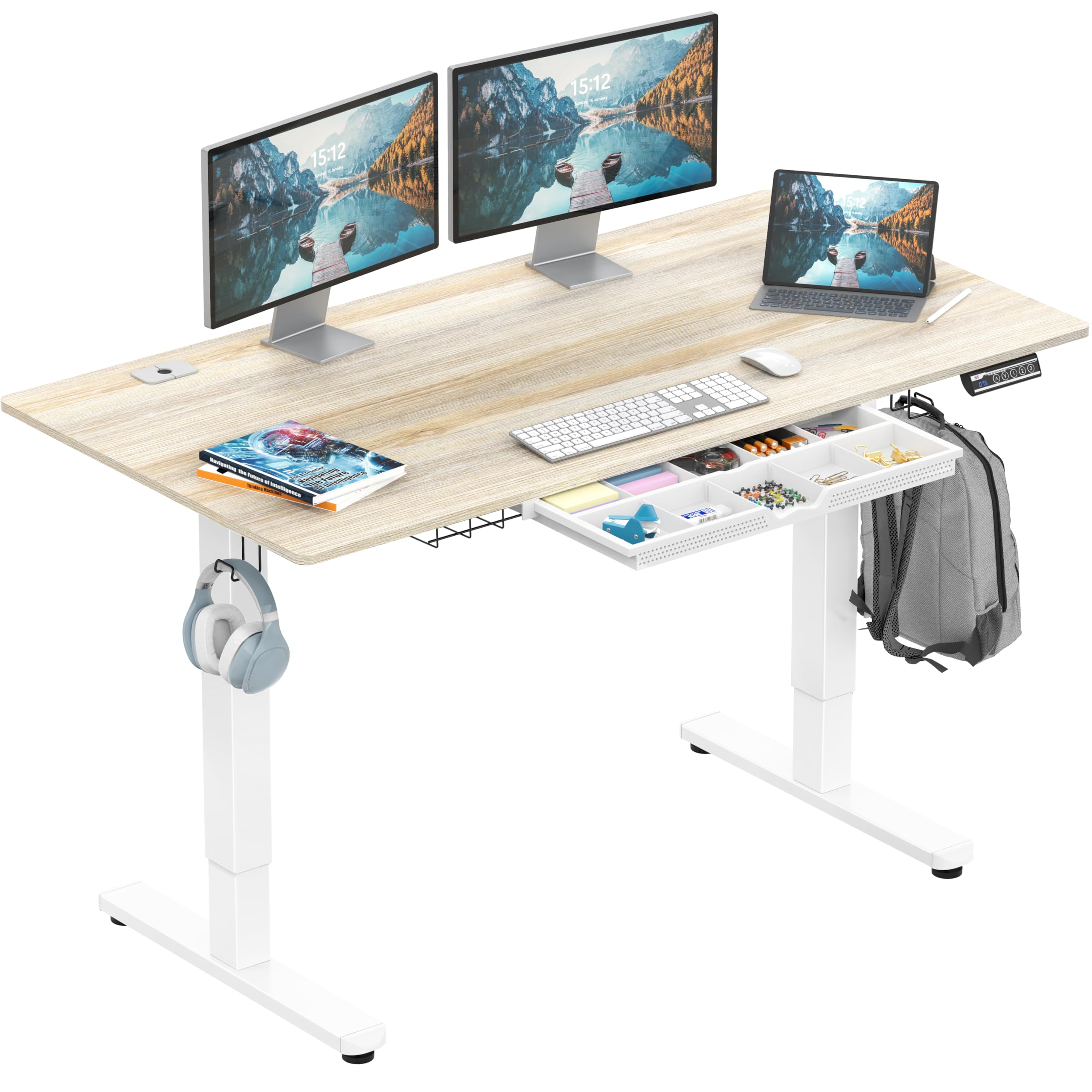
It’s a solid, budget-friendly electric standing desk that works well for dual-monitor setups and everyday home-office use.
Pros
- Smooth, quiet motorized lift with memory preset makes height changes effortless.
- Built-in drawer and cable tray help keep the desktop tidy.
- Integrated hooks and grommets add practical convenience for peripherals.
Cons
- Assembly takes roughly an hour alone and requires some patience.
- Finish color can vary from photos, so expect slight mismatch.
- Not intended for very heavy loads — keep gear within recommended weight.
They unpacked the boxed parts and set the metal frame in place without fuss; the motorized lift moved steadily and quietly when they tested it with two monitors. The drawer slid smoothly on ball-bearing glides and kept small items accessible during standing sessions.
The curved front edge made typing easier and wrist strain less noticeable during long stretches of work. Cable routing via the tray and grommets reduced clutter, though the laminate top showed moderate wear after several months of heavy use.
Levelers corrected a slightly uneven floor and the desk felt stable at most heights; the limited number of height positions meant it wasn’t perfectly fine-tunable but the memory preset offered quick returns to preferred positions.
They recommend this desk for someone who wants a feature-rich adjustable surface on a budget, especially if dual monitors and modest storage are priorities.
VIVO 71″ Electric Standing Desk
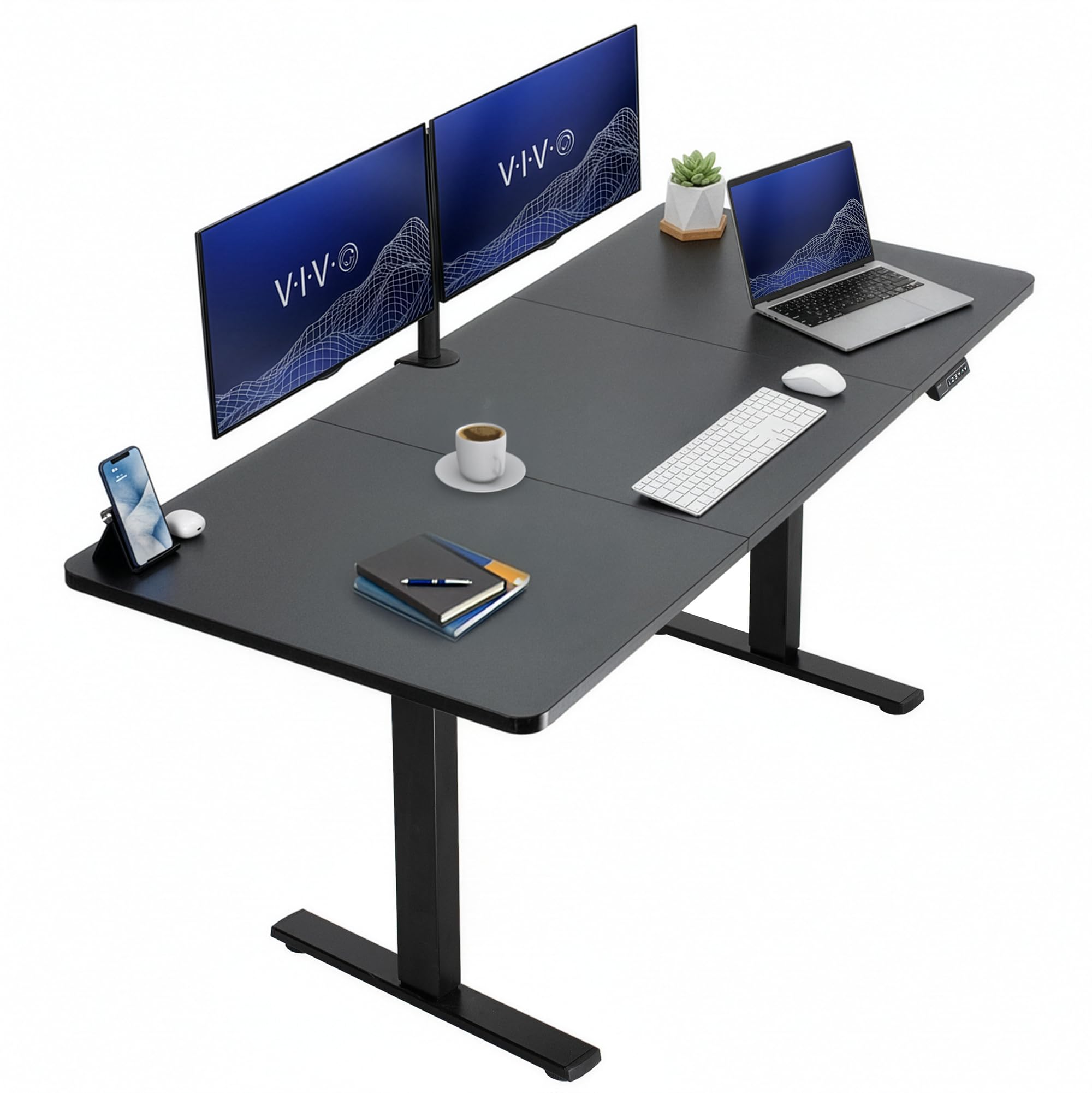
This desk is worth buying for someone who wants a large, stable electric sit-stand surface at a reasonable price and with reliable height presets.
Pros
- Large, deep surface that fits multiple monitors and peripherals comfortably.
- Smooth, quiet motor with memory presets for quick height changes.
- Sturdy steel frame that feels solid under heavy setups.
Cons
- The tabletop panels and edges need careful handling during assembly.
- Some parts arrive unlabeled, which slows the build if working alone.
- Top is particle board—durable but not as premium as solid wood.
They ship a big, heavy kit that looks impressive once unboxed; two people make assembly far easier. The motor lifted my dual-monitor setup quietly and stayed stable at standing height, which made short standing sessions comfortable and not wobbly.
The large 70.9″ top gave room for monitors, a laptop, and papers without feeling crowded. Frequent height changes felt effortless thanks to the four memory presets; one-button recalls saved time during back-to-back tasks.
A few sharp edges on the joining seams caught attention while handling the panels, so wear gloves and check alignment before tightening. Overall, it behaved like a work-ready desk rather than a fragile showroom piece.
Buy the VIVO 71″ Electric Standing Desk
Buying Guide
Consider desk height range and adjustability first. It should accommodate the user’s standing and sitting heights comfortably; check maximum and minimum heights and whether memory presets are included.
Look for stable frame construction and motor strength. A solid frame reduces wobble when typing or using dual monitors; higher lifting capacity supports heavier setups.
Evaluate surface size and shape relative to workspace. It must fit monitors, keyboard, and accessories while allowing a comfortable posture; deeper desks benefit users who need more workspace.
Assess control options and ease of use. Simple up/down controls or programmable presets speed transitions; touch-sensitive or anti-collision features improve safety.
Check noise level and speed of the lift mechanism. Quieter motors suit shared or quiet offices; faster lifting can save time but may trade off noise.
Review cable management and accessory compatibility. Built-in trays, grommets, and mounting points for monitor arms keep the workspace tidy and ergonomic.
Consider power source and energy use. Verify voltage and plug type for the location; some models use less standby power than others.
Factor in warranty, service, and reviews. Longer warranties indicate confidence in durability; user reviews reveal real-world stability and reliability.
Budget against needed features rather than price alone. Prioritize safety, adjustability, and stability; extras like programmable presets or larger worktops can be added if essential.
Frequently Asked Questions
This section answers practical questions about features, stability, size, storage trade-offs, and brand comparisons for adjustable standing desks. It focuses on measurable specs, typical user needs, and real-world performance for daily office use.
What features should I look for when choosing an adjustable standing desk for daily use?
Look for a dual-motor lift with at least 300–400 lbs lift capacity if the user plans to run dual monitors, a laptop, and peripherals. Check height range that clears their tallest user: typical ranges are 22″–48″ for home desks and 24″–50″ for taller users.
Prioritize a desk with a stable steel frame, programmable height presets (3–4 memory positions), and anti-collision safety. Ensure the desktop size fits the workspace—48″–60″ wide for single-monitor setups, 60″–72″ for dual-monitor arrays.
Consider warranty length (5–10 years on motors/frame is common) and customer support responsiveness. Verify electrical specs and certifications (UL/CE) if noise and reliability matter.
How do electric standing desks compare to manual models in terms of stability, noise, and reliability?
Electric desks use motors and scissor or telescoping legs; they typically offer smoother height changes and memory presets. They may introduce motor-driven vibration at very tall heights, but reputable models stay under 40 dB during travel.
Manual crank desks avoid motors and electronics, so they have fewer failure points and zero motor noise. They require physical effort to adjust and usually provide lower maximum speeds and fewer height presets.
For long-term reliability, electrically driven dual-motor systems with independent columns reduce stress and lifespan issues. Look for load-tested specs and long motor warranties to improve reliability.
Which standing desks are considered the most stable at maximum height for dual monitors and heavy equipment?
Desks with wide rectangular legs or T-frames and triple-stage telescoping columns offer the best stiffness at high extension. Steel frames with cross-bracing and thicker desktops (1″–1.25″) perform best under dual-monitor arms and heavy gear.
Models rated for 300–500 lbs with lateral stabilization features hold up best. User reviews and lab tests that report minimal wobble under 10 mm lateral deflection at full height are good indicators.
Avoid narrow single-column designs for heavy setups. Test load ratings and check teardown reviews for real-world stability data.
What is the ideal size and height range for a standing desk in a home office setup?
A 48″–60″ width suits most single- or dual-monitor setups while leaving room for peripherals. Depth of 24″–30″ accommodates monitor stands and a keyboard tray without crowding the user.
Height range should allow elbow height to sit 90 degrees at both seated and standing positions. For most adults, a 22″–48″ range covers seated to standing; taller users need ranges starting lower or extending to 50″+.
Factor in monitor arm clearance and cable routing when choosing desktop thickness and grommet locations. Measure desk placement and walking space before ordering.
Are standing desks with drawers or built-in storage worth it, and what trade-offs should I expect?
Built-in drawers add convenience and reduce separate furniture needs but increase desktop weight and raise center of gravity. That extra mass can reduce stability at taller heights unless the frame is rated for the load.
Drawers reduce usable under-desk legroom and can limit cable routing or mounting of CPU holders and UPS units. They often add 50–100 lbs to the assembly; verify the desk’s load rating and clearance.
If storage is essential, choose desks with reinforced frames and anti-tip features. Otherwise, consider separate mobile pedestals to preserve stability and adjustability.
How does the UPLIFT standing desk compare to other leading adjustable standing desk brands?
UPLIFT desks commonly feature dual motors, triple-stage legs on higher-end models, and programmable keypads with 4 memory presets. They often rate 350–535 lbs depending on the frame and advertise 1″–1.25″ desktops with multiple laminate and solid wood options.
Warranty coverage typically spans 10 years for frames and motors, which matches or exceeds several competitors. Independent reviews highlight good stability, extensive accessory ecosystem, and a broad range of desktop sizes.
Competitors may offer quieter motors, lower pricing, or lighter frames; buyers should compare load ratings, height range, and real-world wobble tests to match needs.