How Often Should You Practice Pickleball to Improve?
This article contains affiliate links. If you buy through them, we may earn a commission at no extra cost to you.
If you are wondering how often to practice pickleball, start with a schedule you can repeat without feeling exhausted or sore all the time. For many recreational players, two to three focused sessions per week is a practical starting point. The best schedule combines purposeful drills, game experience, and enough recovery to keep your movement and technique sharp.
This article is part of our guide: How to Practice Pickleball: A Guide to Drills, Skills, and Training Equipment
Frequently Asked Questions About Pickleball Practice
1. How often should I practice pickleball to improve?
Aim for two to three purposeful practice sessions per week to start, then adjust based on your recovery, experience, and goals. This is a practical guideline, not a requirement for every player.
Spreading practice across the week gives you regular opportunities to revisit skills without cramming everything into one long outing. A manageable schedule might include:
- One technique session: Work on serves, returns, dinks, or another specific skill.
- One mixed session: Combine drills with games that emphasize your practice goal.
- One optional session: Play recreational games or do a short, low-intensity practice.
If you currently play once a week, adding one short drill session may be more useful than suddenly doubling your total court time. Increase your workload gradually rather than treating more practice as automatically better.
2. How often should a beginner practice pickleball?
Beginners can start with two short sessions per week and add a third if they feel comfortable and recover well. Early practice should build reliable basics rather than chase speed, power, or complicated shot combinations.
Give each session a simple purpose. For example, practice getting serves in consistently during one session, then focus on controlled returns and getting into position during the next.
- Learn a comfortable ready position and balanced movement.
- Practice contacting the ball in front of your body.
- Develop a repeatable serve and return.
- Learn non-volley-zone rules and safe movement around the kitchen.
A lesson or feedback from a qualified instructor can help you identify what to work on. That is especially useful when you keep missing a shot but cannot tell why.
3. Should intermediate and advanced players practice more often?
Intermediate and advanced players may benefit from more frequent practice, but only when the extra sessions have a clear purpose and fit their recovery needs. Adding court time without addressing weaknesses can simply reinforce existing habits.
An intermediate player might use three weekly sessions to separate technical work, decision-making drills, and match play. A competitive player may train more frequently, while varying intensity rather than making every session demanding.
Choose priorities based on situations that repeatedly cost you points. Examples include inconsistent third-shot drops, attackable returns, rushed resets, or difficulty recognizing when to move forward. As your level rises, practice should increasingly connect shot execution with shot selection.
4. How long should a pickleball practice session last?
A focused session of about 30 to 60 minutes is a useful starting point, although shorter sessions can still be productive. The right length depends on intensity, weather, fitness, and how well you maintain concentration.
You do not need to stay on court until you are exhausted. Once your footwork gets careless or you stop making deliberate choices, consider taking a break, simplifying the drill, or ending the session.
A simple 45-minute practice could look like this:
- About 10 minutes of gradual movement and easy hitting.
- About 15 minutes on one priority skill.
- About 15 minutes applying that skill in a moving or competitive drill.
- A few minutes to review what worked and choose your next focus.
Treat those times as flexible blocks, not a rigid formula.
5. Is drilling better than just playing games?
Drilling is usually better for targeting a specific weakness, while games are essential for applying skills under realistic pressure. Most players benefit from including both.
In open play, you may get only a few chances to attempt the shot you want to improve. A drill lets you repeat that situation and make adjustments between attempts.
However, predictable repetitions alone do not teach every part of the game. You also need to read opponents, choose shots, communicate with a partner, and recover after mistakes.
A useful progression is to practice a shot with a cooperative partner, add movement or an unpredictable feed, and then use a scoring game that rewards the intended skill. This connects controlled practice to actual play.
6. What should I practice during each session?
Choose one main skill and one related game situation rather than trying to improve everything at once. A narrow focus makes your practice easier to organize and evaluate.
For example, if you struggle to reach the kitchen after your team’s third shot, practice more than the drop itself. Include reading the opponent’s response, moving forward when appropriate, and stopping in balance before the next contact.
| Practice priority | Useful drill focus | Game application |
|---|---|---|
| Serve consistency | Serve toward a generous target area | Start points reliably without forcing extra pace |
| Return depth | Return to a deep target with comfortable net clearance | Create time to move toward the kitchen line |
| Dink control | Alternate cooperative dinks with different placements | Stay patient and avoid leaving attackable balls |
| Defensive resets | Practice soft replies to controlled attacking feeds | Handle pressure while maintaining balance |
Start with targets large enough to encourage control. Make the task harder as your execution becomes more dependable.
7. Can I practice pickleball every day?
You can do some pickleball-related practice daily, but daily hard court sessions are not necessary to improve. Repetitive hitting, quick direction changes, and long matches all add physical load.
If you enjoy daily practice, vary what you do. A demanding court session might be followed by light shadow swings, tactical review, or gentle movement rather than another intense outing.
Light days should genuinely feel light. Shorten or stop practice if fatigue changes your movement or hitting mechanics. If pain persists or worsens, seek guidance from a healthcare professional instead of trying to practice through it.
8. How much rest should I take between practice sessions?
Leave enough recovery time to return with comfortable movement, manageable fatigue, and good concentration. For many recreational players, spacing demanding sessions with a rest or light-activity day is a sensible starting approach.
Your needs may change with session intensity, sleep, other exercise, previous injuries, and playing conditions. A long singles session can place very different demands on you than a short cooperative dinking session.
- Reduce the next session if soreness affects your normal movement.
- Take breaks and adjust your workload in hot conditions.
- Count games and other workouts as part of your total activity.
- Avoid increasing practice frequency and session length sharply at the same time.
Recovery is part of a sustainable practice plan, not a sign that you are falling behind.
9. Can I improve if I can only practice once a week?
Yes, you can improve with one weekly session, especially if you make it focused and consistent. Progress may be less steady when there are long gaps between opportunities to repeat a skill, but limited time does not make practice pointless.
Use your available court time deliberately. Warm up, spend a meaningful block on your biggest priority, and then look for opportunities to apply it in games.
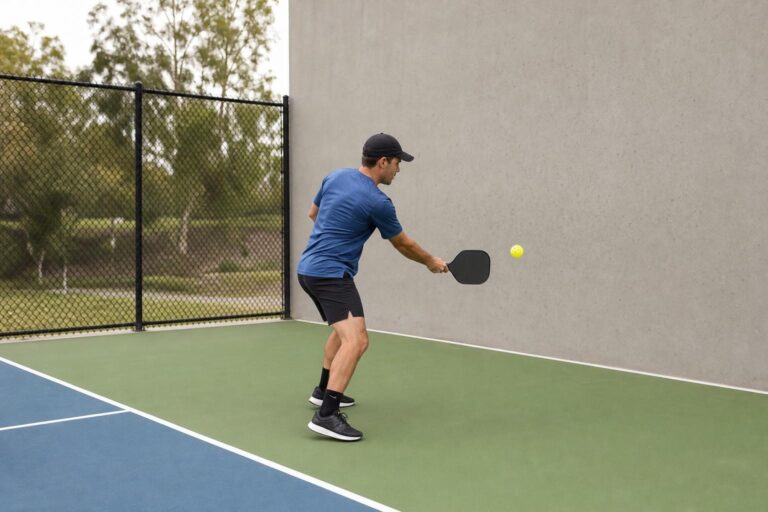
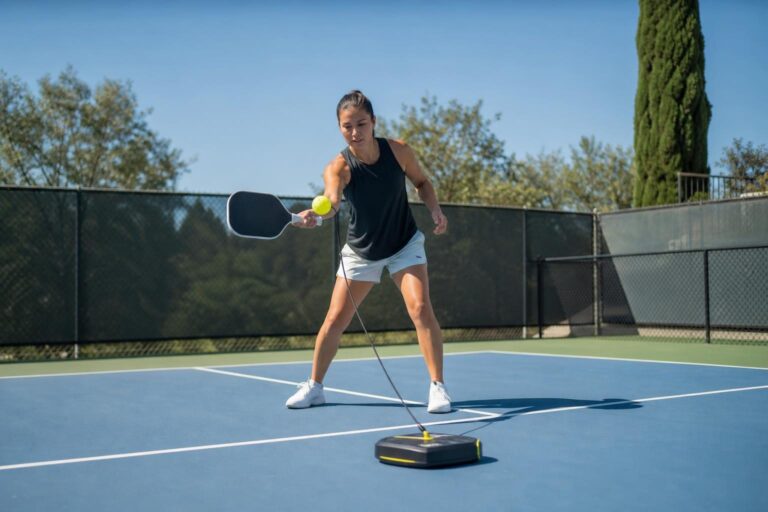
If possible, add brief off-court work between sessions. You might rehearse balanced footwork in a clear space, review a recording of your play, or write down one tactical adjustment. Wall practice can also provide extra repetitions where it is permitted and safe, although it does not replace learning to read a live opponent.
10. How long will it take to notice improvement?
You may notice individual skills improving within a few weeks of consistent practice, but there is no guaranteed timeline. Your starting level, practice quality, feedback, and opportunities to play all influence progress.
Look for changes in repeatable behaviors rather than judging yourself only by wins. Useful signs include:
- Getting more serves into your intended target area.
- Returning with better depth and balance.
- Making fewer rushed attacks from poor positions.
- Recovering your ready position more consistently.
- Using a practiced shot successfully during games.
Repeat a simple drill under similar conditions and record your results. Review the trend across several sessions rather than reacting to one unusually good or frustrating day. If progress stalls, adjust the drill or get feedback before simply adding more hours.
Build a Schedule You Can Sustain
The best answer to how often to practice pickleball is a schedule that gives you regular, focused repetitions without sacrificing recovery. Start with two or three manageable sessions per week if your schedule and body allow, combine drills with games, and track one or two meaningful skills. Consistent, purposeful work is more useful than collecting court hours without a plan.