How to Practice Pickleball: A Guide to Drills, Skills, and Training Equipment
This article contains affiliate links. If you buy through them, we may earn a commission at no extra cost to you.
Learning how to practice pickleball starts with a simple shift: spend some court time working on one skill instead of only playing games. Matches help you learn the sport, but focused drills give you more chances to repeat a movement, notice mistakes, and make useful adjustments. This guide covers the essential shots, solo and partner drills, training equipment, and practice habits that help beginners build a reliable game.
1. Build a Simple Practice Plan and Warm Up
A productive practice session needs a clear purpose, not a complicated schedule. Choose one main goal, such as landing more serves, keeping dinks low, or improving your third-shot drop. Add a short review of another skill, then finish by applying what you practiced.
Understand the court and basic rules
Before drilling, get comfortable with the baseline, service courts, sidelines, and non-volley zone, commonly called the kitchen. A few rules shape almost every practice activity:
- Serve diagonally: The serve must land in the opposite service court, beyond the kitchen. The kitchen line is out on a serve.
- Respect the two-bounce rule: The serve must bounce before the receiver hits it, and the return must bounce before the serving team hits it.
- Know the kitchen restriction: You cannot volley while touching the kitchen or its boundary. Momentum from a volley cannot carry you into the kitchen afterward.
- Remember that entering the kitchen is allowed: You may step in to play a ball that has bounced. Reestablish both feet outside the kitchen before volleying again.
Warm up before increasing intensity
Start with a few minutes of easy walking, marching, and controlled side steps. Add gentle shoulder rotations, ankle movements, and shallow squats within a comfortable range. Then begin with soft exchanges before moving to serves, drives, and faster volleys.
Wear court shoes that support lateral movement, check the playing surface for hazards, and keep water nearby. Avoid chasing balls into another drill area. Stop for sharp pain, dizziness, or unusual discomfort.
2. Practice the Foundational Shots First
Beginners benefit most from dependable contact and placement. Power can wait. Develop a balanced ready position with your knees comfortably bent, paddle in front, and grip relaxed enough to control the paddle without squeezing unnecessarily.
Serve for consistency and placement
Use a legal volley serve or drop serve, learning the requirements for your chosen method. Start with a large target rather than aiming near a line.
- Place a flat court marker well inside the diagonal service box.
- Hit 10 serves using the same setup and routine.
- Count how many land legally in the service court.
- Repeat, aiming toward a broad deep area while leaving room for error.
Change only one thing at a time. If you are missing long, adjust your swing or paddle angle rather than rebuilding the entire motion.
Return deep and recover
A deep return can give you time to move toward the kitchen line. Practice a controlled return with enough net clearance to avoid unnecessary errors.
Have a partner serve, return toward a generous target, and move forward under control. Work toward the kitchen line, but get balanced before the opponent strikes. Do not keep running through your next shot.
Develop forehand and backhand control
Ask a partner to feed comfortable balls to each side. Use manageable swings, make contact in front of your body, and recover after each shot. Begin with cooperative rallies through the middle before adding direction.
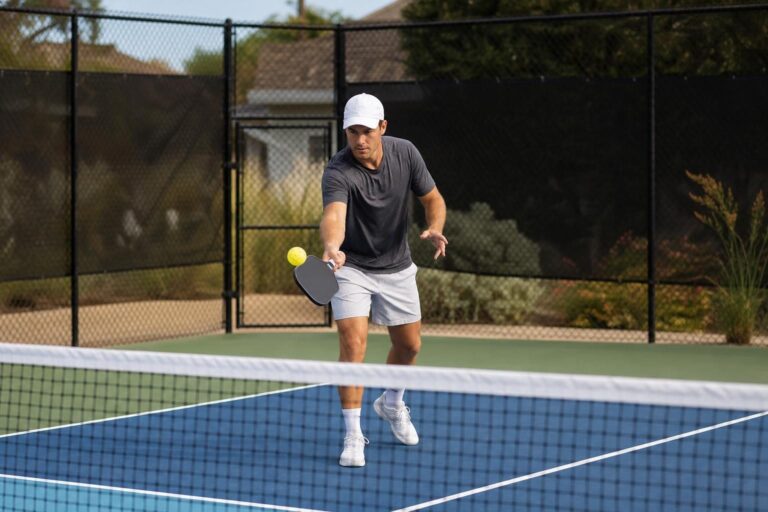
For volleys, stand outside the kitchen and practice compact blocks with a partner. Keep the paddle in front and avoid a large backswing. The first goal is a controlled response, not a hard put-away.
3. Learn the Soft Game: Dinks, Drops, and Resets
The soft game helps you keep a rally neutral and move into stronger court positions. These shots share a need for touch, but they solve different problems.
Dinks: build patience near the kitchen
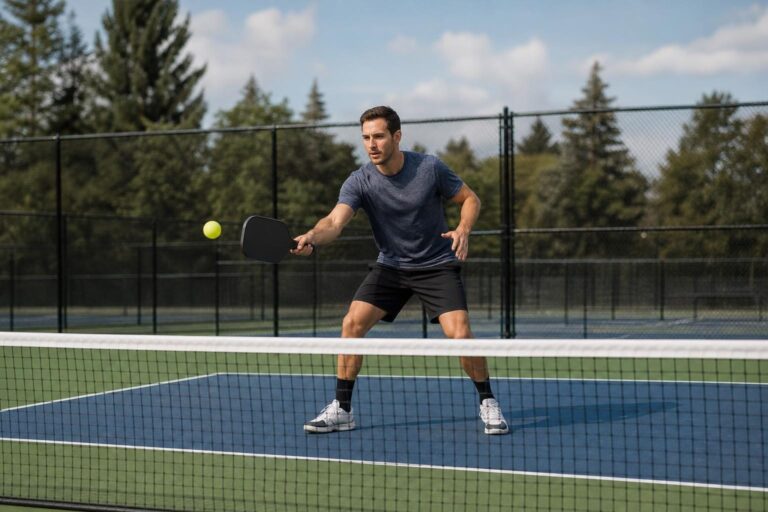
A dink is a soft shot played after the bounce, usually from near the kitchen line, that lands in the opponent’s kitchen. It can prevent opponents from attacking comfortably.
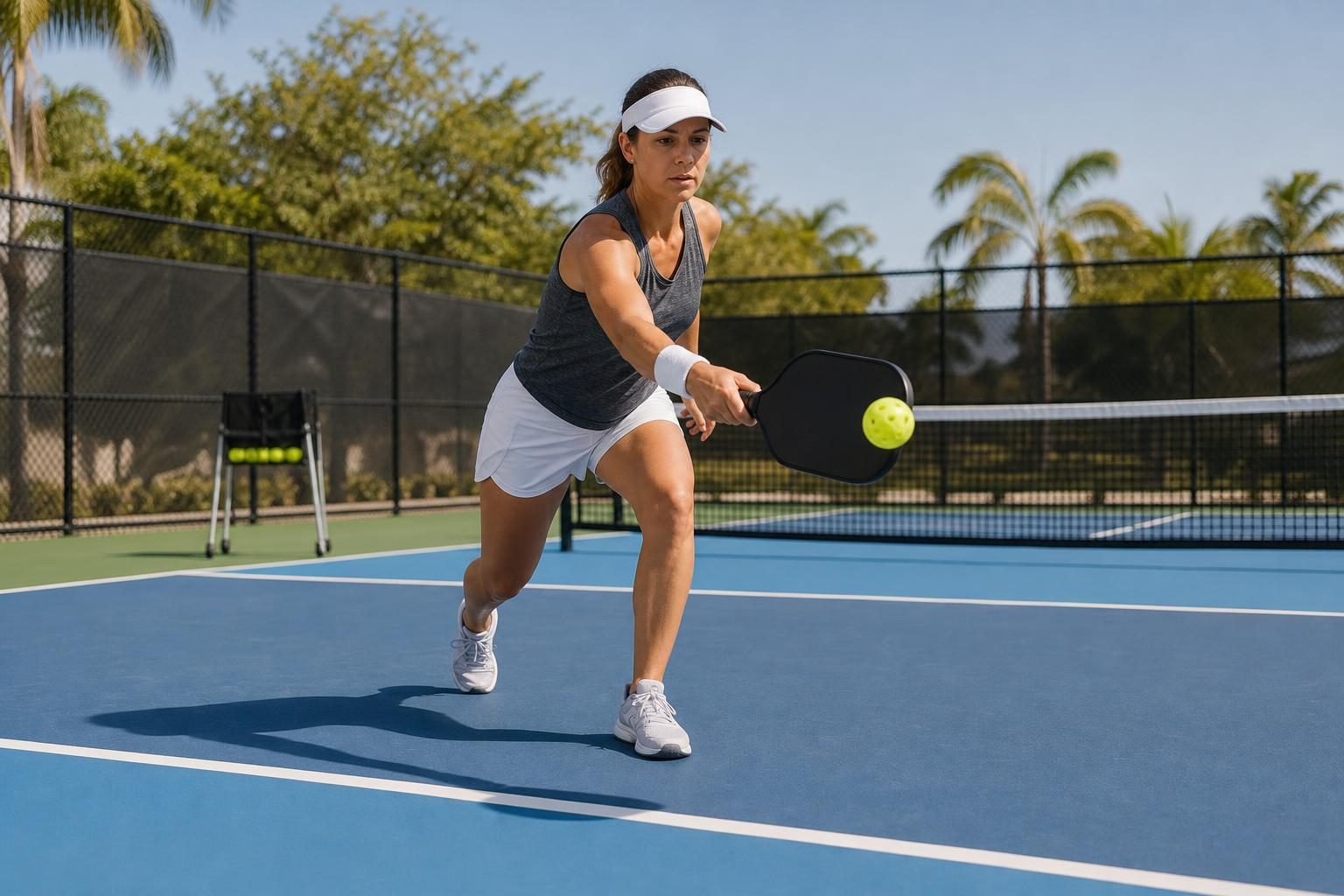
Begin with straight-ahead cooperative dinks. Aim for a comfortable landing area rather than the sideline, and use small foot adjustments to stay balanced. Once you can sustain exchanges, add crosscourt dinks and gentle changes of direction.
- Keep your grip pressure light enough for touch.
- Use a controlled lifting motion rather than a wristy flick.
- Recover your paddle position after each contact.
- Judge success by whether the ball is difficult to attack, not simply whether it clears the net.
Third-shot drops: create an opportunity to advance
The third shot is the serving team’s first shot after the return. A third-shot drop is intended to land softly in the kitchen, making it harder for opponents to attack while the serving team advances.
Start learning closer to the kitchen rather than immediately dropping from the baseline. Have a partner feed a gentle ball, send it into the kitchen, and work backward as your control improves.
Use a smooth swing and enough height for the ball to descend into the target area. Move forward when your shot allows it, but do not automatically charge the net. If the drop sits high, get balanced and prepare for an attacking reply.
Resets: soften the rally under pressure
A reset takes pace off an incoming ball and sends it softly toward the kitchen. It is useful when you are caught between the baseline and kitchen line or defending a faster exchange.
Practice with gentle feeds first. Keep the paddle stable, soften your hands, and guide the ball rather than punching it. Increase the pace only when you can consistently keep the reply low.
4. Learn How to Practice Pickleball Alone
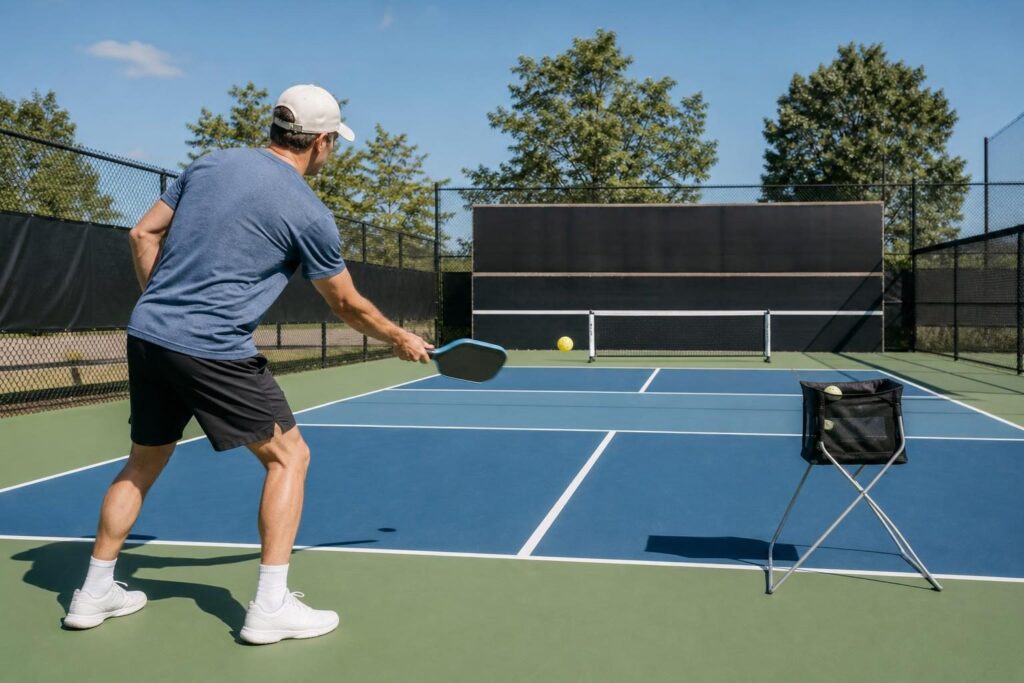
Solo practice works well for serving, controlled repetition, and movement patterns. The key is to make each activity resemble a useful part of a rally rather than simply hitting as many balls as possible.
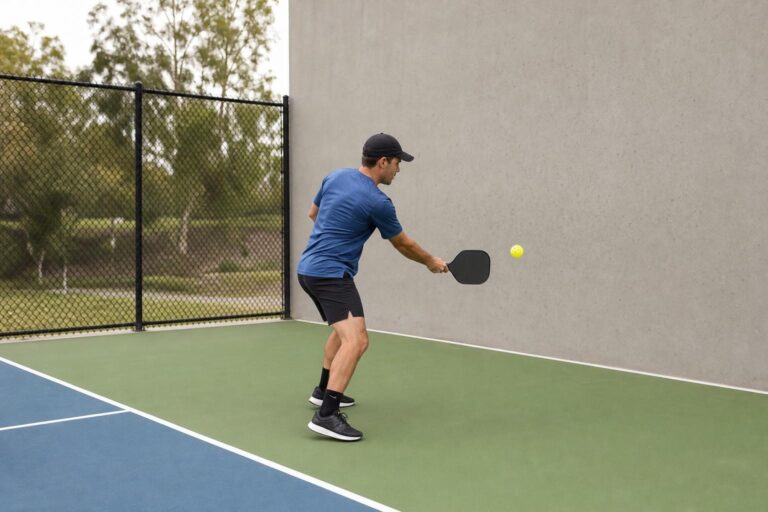
Use a wall for contact and control
Choose a flat wall where ball play is permitted, with a safe surface and enough clear space. If allowed, mark a reference at approximately net height. Remember that a wall does not reproduce a net, an opponent, or realistic court depth.
To practice pickleball dinks against a wall, begin close enough to use a soft stroke without rushing. Hit gently above the reference, let the rebound bounce, and dink again. Adjust your distance and pace until you can maintain a controlled rhythm.
Aim for short sequences of clean contacts. If the ball speeds up or pulls you out of position, stop and restart rather than chasing a deteriorating rally.
Make solo serving purposeful
Use a small supply of balls and work in sets. Alternate service sides, choose a target, and record legal serves separately from serves that reach your intended area.
This distinction matters: getting the ball in is the first milestone, while intentional placement is the next.
Rehearse movement without a ball
Practice a ready position, a small split step, a controlled move to an imaginary ball, and recovery. Include movements forward and diagonally, not just sideways.
Keep repetitions short enough to maintain balance. Avoid backpedaling to chase an imaginary lob; rehearse turning and moving safely instead.
5. Use Partner Drills That Transfer to Games
A partner can vary placement, provide realistic feeds, and help you connect technique with decisions. Agree on the drill’s purpose before starting, including whether you are cooperating or competing.
Cooperative consistency rally
Choose one shot pattern, such as crosscourt dinks or baseline groundstrokes. Set a shared rally target that is challenging but achievable. Restart after an error and focus on giving each other playable balls.
Once the pattern feels comfortable, introduce a second target. This adds decision-making without turning the drill into unrestricted play.
Serve, return, and third-shot drill
- One player serves and the other returns.
- The server practices a third-shot drop or controlled drive.
- Play one or two additional shots, then reset.
- Switch roles after a short set.
This drill reveals whether a shot works in context. A drop from a stationary feed may feel easy; a drop after moving to a deep return is a different challenge.
Transition and reset drill
One player starts near the kitchen line and the other starts farther back. The front player sends manageable balls toward the back player, who works on soft replies and advances when appropriate.
Keep feeds controlled at first. The purpose is learning when to move and when to stop, not overwhelming the advancing player.
Conditioned games for tactics
Finish with a short game that rewards your practice goal. For example, use cooperative dink-only points before returning to normal play, or track how often the serving team reaches the kitchen under control.
In doubles, practice moving with your partner, communicating on middle balls, and leaving fewer gaps. Choose high-percentage targets, and learn to distinguish an attackable high ball from a low ball that deserves patience.
6. Choose Training Equipment That Solves a Real Problem
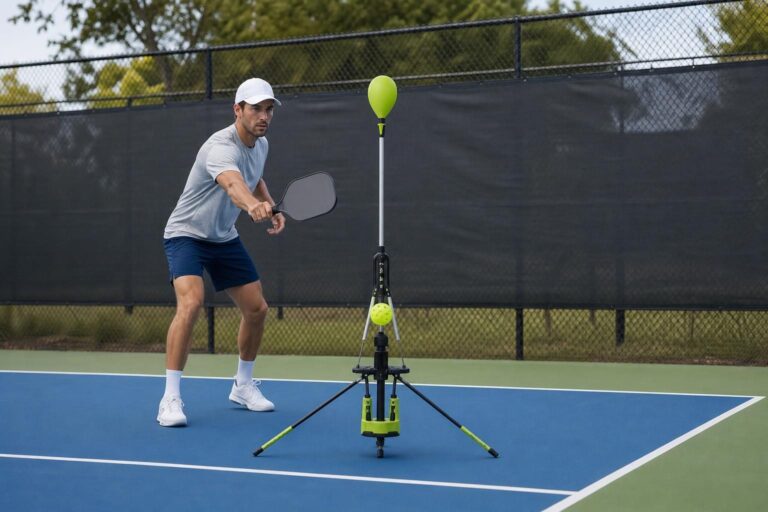
You do not need a large collection of training aids to improve. Start with a suitable paddle, balls appropriate for your playing environment, supportive shoes, and a clear practice plan.
Useful basics for solo practice
- Extra balls: Reduce interruptions during serving and feeding drills.
- Flat court markers: Create visible targets without placing raised obstacles in movement areas.
- A ball basket or pickup tool: Makes collecting balls more convenient between sets.
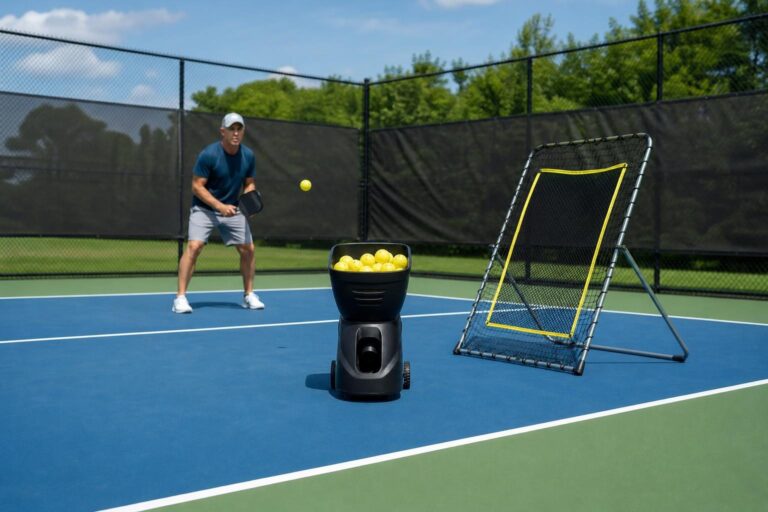
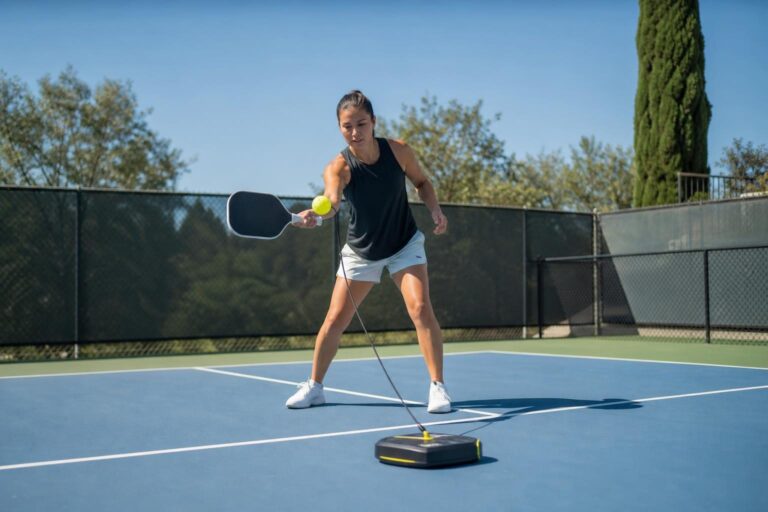
- A rebounder: Provides returning balls for some contact and reaction drills.
- A phone or camera: Allows occasional video review when filming is permitted and other players’ privacy is respected.
The best pickleball training aids for solo practice are the ones that support a specific skill and fit the space you actually have.
Ball machine versus rebounder
A ball machine feeds balls independently, making it useful for repeated groundstrokes, drops, volleys, and movement patterns. A rebounder returns the ball you hit into it, so its next rebound depends partly on your previous shot.
| Consideration | Ball machine | Rebounder |
|---|---|---|
| Main strength | Repeated feeds for a planned drill | Continuous contact practice |
| Practical demands | Power, ball collection, transport, and setup | Suitable rebound space and setup |
| Important limitation | Predictable feeds can encourage anticipation | Rebounds may differ from realistic opponent shots |
Neither replaces live play. Use equipment for repetitions, then test the skill against a person who can change pace, placement, and tactics.
Considering the Pickleball Tutor Plus
The Pickleball Tutor Plus is one ball-machine option to compare. If you are considering it, review the exact version’s feed adjustments, spin options, oscillation, controls, and power requirements rather than assuming every configuration is identical.
Portability deserves equal attention. Think about lifting, vehicle space, storage, and the route from your parking spot to the court. Check court policies before bringing a machine, and compare its practice options with the drills you intend to perform.
7. Set a Sustainable Schedule and Track Progress
How often should you practice pickleball to improve? There is no single schedule that suits every beginner. Your starting fitness, recovery, available court time, and other activities all matter.
A practical starting point is two or three manageable pickleball sessions per week, with some devoted to drills rather than only games. If that is too much, start smaller. Consistent, attentive practice is more useful than occasional sessions that leave you excessively fatigued.
Try a balanced practice session
- First 5–10 minutes: Dynamic warm-up and easy hitting.
- Next 10 minutes: Serves, returns, or basic contact work.
- Next 15 minutes: One priority skill, such as dinks or drops.
- Next 10–15 minutes: A partner drill or conditioned game.
- Final few minutes: Easy movement and a brief practice note.
Shorten the session when needed. Stop a drill when fatigue makes your movement or technique consistently sloppy.
Measure a few useful outcomes
Track legal serves out of 10, controlled dink exchanges, or drops that land in the kitchen without offering an easy attack. Compare results under similar conditions rather than treating every practice score as directly equivalent.
Write down one thing that improved and one thing to revisit. If the same error persists, a qualified instructor or occasional video review may help identify whether the issue is contact, positioning, timing, or shot selection.
Support your court time with suitable strength, balance, and aerobic activity. Increase workload gradually and allow recovery when soreness or fatigue affects normal movement.
Conclusion: Practice With a Purpose
The most effective way to practice pickleball is to choose a clear goal, repeat the skill with control, and then use it in a realistic rally. Build dependable serves and returns, develop your soft game, and combine solo work with partner practice. Keep your equipment simple, your schedule sustainable, and your attention on steady progress rather than perfect shots.
In this guide
- Pickleball Tutor Plus Review: Features, Portability, and Practice Options
- Pickleball Ball Machine vs. Rebounder: Which Is Better for Solo Practice?
- Best Pickleball Training Aids for Solo Practice
- How to Practice Pickleball Dinks Against a Wall
- How to Hit a Third-Shot Drop: Technique and Beginner Drills
- How Often Should You Practice Pickleball to Improve?