How Long Do Pickleball Paddles Last? Wear Signs and Replacement Timing
This article contains affiliate links. If you buy through them, we may earn a commission at no extra cost to you.
Pickleball paddles do not have a fixed expiration date. Some remain useful for years, while others lose their playing characteristics much sooner. If you are wondering how long do pickleball paddles last, the most useful answer depends on how often you play, how you store your paddle, and whether its face, core, and handle are still performing consistently.
This article is part of our guide: How to Choose a Pickleball Paddle: Weight, Shape, Materials, and Grip
Pickleball Paddle Lifespan: Common Questions
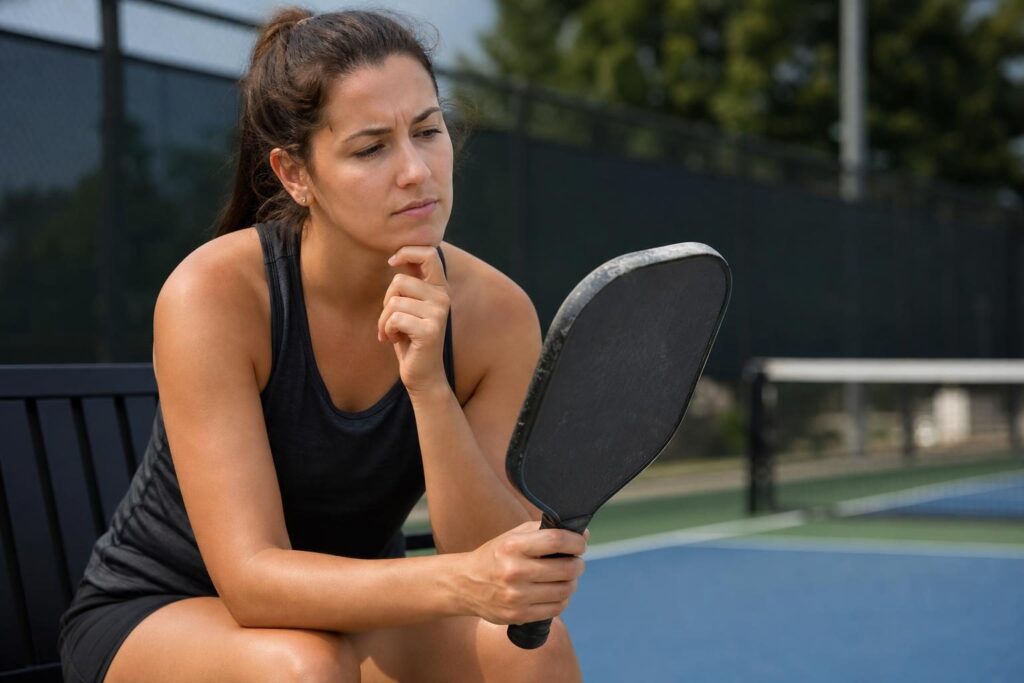
1. How long do pickleball paddles usually last?
A pickleball paddle can last anywhere from several months of heavy use to several years of occasional play. That is a broad planning range, not a guaranteed service life. There is no universal replacement schedule that applies to every paddle or player.
It also helps to distinguish between two kinds of lifespan:
- Usable lifespan: How long the paddle remains structurally sound and suitable for recreational play.
- Performance lifespan: How long it delivers the spin, response, and consistency you expect.
A paddle may remain usable after its surface has worn enough to reduce spin. For a casual player, that might not justify replacement. For someone who relies on precise drops, resets, and topspin drives, the same wear may matter much more.
2. Does playing more often mean I should replace my paddle sooner?
Yes, more playing time generally means faster wear, but hours on court are more useful than calendar age. A paddle used for several long sessions each week receives much more impact and surface abrasion than one used occasionally.
Your style of play matters, too. Repeated hard hitting, frequent mishits near the edge, and accidental court contact can contribute to wear. Storage conditions and construction quality also affect how well a paddle holds up.
Instead of replacing it automatically after a certain number of months, check it regularly:
- Inspect the face, edge guard, and handle when cleaning it.
- Notice whether familiar shots still produce a predictable response.
- Check for new rattles, unusual vibration, or movement at the handle.
- Compare performance over several sessions rather than judging one bad game.
3. What are the clearest signs that a pickleball paddle is worn out?
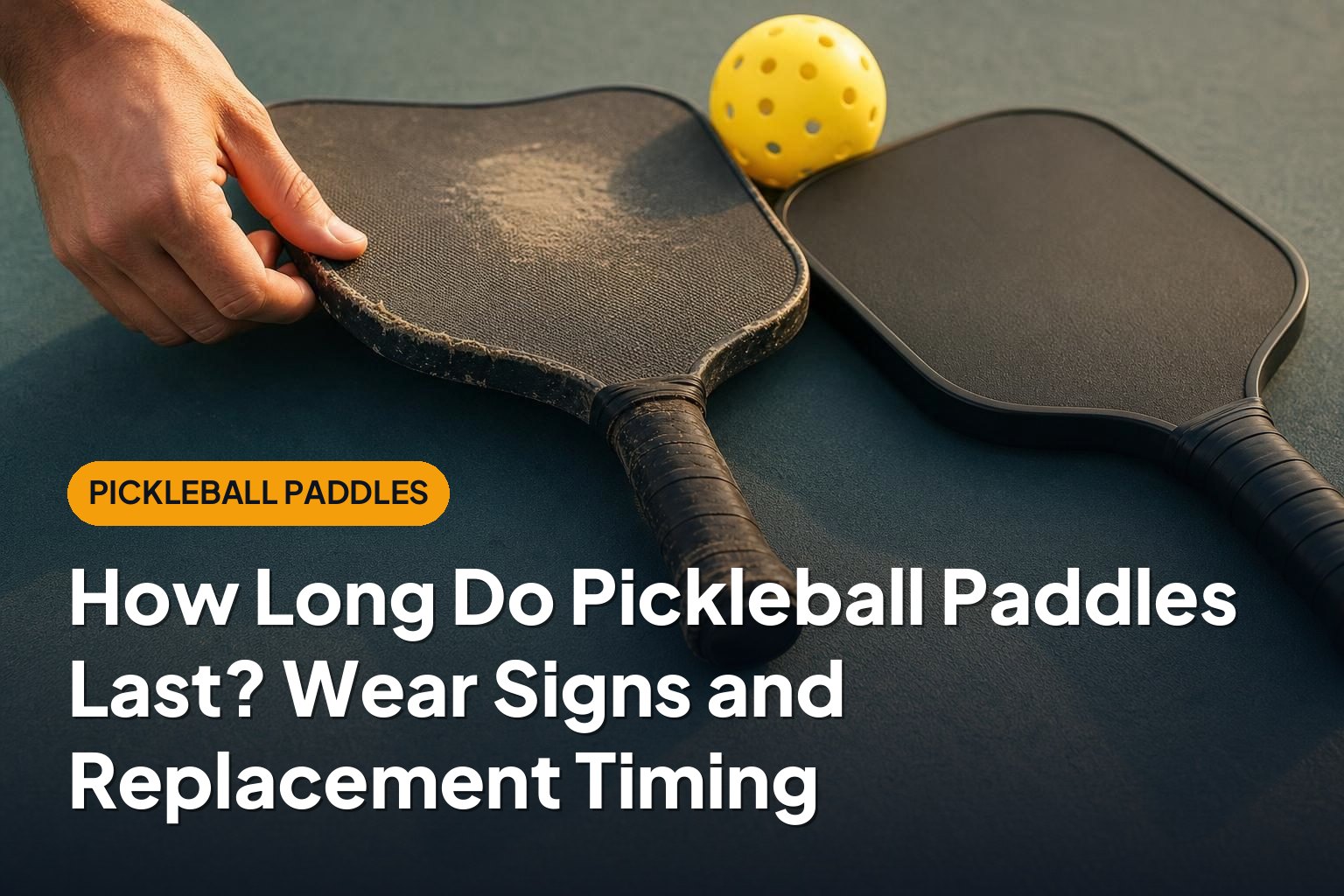
The clearest warning signs are structural damage, a loose handle, persistent dead spots, or a noticeable change in response. Cosmetic scratches alone usually do not mean a paddle needs replacing.
Look for these changes:
- Cracks: Visible splits in the face, edge, throat, or handle area.
- Loose connections: Movement between the handle and paddle head.
- Uneven response: Certain areas consistently produce weak or unpredictable shots.
- Surface separation: Bubbling, lifting, or separation between layers.
- Changed feel: New vibration, unusual softness, or unexpectedly lively rebound.
A loose edge guard or internal rattle deserves inspection, but neither automatically proves the entire paddle has failed. If a paddle suddenly behaves differently, contact the manufacturer before assuming normal wear is the cause.
4. How can I tell whether my paddle has a dead spot?
A possible dead spot is an area that repeatedly produces less rebound or a different feel than nearby areas under similar contact. One weak shot is not enough to diagnose it.
Start with a clean paddle and an undamaged ball. During gentle, controlled hits, see whether the same area repeatedly feels unusually dull. Avoid comparing the center directly with the extreme edge, because paddles naturally respond differently outside their sweet spot.
Keep these limits in mind:
- Changes in sound alone do not confirm core damage.
- A cracked ball, cold conditions, or off-center contact can change the feel.
- Informal checks can reveal inconsistencies, but they cannot reliably identify the internal cause.
If the problem persists across sessions and with different balls, ask the manufacturer or retailer about an inspection or warranty assessment.
5. Does losing surface grit mean I need a new paddle?
No, reduced surface texture does not automatically mean you need a new paddle, but it can affect spin performance. A paddle can remain structurally sound even after its face becomes smoother.
Before deciding the texture is worn away, clean the surface according to the manufacturer’s instructions. Ball residue and dirt can change how the face feels and plays.
If cleaning does not help, consider whether the change affects your game. A recreational player may be comfortable continuing with less spin. A player who depends heavily on topspin and shaped shots may choose to replace the paddle sooner.
Do not apply gritty coatings, abrasive treatments, or homemade resurfacing products. They can damage the face, affect warranty coverage, and make the paddle unsuitable for sanctioned competition.
6. Do carbon fiber paddles last longer than fiberglass or wooden paddles?
No face material guarantees a longer overall lifespan, because paddle durability depends on the entire construction. The core, bonding, handle assembly, surface treatment, and manufacturing quality all matter.
Carbon fiber and fiberglass paddles can both develop surface wear, edge damage, or internal problems. A strong face does not prevent every possible core or handle failure.
Wooden paddles can be durable for basic recreational use, but their weight and playing characteristics differ from those of many modern composite paddles. Their durability alone does not make them the best choice for every player.
When comparing options, look beyond the material label. Consider construction details, care requirements, warranty terms, and whether the paddle suits your playing needs.
7. Can a worn or damaged pickleball paddle be repaired?
Some minor issues can be repaired, but structural face, core, or handle damage usually calls for professional assessment or replacement. Replacing a worn grip is very different from trying to fix a cracked paddle.
| Issue | Typical next step |
|---|---|
| Slippery or compressed grip | Replace the grip or add a suitable overgrip. |
| Dirt or ball residue on the face | Clean using the manufacturer’s recommended method. |
| Loose edge guard | Ask the manufacturer about an approved repair. |
| Cracked face or loose handle | Stop using it and seek warranty assessment or replacement. |
| Suspected internal damage | Contact the manufacturer rather than attempting a home repair. |
Avoid drilling, injecting adhesive into the core, or sanding the face. Such changes may worsen the problem and affect the paddle’s eligibility for competition.
8. How can I make my pickleball paddle last longer?
You can extend your paddle’s useful life by protecting it from excessive heat, moisture, abrasion, and unnecessary impacts. Consistent basic care is more helpful than aggressive cleaning or frequent tinkering.
- Store it indoors: Avoid leaving it in a hot vehicle or in prolonged direct sunlight.
- Use a cover: Keep the face from rubbing against keys, zippers, and other equipment.
- Clean it appropriately: Follow the care instructions for your specific surface.
- Keep it dry: Do not soak it, and let damp grips dry before storage.
- Avoid court contact: Do not scrape the paddle along the ground to retrieve balls.
- Maintain the grip: A secure, comfortable grip helps you control the paddle without slipping.
No care routine can prevent all wear, but these habits reduce avoidable damage.
9. Should I replace my paddle before a tournament?
Replace your paddle before a tournament only if it has a meaningful performance problem, structural damage, or an eligibility issue. Age alone is not a good reason to switch immediately before an important event.
A familiar paddle with predictable response can be a better choice than a new one you have barely used. If replacement is necessary, allow practice time to adjust to differences in weight, balance, rebound, and touch.
Before competing, inspect your paddle and check the event’s equipment requirements and relevant approved-paddle list. Approval status and physical condition are separate checks: a model’s approval does not mean a damaged individual paddle should remain in play.
10. Does a paddle warranty tell me how long it should last?
No, a warranty describes coverage under stated conditions, not a guaranteed performance lifespan. Its length should not be treated as either an expiration date or a promise that the paddle will feel unchanged throughout that period.
Coverage varies by manufacturer and may distinguish manufacturing defects from ordinary wear, misuse, or accidental damage. Check whether registration, proof of purchase, or purchase from an authorized seller is required.
If a relatively new paddle develops cracks, separation, a loose handle, or a sudden response change, document the issue and contact the seller or manufacturer promptly. Avoid attempting repairs before they have reviewed the problem.
Conclusion: Replace for Condition, Not Just Age
The best replacement timing depends on how your paddle performs, not simply how long you have owned it. Keep playing if it remains sound and predictable. Replace it when structural damage, persistent inconsistencies, or surface wear meaningfully affects your game—and maintain the grip and face along the way.