How to Measure Your Pickleball Paddle Grip Size
This article contains affiliate links. If you buy through them, we may earn a commission at no extra cost to you.
A comfortable paddle grip helps you hold the paddle securely without squeezing harder than necessary. If you are wondering how to measure pickleball paddle grip size, start by measuring the handle’s circumference, then check how that size fits your hand. A hand measurement can provide a useful starting point, but your on-court comfort should guide the final choice.
This article is part of our guide: How to Choose a Pickleball Paddle: Materials, Weight, Shape, and Grip
What Does Pickleball Paddle Grip Size Mean?
Grip size is the distance around the paddle handle, also called its circumference. It is not the handle’s length or the width across one side of the handle.
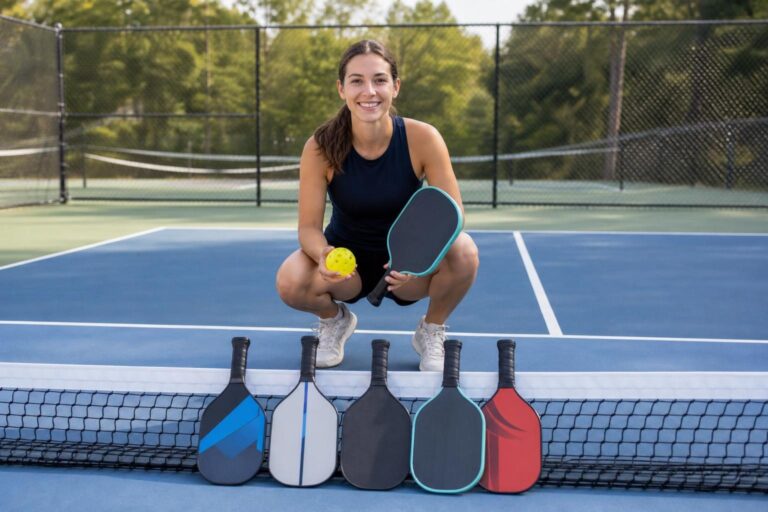
Pickleball paddle grip sizes are commonly listed in inches. You may see measurements such as 4 inches, 4 1/8 inches, or 4 1/4 inches. Some manufacturers offer multiple sizes, while others sell a paddle with only one standard grip size.
The listed measurement generally describes the handle with its factory grip installed. Adding an overgrip or changing the replacement grip can alter the finished circumference.
Two paddles with the same listed grip size may still feel different. Handle shape, cushioning, grip texture, and the prominence of the handle’s bevels all affect how a paddle sits in your hand.
What You Will Need
- A flexible measuring tape, preferably marked in inches.
- A ruler for measuring your hand.
- A narrow strip of paper and a pen if you do not have a flexible tape.
- Your current paddle, if available.
- Access to a few paddles to compare, if possible.
You can complete the basic measurements at home. Trying a paddle before buying is helpful because measurements alone cannot tell you exactly how a handle will feel during play.
How to Measure Pickleball Paddle Grip Size: Step by Step
Step 1: Identify What You Want to Measure
There are two related measurements to consider: the circumference of an existing paddle handle and a hand measurement used to estimate a suitable starting size.
If you already own a comfortable paddle, measuring its handle gives you a useful reference when shopping. If you are choosing your first paddle, start with the hand measurement, then check the fit of actual handles.
Neither measurement is a universal sizing rule. Finger length, palm shape, grip style, and personal preference all influence what feels comfortable.
Step 2: Measure Your Playing Hand for a Starting Estimate
Open your paddle hand with your fingers extended comfortably and close together. Keep your palm relatively flat rather than stretching your fingers as far as possible.
Place the end of a ruler at the main palm crease running across the middle of your palm. Measure toward the tip of your ring finger, roughly following the finger’s line down into the palm.
This traditional racket-sport sizing method provides an approximate starting point for grip circumference. For example, a measurement near 4 1/4 inches gives you a reason to begin by comparing handles around that size.
Palm creases vary, so do not treat this result as a prescription. If the crease is difficult to identify, prioritize checking an actual paddle rather than forcing a precise reading.
Step 3: Measure the Paddle Handle’s Circumference
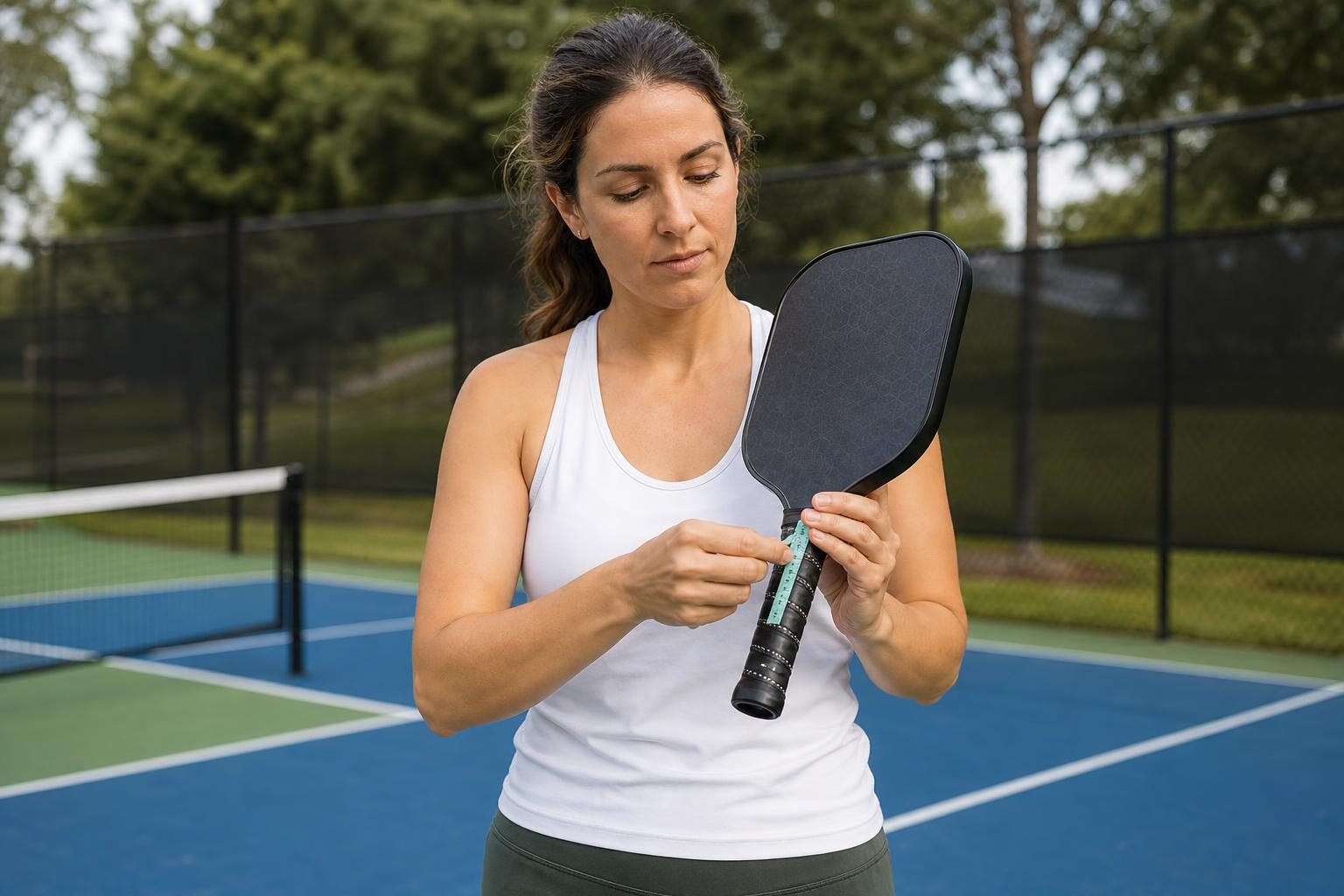
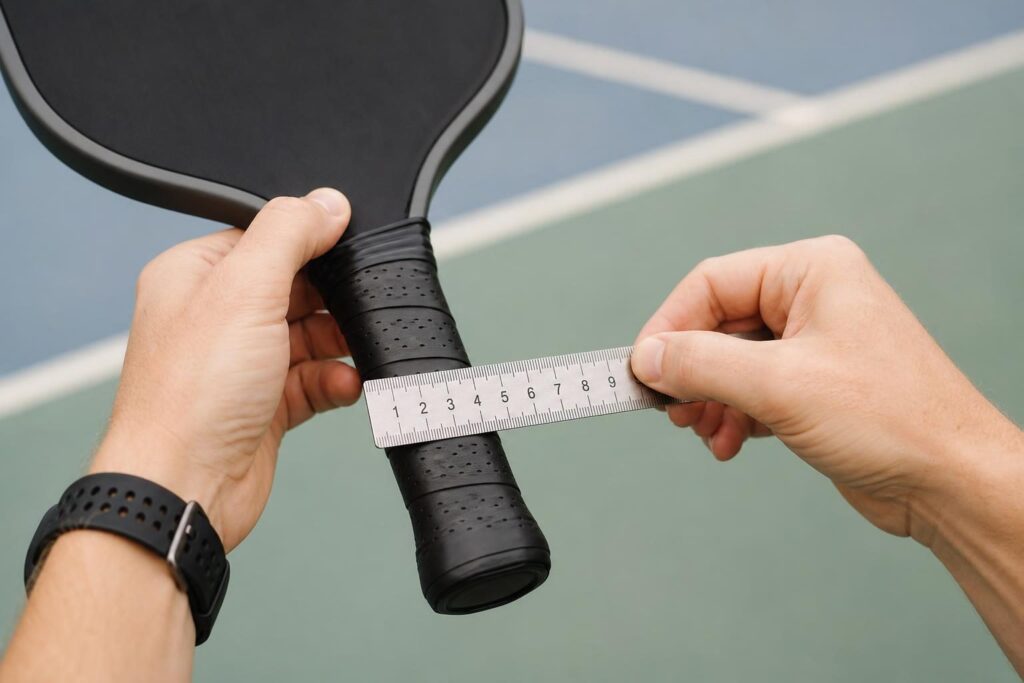
If you have a paddle available, wrap a flexible measuring tape around the middle of the usable gripping area. Keep the tape perpendicular to the handle’s length, rather than letting it spiral diagonally.
The tape should lie snugly against the grip without compressing its cushioning. Read the measurement where the tape completes one full wrap.
Keep these details consistent:
- Measure over the grip you actually play with, including any overgrip.
- Avoid the flared butt cap at the bottom of the handle.
- Avoid measuring directly over a bulky finishing-tape section.
- If the handle tapers, also check the area where your hand normally rests.
Without a flexible tape, wrap a narrow paper strip around the handle and mark where the end meets the strip. Lay the paper flat and measure from the starting edge to the mark. Paper that stretches or wrinkles can reduce accuracy.
Step 4: Check the Fit With a Relaxed Hold
Hold the paddle as you normally would, using a relaxed handshake-style grip. Your fingers should curl comfortably around the handle without needing a tight squeeze.
A common screening method is the index-finger test: try placing the index finger of your other hand in the space between your fingertips and palm.
- If there is very little space and your fingertips dig into your palm, the grip may be too small.
- If there is a large gap and your fingers struggle to wrap securely, the grip may be too large.
- If your fingers wrap comfortably and the paddle feels secure, the size may be suitable.
This test is only a rough guide. Hand proportions differ, and some players prefer a smaller fit than the test suggests. Do not reject an otherwise comfortable grip solely because the gap does not match one finger exactly.
Step 5: Compare Nearby Sizes
Try the closest available sizes rather than assuming your initial measurement must match a label perfectly. Hold each paddle with similar pressure and compare how easily you can control the face.
Pay attention to whether you can keep your hand relaxed, make small grip adjustments, and support the paddle without feeling that it might slip.
When comparing paddles, remember that weight and balance also affect comfort. A paddle that feels awkward may not have a grip-size problem.
Step 6: Confirm the Fit During Gentle Play
If possible, test the paddle with easy dinks, volleys, and controlled groundstrokes. A handle can feel comfortable while standing still but less secure when the ball contacts the paddle.
Watch for repeated slipping, unwanted twisting, excessive squeezing, or difficulty changing grips. These can point to a fit issue, although worn grip material, sweat, technique, and off-center contact can cause similar problems.
Stop if you experience pain, tingling, or numbness. Grip adjustments are not a substitute for advice from a qualified healthcare professional when symptoms persist.
Common Grip-Measuring Mistakes
Measuring Width Instead of Circumference
A ruler placed across the handle measures width, not grip size. Because paddle handles have shaped bevels rather than a perfectly round cross-section, width is not a reliable substitute for a full wraparound measurement.
Pulling the Tape Too Tight
Soft grips compress under pressure. Pulling hard on the tape can produce a smaller reading than the handle’s normal finished size. Keep the tape snug, not stretched tightly into the cushioning.
Ignoring an Existing Overgrip
If you love the feel of your current paddle with an overgrip installed, measure that complete setup. Comparing its finished circumference with another paddle’s factory specification can otherwise be misleading.
Choosing a Size From Hand Measurements Alone
A hand measurement is a starting estimate, not a guarantee. Handle shape and padding can make two equally sized grips feel noticeably different.
Assuming Bigger Means More Secure
A larger handle is not automatically easier to hold. If your fingers cannot wrap comfortably, you may compensate by squeezing harder. Likewise, a very small handle may encourage excessive gripping pressure.
Practical Tips for Fine-Tuning Your Grip
- Make small changes. Adjust one thing at a time so you can tell whether it improves the fit.
- Use an overgrip thoughtfully. It can increase circumference and change traction, but the amount depends on its thickness, stretch, and overlap.
- Remember that reducing size is harder. A thinner replacement grip may help, but the underlying handle limits how small you can go.
- Avoid excessive layering. Multiple overgrips can soften the bevels, making the handle feel rounder and changing your sense of paddle-face orientation.
- Check grip condition. A slick or worn surface can feel insecure even when the circumference is suitable.
- Record your preferred setup. Note the measured circumference, replacement grip, and any overgrip so you can reproduce the feel later.
If you fall between sizes, the smaller option can offer more room for adjustment with an overgrip. However, choose it only if it feels comfortable; adding material also changes cushioning and handle shape.
Conclusion
To measure your pickleball paddle grip size, wrap a flexible tape around the handle’s gripping area and record its circumference. Use a hand measurement as a starting estimate, then confirm the fit with a relaxed hold and gentle play. The best choice lets you control the paddle comfortably without constant slipping or unnecessary squeezing.