Can You Leave a Portable Pickleball Net Outside?
This article contains affiliate links. If you buy through them, we may earn a commission at no extra cost to you.
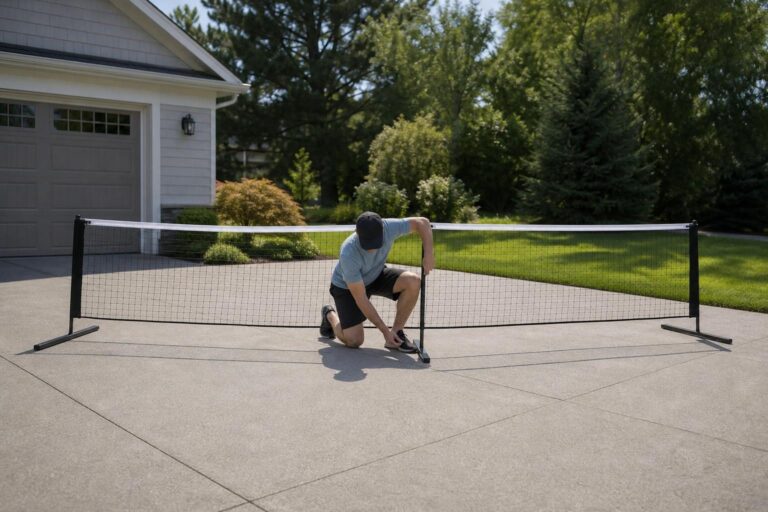
A portable pickleball net makes it easy to turn a driveway, patio, or shared court into a place to play. But packing it away after every session can feel like extra work. So, can you leave a portable pickleball net outside? Usually, short periods outdoors are manageable in suitable weather, but permanent outdoor storage can shorten its life unless the manufacturer specifically allows it.
This article is part of our guide: Portable Pickleball Net Buying Guide: Size, Stability, and Setup
Frequently Asked Questions About Leaving Portable Pickleball Nets Outside

1. Can you leave a portable pickleball net outside all the time?
Most portable pickleball nets should not be left outside permanently unless they are specifically designed for continuous outdoor exposure. A net intended for outdoor play is not necessarily intended for outdoor storage.
Portable systems often combine a metal frame, mesh netting, fabric edging, adjustment straps, and plastic components. Each material responds differently to moisture, sunlight, and temperature changes. Even if the frame holds up well, the edging or straps may deteriorate first.
Check the instructions for storage requirements rather than relying on descriptions such as “outdoor” or “weather-resistant.” If the manufacturer recommends indoor storage, taking the net down between sessions is the safest approach.
2. Is it okay to leave a portable pickleball net outside overnight?
Leaving a portable net outside overnight occasionally is generally lower risk in dry, calm conditions, provided its instructions allow outdoor exposure. However, the forecast is only part of the picture.
Dew can wet the frame and net even when no rain falls. Irrigation systems may also soak a net left on a driveway or beside a lawn. Wind can develop overnight, creating a tipping or movement hazard.
Before leaving it out, check that:
- No strong winds, storms, or freezing conditions are expected.
- Sprinklers will not reach the net.
- The location is secure and does not obstruct a walkway or shared space.
- The manufacturer does not require storage after each use.
If the net is damp the next morning, let it dry fully before packing it into its bag.
3. Can a portable pickleball net get rained on?
Many outdoor-use portable nets can tolerate an occasional shower, but repeated rain exposure can accelerate wear. Rain may collect around frame joints, fasteners, feet, and openings in hollow tubing.
After an unexpected shower, wipe down accessible frame surfaces and allow the netting, edging, and straps to air-dry. Follow the assembly instructions if sections need separating to release trapped moisture.
Do not put the system straight into its carry bag while wet. Trapped moisture can encourage corrosion, mildew, and unpleasant odors. If thunderstorms are approaching, stop playing and seek appropriate shelter rather than spending time dismantling equipment outdoors.
4. Are portable pickleball nets waterproof or just weather-resistant?
Many portable pickleball nets are weather-resistant rather than fully waterproof, and those terms should not be treated as interchangeable. Weather resistance usually indicates some ability to withstand outdoor conditions, not unlimited protection.
A powder-coated frame, for example, has a protective finish, but scratches and worn joints can expose the metal underneath. Likewise, synthetic mesh may handle water better than some fabric components without making the whole system waterproof.
Look for specific information about:
- Whether continuous outdoor storage is permitted.
- Frame material and protective coatings.
- UV resistance of the netting and edging.
- Care instructions for rain, frost, and coastal conditions.
When the documentation is unclear, ask the manufacturer rather than assuming the net is suitable for year-round exposure.
5. Will the frame rust if I leave my pickleball net outside?
A steel portable-net frame can rust when moisture reaches exposed metal, especially at scratches, joints, and fasteners. Protective coatings reduce that risk but do not eliminate it.
Aluminum frames do not develop the reddish rust associated with steel, although aluminum can still corrode. An aluminum system may also contain steel screws, springs, or other hardware that needs protection from moisture.
Inspect connection points and the underside of the feet regularly. Dragging the frame over rough pavement can damage its finish, so lift or move it as directed. Near the coast, remove salt residue using the manufacturer’s recommended cleaning method, then dry the equipment thoroughly.
6. Does sunlight damage a portable pickleball net?
Yes, prolonged sunlight can gradually weaken netting, straps, edging, and plastic parts. UV-resistant materials offer better protection, but they are not immune to aging.
Fading may be the first visible change. More concerning signs include brittle mesh, cracking plastic, fraying straps, and edging that tears under normal tension.
Storing the net out of direct sunlight between games reduces unnecessary exposure. If you leave it assembled briefly, shade can help, but remember that a shaded outdoor location may still expose it to wind, moisture, and changing temperatures.
7. Can I leave a portable pickleball net outside in windy weather?
You should take a portable pickleball net down when winds could move, tip, or damage it. There is no single safe wind-speed limit that applies to every model.
Stability depends on the frame design, weight, playing surface, and wind direction. Mesh allows some airflow, but the net and edging still catch wind. A fitted cover can catch even more.
Use only manufacturer-approved stabilizing methods. Improvised weights, ropes, or stakes can damage the frame or create trip hazards. If the net starts shifting, rocking, or lifting, stop play and dismantle it when it is safe to do so.
8. Will a cover protect a portable pickleball net outside?
A suitable cover can reduce exposure to rain, dirt, and sunlight, but it does not make every portable net safe for permanent outdoor storage. Moisture can still collect beneath a cover through condensation or leaks.
Choose a cover intended for the assembled system, ideally with ventilation and secure attachment points. Cover the net only when it is dry, and check underneath periodically for dampness.
Avoid treating the carry bag as an outdoor cover unless the manufacturer explicitly approves that use. A transport bag may not be weatherproof and can trap moisture around the components. In exposed locations, taking the net indoors is usually more dependable than covering it.
9. Can I leave my portable pickleball net outside during winter?
Most portable pickleball nets are better stored indoors during winter, particularly where snow, ice, or repeated freezing occurs. Winter conditions can expose the system to prolonged moisture and loads it was not designed to support.
Snow and ice can weigh down the mesh and edging. Water trapped in frame openings or joints may freeze, while some plastic components become more brittle in low temperatures.
Before seasonal storage:
- Remove dirt and debris using the recommended cleaning method.
- Dry the frame, netting, straps, and bag completely.
- Check for damaged joints, loose hardware, and worn fabric.
- Store the packed system in a dry, sheltered location away from standing water.
A damp shed or a garage corner that regularly floods is not a good substitute for dry storage.
10. How can I make a portable pickleball net last longer outdoors?
The best way to extend its life is to limit unnecessary weather exposure and clean, dry, and inspect it regularly. A simple routine is usually more useful than waiting until corrosion or fabric damage becomes obvious.
- After play: Remove debris and check whether the system is damp.
- Before storage: Allow all components to dry fully, including the carry bag.
- During setup: Avoid forcing connections or overtightening tension straps.
- Periodically: Inspect coatings, fasteners, mesh, edging, and frame joints.
- Before bad weather: Bring the net into a dry, sheltered space.
Follow the manufacturer’s guidance for cleaning products, lubrication, and any coating repairs. Also check the warranty: weather-related damage or storage contrary to the instructions may not be covered.
Conclusion
You can often leave a portable pickleball net outside briefly in mild weather, but continuous exposure is a different matter. Unless your system is explicitly approved for permanent outdoor storage, bringing it in between sessions is the better choice. Keep it dry, protect it from strong wind and prolonged sun, and follow its care instructions to help it stay ready for the next game.