Can You Wear Running Shoes for Pickleball?
This article contains affiliate links. If you buy through them, we may earn a commission at no extra cost to you.
Can you wear running shoes for pickleball? You can, but they are usually not the best choice for a sport built around sideways movement, quick stops, and sudden changes of direction. If you are deciding whether your current shoes will do—or whether to buy a dedicated pair—these answers explain what matters most.
This article is part of our guide: How to Choose Pickleball Shoes for Indoor and Outdoor Courts
Running Shoes for Pickleball: Your Questions Answered
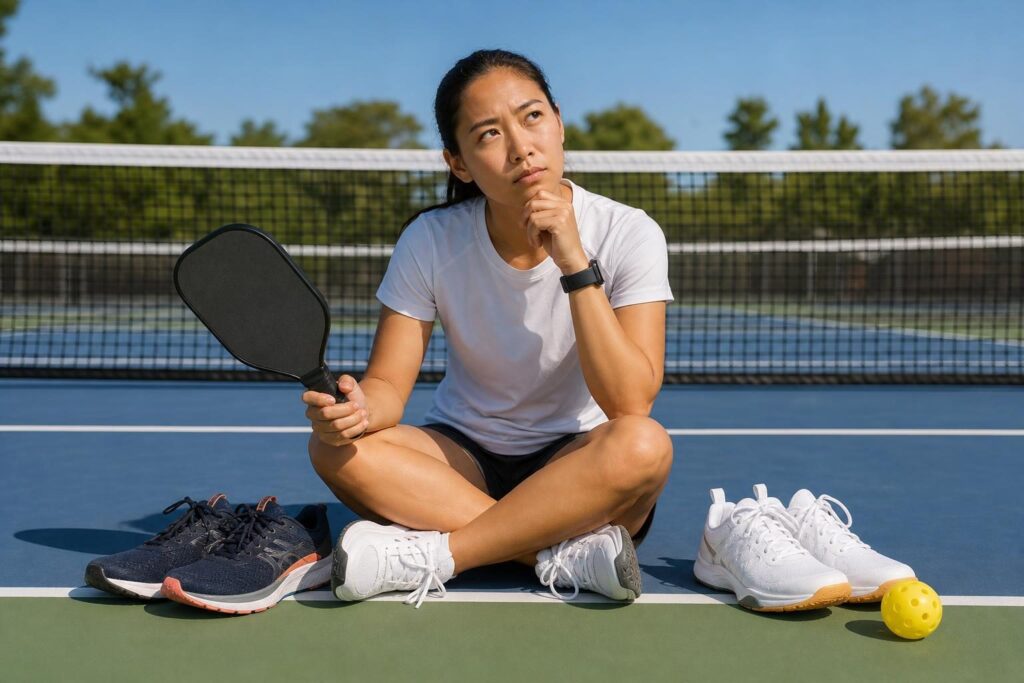
1. Can you wear running shoes for pickleball?
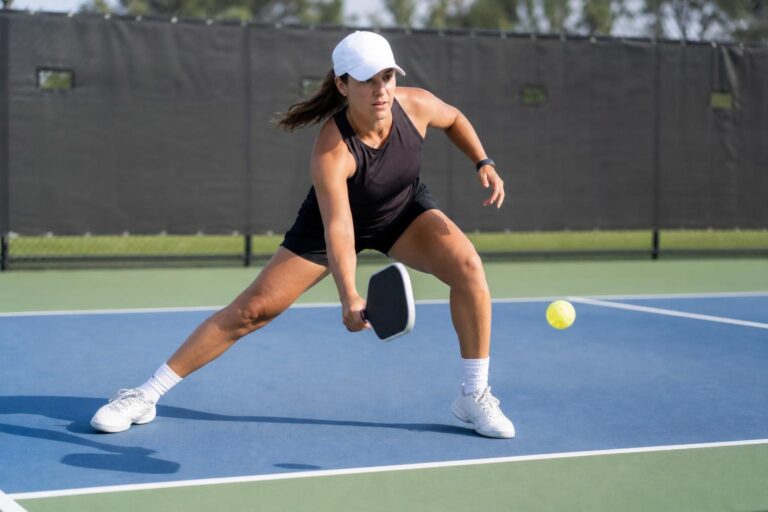
Yes, you can wear running shoes for pickleball, but court shoes are generally better suited to the game. Running shoes are primarily designed for repeated forward movement. Pickleball also involves lateral shuffles, diagonal steps, abrupt braking, and changes of direction.
For a brief, easy introduction to the sport, the running shoes you already own may be a practical temporary option. However, that does not make them equivalent to court shoes, particularly once rallies become faster or more competitive.
If your running shoes feel unstable when you move sideways, allow your foot to slide inside, or struggle to grip the surface, do not keep playing in them simply because they feel comfortable while walking.
2. Why are running shoes different from pickleball shoes?
Running shoes emphasize forward-motion comfort, while pickleball shoes are designed to support multidirectional court movement. The difference involves more than the tread on the bottom.
Although designs vary, running shoes often have cushioned midsoles and upper materials that prioritize comfort during a running stride. Some also have tall platforms or pronounced rocker shapes. These features are not necessarily helpful when you need to plant a foot and push sideways.
Court-oriented shoes typically focus on:
- Lateral containment: Helping keep your foot positioned over the shoe during side-to-side movement.
- A stable platform: Supporting stops, starts, and changes of direction.
- Surface-appropriate traction: Providing grip suited to the intended court.
- Wear resistance: Reinforcing areas exposed to court abrasion.
Not every running shoe is unstable, and not every pickleball shoe fits every player. Construction and fit matter more than the label alone.
3. Can running shoes increase your risk of injury when playing pickleball?
Running shoes can create stability and traction concerns during pickleball, but wearing them does not mean you will necessarily get injured. Injury risk also depends on your movement, fitness, previous injuries, court conditions, and other factors.
A shoe that lets your foot spill over its edge or slide inside the upper can make lateral movements harder to control. A tall, soft platform may also feel less stable during a quick directional change.
Likewise, unsuitable traction can interfere with stopping and turning. Too little grip can cause slipping, while a shoe that catches unexpectedly can disrupt your movement.
No shoe guarantees injury prevention. Choose footwear that fits securely, suits the surface, and feels controlled during court movement. Stop if you experience pain or repeated instability.
4. Is it okay to wear running shoes for your first pickleball lesson?
Running shoes may be a temporary option for a gentle first lesson, provided the facility allows them and they offer adequate grip and stability. You do not necessarily need to buy new shoes before finding out whether you enjoy the sport.
Ask the instructor or facility about footwear requirements beforehand. Some venues require non-marking court shoes, and an indoor facility may have specific sole restrictions.
If you attend in running shoes, keep the session controlled:
- Tell the instructor that you are not wearing court shoes.
- Focus on basic technique rather than chasing difficult shots.
- Avoid aggressive cuts, lunges, and abrupt changes of direction.
- Stop if your feet slide inside the shoes or the shoes feel unstable.
Borrowing suitable court shoes that fit properly is another option, although a poor-fitting borrowed pair is not automatically better than your own footwear.
5. Can you wear running shoes on both indoor and outdoor pickleball courts?
You may be allowed to wear running shoes on either surface, but permission does not mean they are well suited to it. Indoor and outdoor courts place different demands on footwear.
Indoor pickleball may be played on wood or synthetic gym flooring. These facilities often require non-marking soles, and traction can be affected by dust or surface finishes. Do not assume a running shoe is non-marking because its sole is light-colored.
Outdoor hard courts are abrasive and can wear down lightweight running-shoe outsoles and exposed foam. Shoes designed for outdoor court use generally emphasize durability as well as lateral support.
Always check the actual playing surface and venue rules. An indoor location can still have a hard-court surface, so “indoor” does not always mean a gym floor.
6. Are tennis shoes a good alternative to pickleball shoes?
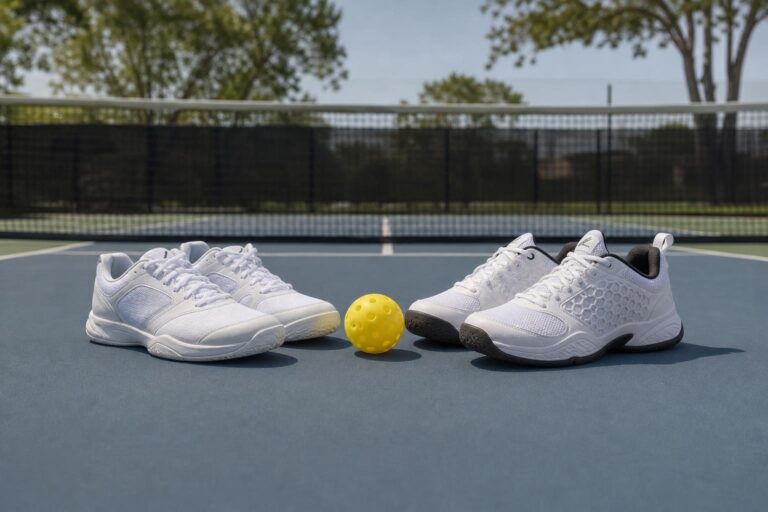
Yes, tennis shoes are often a good alternative to dedicated pickleball shoes. Both sports involve lateral movement, quick stops, and repeated changes of direction.
For outdoor hard-court pickleball, hard-court tennis shoes are a sensible category to consider. They typically combine a supportive upper, a stable base, and an outsole designed to withstand abrasive courts.
For indoor gym floors, suitable indoor court shoes may also work well. The important point is matching the shoe to the surface rather than choosing solely by the sport printed on the box.
Be careful with the phrase “tennis shoes,” which is sometimes used to mean any casual sneaker. A lifestyle sneaker is not necessarily built for tennis or pickleball.
7. What should you look for in shoes for pickleball?
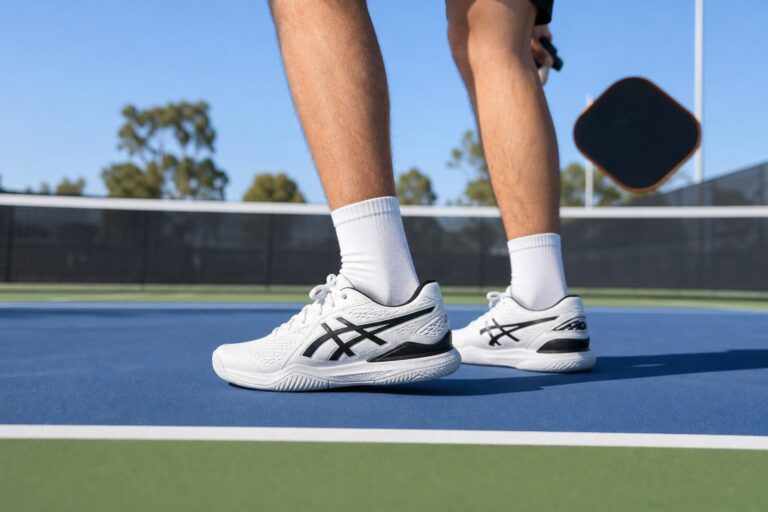
Look for secure fit, lateral support, suitable traction, and enough cushioning to stay comfortable without feeling unstable. The best choice is a shoe that works with your foot and playing surface.
- Heel security: Your heel should not repeatedly lift or slide during movement.
- Midfoot hold: Your foot should feel supported without uncomfortable pressure.
- Toe room: Your toes need space, especially when you brake, but your foot should not slide forward excessively.
- Lateral stability: The shoe should feel controlled during gentle side steps.
- Appropriate outsole: Choose a sole intended for your court surface and compliant with venue rules.
- Comfort: Avoid shoes that pinch, cause numbness, or create pressure points.
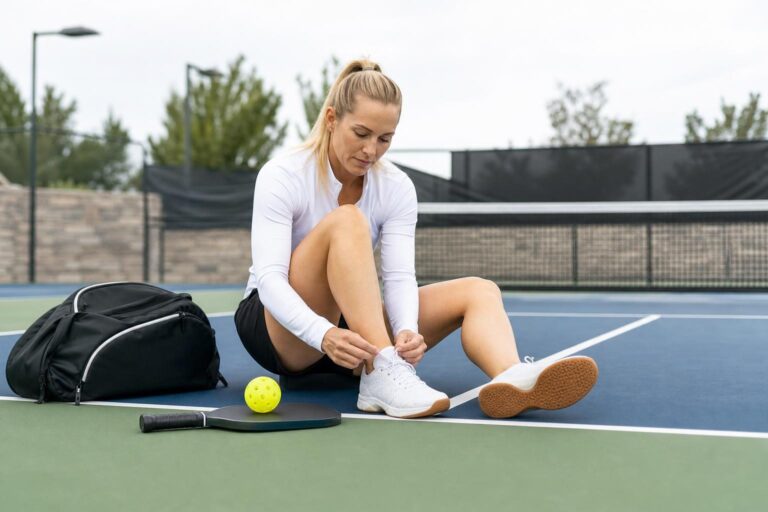
Try shoes on with the socks you intend to wear for play. If permitted, walk, shuffle gently, and make controlled stops before deciding.
8. Are highly cushioned running shoes better if your feet or knees hurt?
More cushioning does not automatically make a running shoe better for pickleball-related foot or knee discomfort. Cushioning is only one part of how a shoe performs, and very soft or tall midsoles can feel unstable during lateral movement.
A comfortable court shoe can provide cushioning while also supporting the movements pickleball requires. Fit, stability, playing load, and the cause of your symptoms all matter.
Do not assume that switching shoes will resolve persistent pain. Reduce or stop activities that aggravate symptoms, and seek guidance from a qualified healthcare professional if pain persists, recurs, or comes with swelling or difficulty bearing weight.
9. When should you switch from running shoes to court shoes?
Switch to court shoes when you decide to play regularly, and sooner if your running shoes feel unstable or lack reliable traction. You do not need to wait until you become an advanced player.
Beginners still move sideways and make unexpected stops. As you grow more comfortable, you may also start reaching for wider shots and changing direction more forcefully.
Signs that your current shoes are a poor match include:
- Your foot slides sideways inside the shoe.
- You feel as though you are tipping over the edge of the sole.
- You slip during controlled stops or shuffles.
- The outsole or exposed midsole wears rapidly.
- You hold back because you do not trust your footing.
These are reasons to reassess your footwear, not challenges to play through.
10. Do you need expensive pickleball shoes?
No, you do not need expensive pickleball shoes; you need suitable court shoes that fit well. A higher price does not guarantee better comfort, stability, or suitability for your feet.
Compare construction and fit rather than assuming a pickleball-specific label is essential. A properly fitting tennis shoe or appropriate indoor court shoe may meet your needs.
When shopping on a budget, prioritize lateral support, the correct outsole, and secure fit over cosmetic details. Discounted court shoes can be worth considering, but avoid choosing a poorly fitting pair just because it is reduced.
Also inspect shoes you already own. Worn-smooth tread, damaged uppers, or a sole that sits unevenly can make an otherwise appropriate court shoe a poor choice.
Conclusion
You can wear running shoes for pickleball as a temporary compromise, but they are not the preferred footwear for regular play. Choose well-fitting court shoes with lateral support and traction suited to your surface. Whether they are sold for pickleball, tennis, or indoor court sports matters less than how securely and comfortably they support your movement.