How to Choose Pickleball Shoes for Indoor and Outdoor Courts
This article contains affiliate links. If you buy through them, we may earn a commission at no extra cost to you.
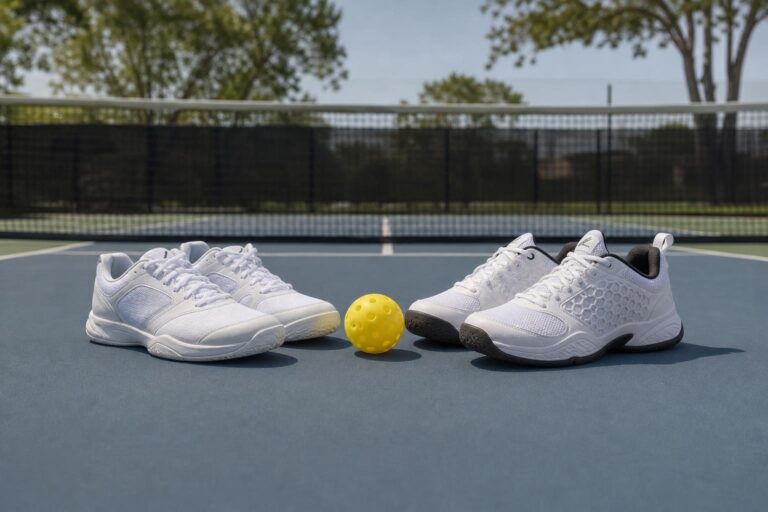
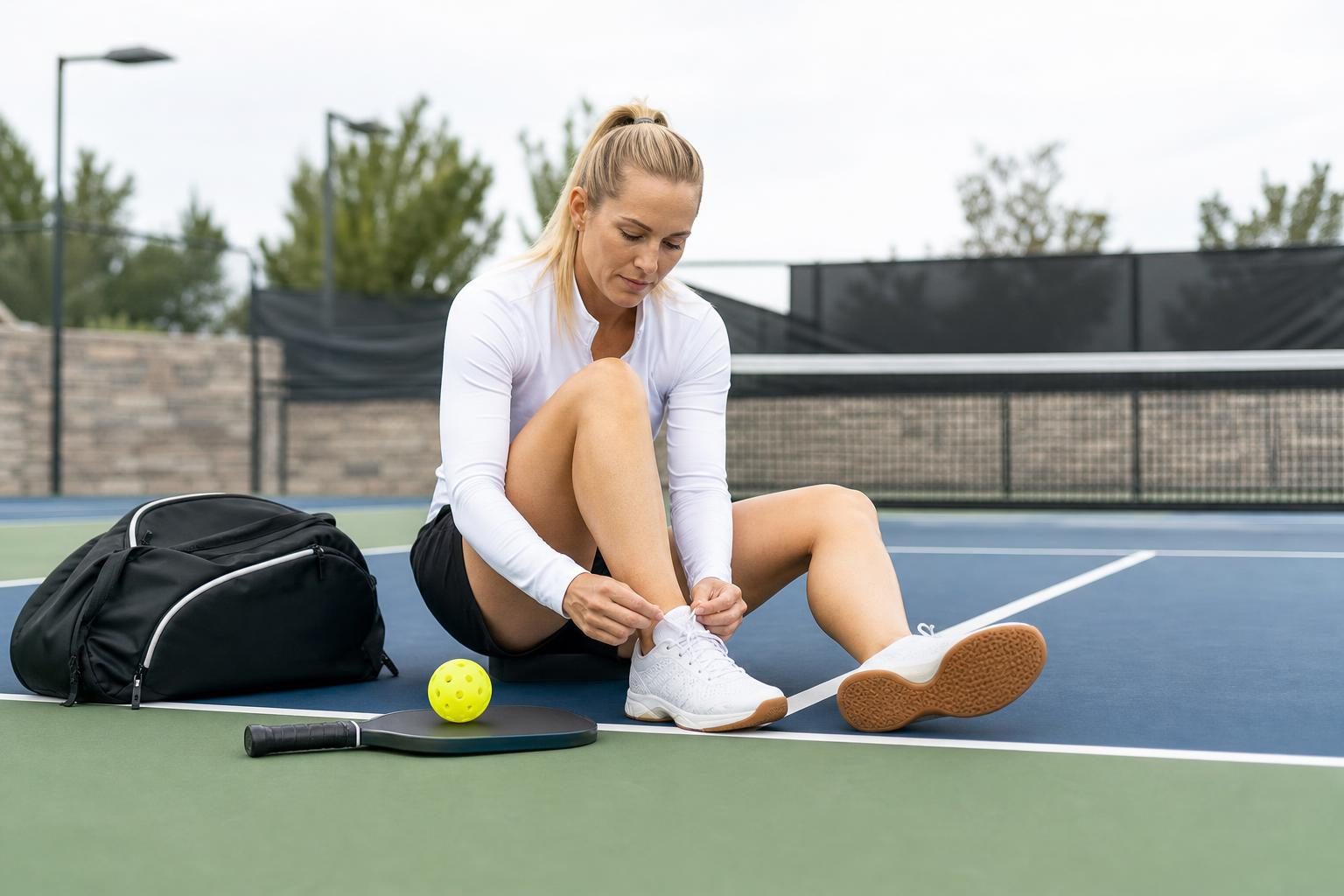
Choosing pickleball shoes is about more than finding a comfortable pair of sneakers. The right footwear should grip your court, support quick sideways movements, and fit securely without squeezing your feet. If you are learning how to choose pickleball shoes, start with where you play, how your feet fit inside the shoe, and how stable you feel when changing direction.
1. Match Your Shoes to the Court Surface
The first decision is not simply “indoor or outdoor.” It is what surface you actually play on. An indoor facility might have a polished gym floor, a synthetic sports floor, or the same textured acrylic surface used on outdoor courts.
Check the surface and any facility footwear requirements before shopping. These details matter more than whether the court has a roof.
Indoor wood and smooth gym floors
For a typical gym floor, look for non-marking court shoes designed to grip smooth indoor surfaces. Indoor volleyball, badminton, and other suitable court shoes may be options, provided they offer enough lateral support for pickleball.
Some indoor shoes use gum-rubber outsoles, but outsole color alone does not tell you how well a shoe grips or whether it is non-marking. Check the manufacturer’s description and the facility’s rules.
- Prioritize: reliable traction, lateral stability, and compliance with non-marking requirements.
- Watch for: dust collecting on the outsole and reducing grip.
- Avoid: assuming that every shoe labeled “indoor” suits every indoor surface.
Outdoor hard courts
Textured outdoor courts are abrasive, so outsole durability becomes especially important. Look for shoes intended for hard-court tennis or outdoor pickleball, with durable rubber under the areas that contact the court.
Herringbone and modified court-specific tread patterns are common choices. However, tread pattern alone does not guarantee traction: the rubber compound, outsole condition, and court cleanliness also matter.
Indoor acrylic courts and mixed-surface play
If your indoor venue has a textured hard-court surface, an outdoor hard-court shoe may be more appropriate than a soft-soled gym shoe. Let the surface guide your choice.
If you regularly alternate between gym floors and outdoor courts, separate pairs can help preserve indoor cleanliness and match each surface more closely. If you want one pair, look for a versatile court shoe approved for both settings, then judge its grip carefully on each court.
2. Prioritize Lateral Stability and Secure Traction
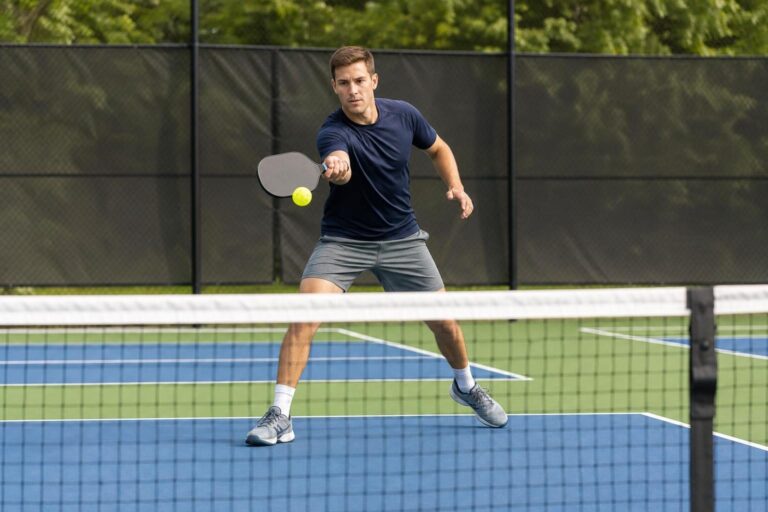
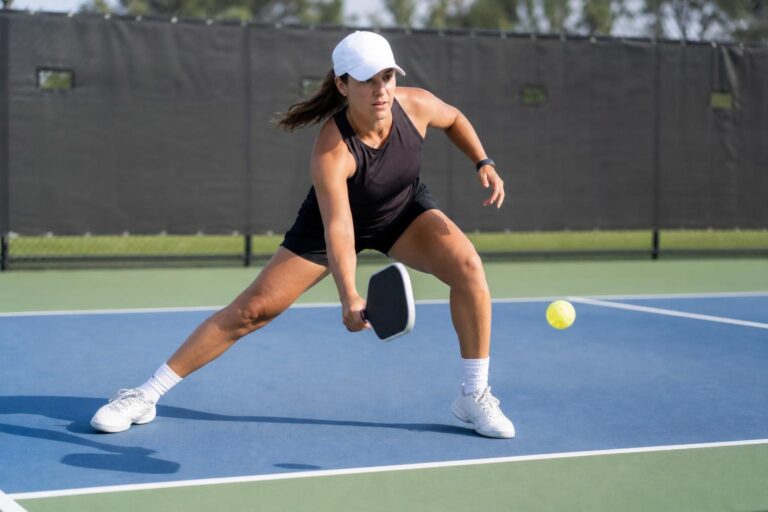
Pickleball involves shuffling, stopping, reaching, and recovering from wide shots. Your shoes need to support movement in multiple directions, not just forward.
A secure upper and stable platform are as important as soft cushioning. If your foot slides over the edge of the shoe during a sideways movement, the shoe is not providing a dependable fit for you.
What useful support looks like
- A stable base: the shoe should feel planted during controlled side steps.
- Lateral reinforcement: supportive material along the sides helps contain your foot when changing direction.
- Secure heel structure: the back of the shoe should hold your heel without painful pressure.
- Controlled flexibility: the forefoot should bend for movement without the entire shoe feeling floppy.
A shoe does not need to feel rigid everywhere. The goal is a balance: enough flexibility to move naturally, with enough structure to keep your foot positioned over the sole.
Grip should feel predictable
Look for traction that lets you stop and change direction confidently. A squeaky outsole is not proof of good grip, and a shoe that works well on one floor may behave differently on another.
Test shoes with gentle movements before playing at full speed. Never assume new footwear will make a dusty, wet, or otherwise unsafe court safe to use.
3. Get the Fit Right, Including Width and Heel Hold
Even a well-designed court shoe can be a poor choice if it does not match your foot shape. Start with your usual size, but treat it as a reference rather than a guarantee. Fit can vary between brands and between models from the same brand.
Try shoes on with the socks you wear for pickleball. If you use orthotics or replacement insoles, bring those too, because they can change the available space and heel position.
Check length, width, and overall volume
Your toes should have room to spread slightly without your forefoot sliding around. Leave a modest amount of space ahead of your longest toe, then confirm that your toes do not strike the front during a controlled stop.
The midfoot should feel held, not compressed. Pressure, tingling, numbness, or pinching are reasons to try a different size or shape rather than hoping the shoe will stretch enough.
- Too short: toes touch the front when you stop or bend.
- Too narrow: the forefoot feels squeezed or pushes noticeably against the sides.
- Too roomy: your foot shifts inside the shoe during lateral movement.
- Poor volume match: the shoe feels tight over the top of your foot despite adequate length.
Choosing pickleball shoes for wide feet
If you have wide feet, look for genuine wide-width options and a toe-box shape that matches your forefoot. Simply buying a longer standard-width shoe can create excess length and heel movement without solving the width problem.
Width labels are not perfectly consistent across manufacturers. Compare how the shoe fits at the forefoot, midfoot, and heel rather than relying only on the size printed on the box.
What to do about heel slipping
A small amount of movement is different from a heel that repeatedly lifts and rubs. First check whether the shoe is too long, too roomy, or poorly shaped for your heel.
A heel-lock lacing pattern may improve hold when the shoe has suitable extra eyelets. However, lacing should fine-tune a good fit, not compensate for a fundamentally unsuitable shoe. Avoid tightening the laces so much that they cause discomfort or numbness.
4. Balance Cushioning, Court Feel, and Durability
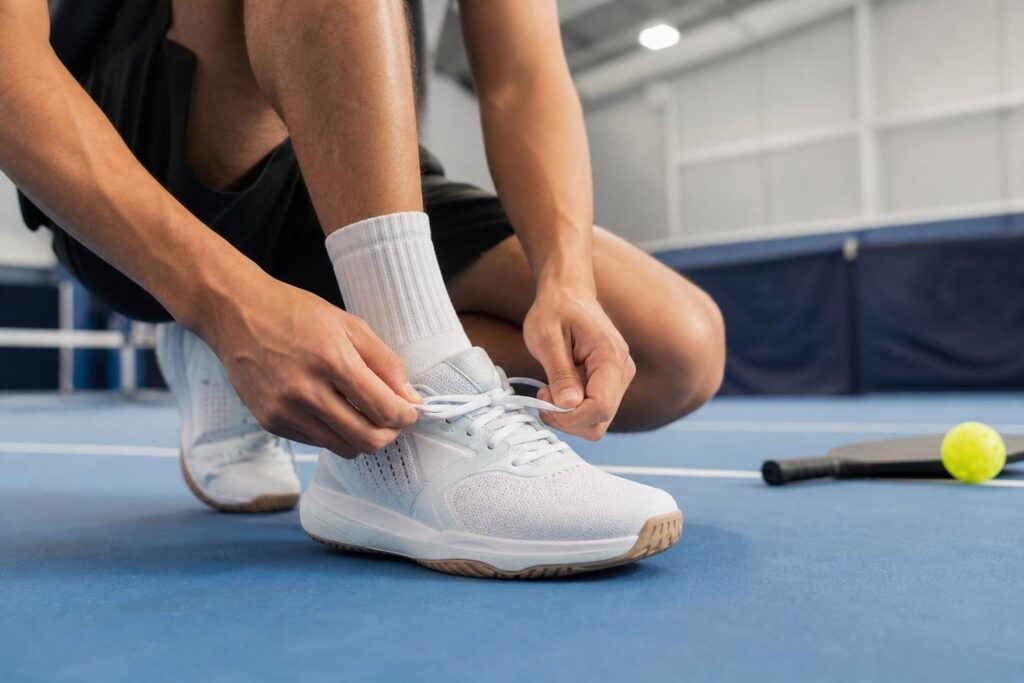
Cushioning matters, particularly during longer sessions, but the softest shoe is not automatically the best pickleball shoe. You also need a stable platform for quick stops and sideways pushes.
Choose cushioning that stays controlled
Look for enough underfoot comfort that the shoe does not feel harsh, while checking that you do not feel perched on a tall, unstable platform. Some players prefer a lower, more connected court feel; others want more cushioning for extended play.
Your body size, movement style, playing frequency, and preferences all influence that balance. Persistent foot, ankle, or knee pain deserves assessment by a qualified healthcare professional rather than repeated shoe changes alone.
Consider weight and breathability
Lighter shoes can feel easier to move in, while more substantial designs may offer additional reinforcement or durability. Neither category is automatically better. Choose the lightest-feeling option that still provides the support and fit you need.
Breathable uppers can improve comfort in warm conditions, but very open materials may offer less abrasion protection in areas that scrape the court. Look at where the shoe places reinforcement, not just how airy it appears.
Inspect high-wear areas
Outdoor players should pay particular attention to outsole coverage and protection around the toe and sides. Players who drag a toe during serves or reach shots may wear those areas quickly.
Indoor players still need durable shoes, but outsole cleanliness and consistent grip may be more pressing concerns than resistance to rough outdoor surfaces.
5. Understand Tennis Shoes, Pickleball Shoes, and Running Shoes
You do not necessarily need a shoe with “pickleball” in its name. The important question is whether it is built for your surface and the multidirectional demands of the game.
Tennis shoes versus pickleball shoes
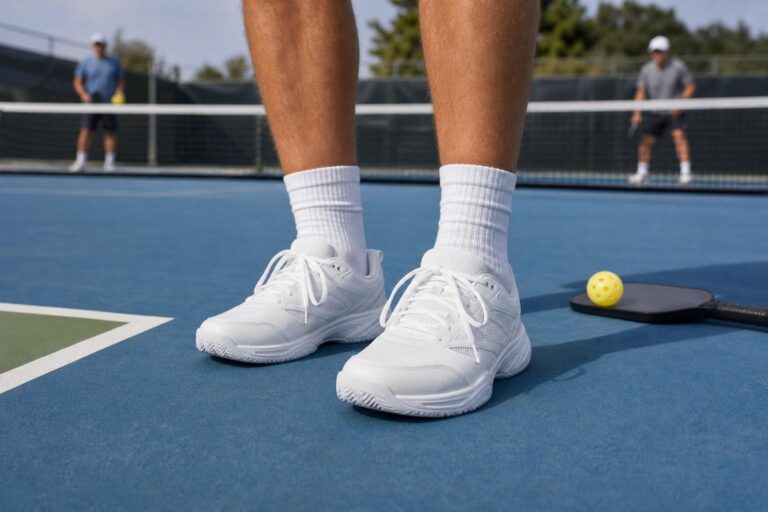
Hard-court tennis shoes can be a practical choice for pickleball because they are designed for lateral movement, abrupt stops, and abrasive courts. Pickleball-specific shoes may offer a different fit, weight, or flexibility, but the label alone does not make them better.
Compare individual models rather than assuming one category always wins. Also check the intended surface: a tennis shoe designed specifically for clay or grass is not the same proposition as a hard-court model.
Can you wear running shoes for pickleball?
Running shoes are primarily designed around forward movement. Many have cushioning and upper construction that do not provide the same lateral containment as court shoes.
For regular pickleball, purpose-built court shoes are the more appropriate choice. A running shoe that feels comfortable while walking may still feel unstable when you shuffle or stop sideways.
If you are trying pickleball for the first time, ask whether the facility offers suitable rental or loan footwear. Avoid treating casual comfort as evidence that a shoe is ready for competitive court movement.
6. Compare Models and Use a Practical Try-On Checklist
Once you know your surface and fit needs, narrow your search to a few suitable court shoes. Compare their intended use, available widths, support features, and return conditions.
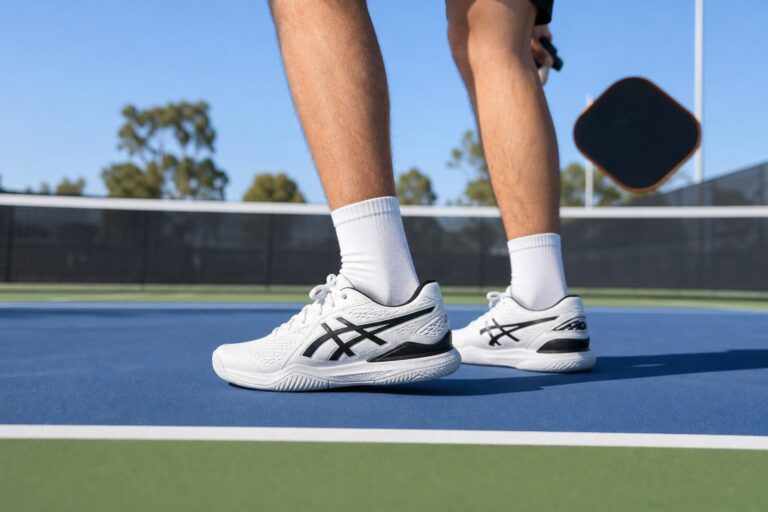
A model such as the ASICS GEL-RENMA is one pickleball-specific option you may encounter. As with any individual model, consider its fit, court grip, and support together rather than choosing it solely for the brand or cushioning name.
Reviews can help identify issues to investigate, such as a snug forefoot or firm underfoot feel. They cannot tell you exactly how the shoe will fit your feet.
Follow this fitting sequence
- Try both shoes. Fit the larger foot comfortably if your feet differ in size.
- Wear your playing socks. Include any orthotics you normally use.
- Lace the shoes securely. Keep tension even without overtightening.
- Check toe clearance. Your toes should not hit the front during a gentle stop.
- Make controlled lateral steps. Check for internal sliding or pressure along the sides.
- Check heel hold. Look for repeated lifting or rubbing.
- Stay in them for several minutes. Notice developing pressure points.
- Confirm the return policy. Understand whether indoor try-ons or court use affect eligibility.
Try shoes later in the day or after normal activity if your feet tend to swell. Do not expect a break-in period to fix an incorrect size or shape.
Spend on suitability, not just features
A more expensive shoe is not automatically a better match. Prioritize fit, surface compatibility, and stability before cosmetic details or feature names.
If you play frequently, durability may justify spending more. If you play occasionally, a simpler court shoe that fits well may meet your needs.
7. Care for Your Shoes and Know When to Replace Them
Good maintenance helps preserve traction and comfort. Keep court shoes separate from everyday footwear when practical, especially if you play on indoor gym floors.
- Remove loose dirt: gently brush the outsoles and follow the manufacturer’s cleaning guidance.
- Air-dry after play: loosen the laces and allow moisture to escape.
- Avoid excessive heat: do not leave shoes against heaters or in other very hot locations.
- Check the tread: inspect the forefoot, heel, and any areas you drag.
- Inspect the upper: look for tears, loose seams, or stretched material that no longer holds your foot securely.
There is no universal replacement schedule. Court texture, playing frequency, movement habits, and shoe construction all affect wear.
Replace shoes when traction has noticeably deteriorated, the outsole is worn smooth in important areas, the upper no longer contains your foot, or the shoe feels substantially less supportive or comfortable. An intact-looking upper does not guarantee the rest of the shoe is still performing well.
Conclusion: Choose for Your Court and Your Feet
Learning how to choose pickleball shoes starts with three priorities: match the outsole to your court, find a secure and comfortable fit, and check support during sideways movement. Then balance cushioning, breathability, and durability around how often you play.
Whether you choose a pickleball-specific model or a suitable tennis or indoor court shoe, judge the individual pair—not just its label. The best choice is one that lets you move confidently without pinching, slipping, or feeling unstable.