Full-Size vs Half-Court Pickleball Nets: Which Fits Your Practice Space?
This article contains affiliate links. If you buy through them, we may earn a commission at no extra cost to you.
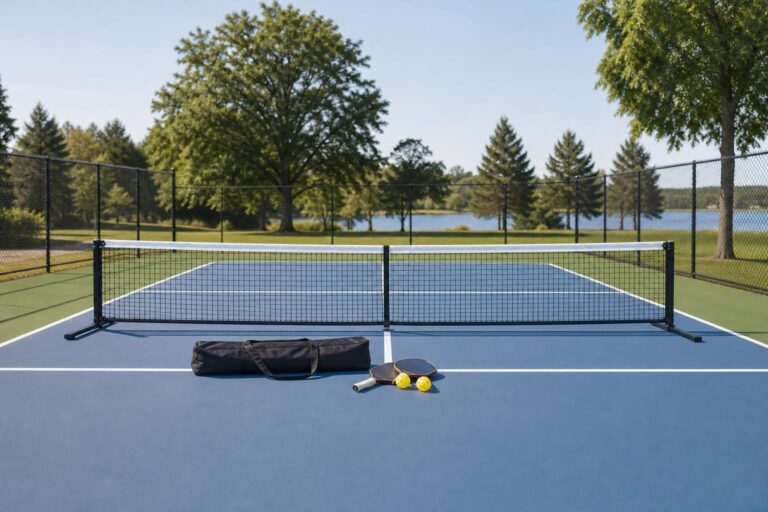
Choosing between full-size and half-court pickleball nets starts with your available space, but it also depends on what you want to practice. A regulation-width net supports realistic games and full-court drills, while a shorter net can make focused practice possible in a driveway, garage, or small patio. When comparing full size vs half court pickleball nets, consider the entire setup—not just whether the frame fits.
This article is part of our guide: Portable Pickleball Net Buying Guide: Size, Stability, and Setup
Full-Size vs Half-Court Pickleball Nets at a Glance
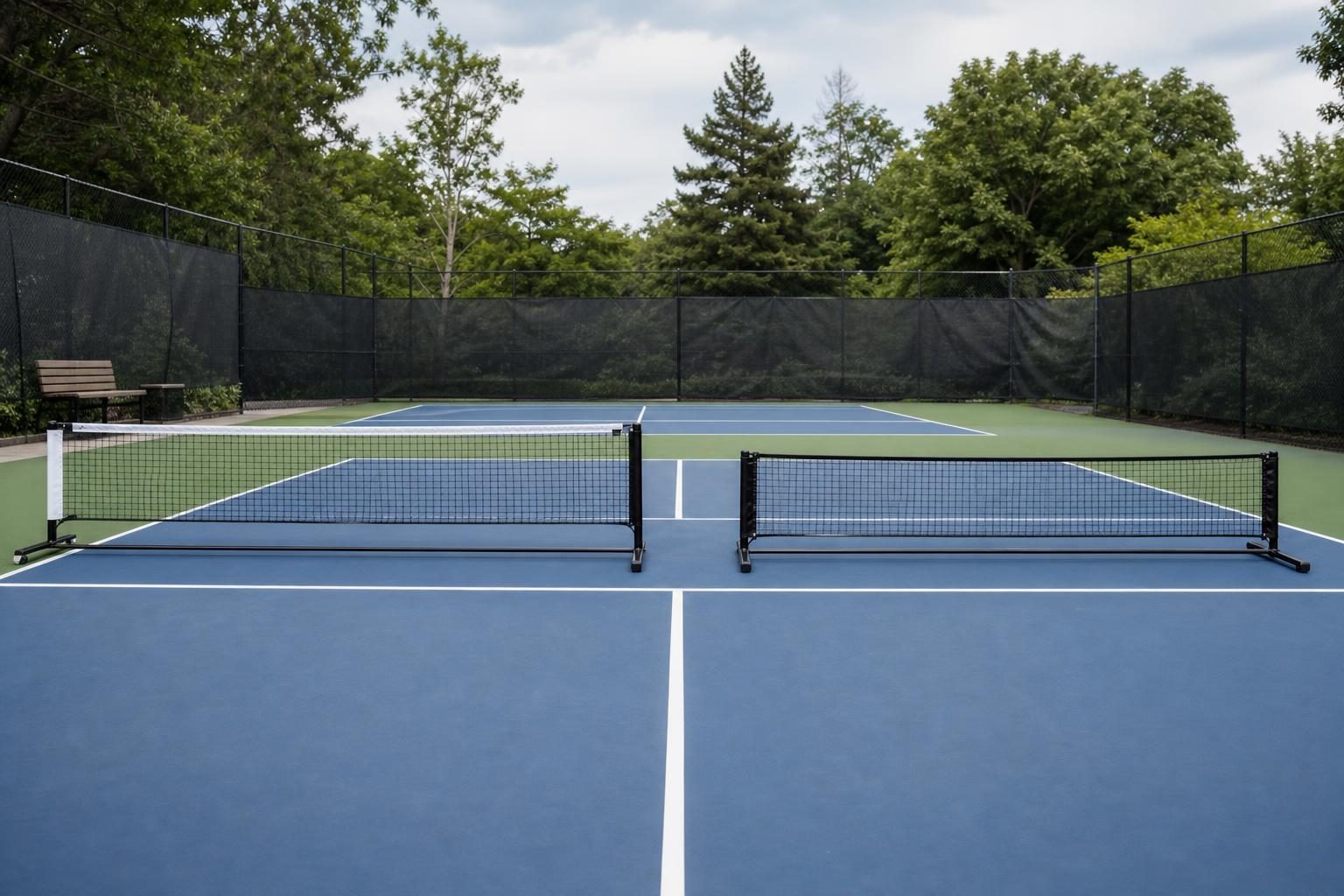
A full-size portable pickleball net is designed to span a regulation court. A half-court net is a shorter practice option, but the term is not standardized. Check the actual dimensions rather than assuming every compact net is exactly half the width of a full-size model.
| Feature | Full-Size Portable Net | Half-Court Portable Net |
|---|---|---|
| Typical width | Regulation net length is at least 22 feet | Varies by product; often around 10–12 feet |
| Playing height | Should provide 36 inches at the sidelines and 34 inches at the center | Check specifications; some match pickleball heights, while others are adjustable |
| Space required | Enough width for the net frame, plus court space and safe player clearance | A smaller footprint, but still needs room for players and safe movement |
| Best uses | Full-court games, serving, returns, and realistic doubles positioning | Dinking, controlled volleys, touch drills, and narrow-space practice |
| Portability | Usually has longer or more frame components to transport | Often easier to carry and store, depending on construction |
| Main limitation | Needs more usable space | Cannot reproduce full-court width, angles, or doubles coverage |
Full-Size Portable Pickleball Nets: Best for Realistic Court Practice
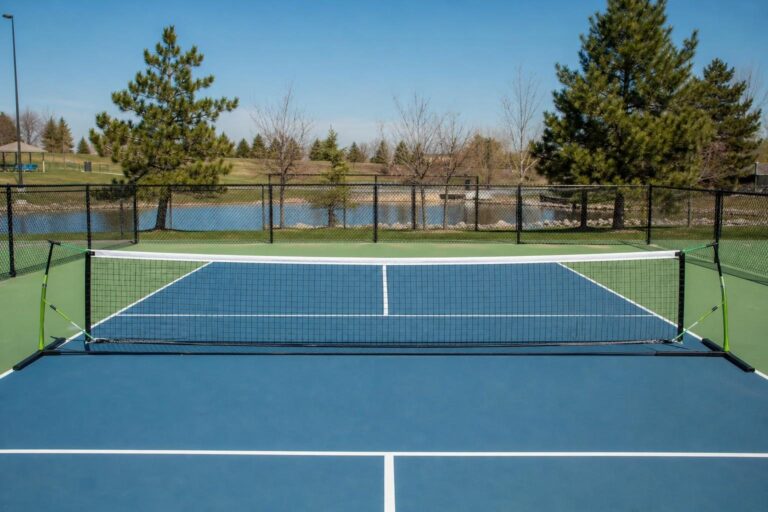
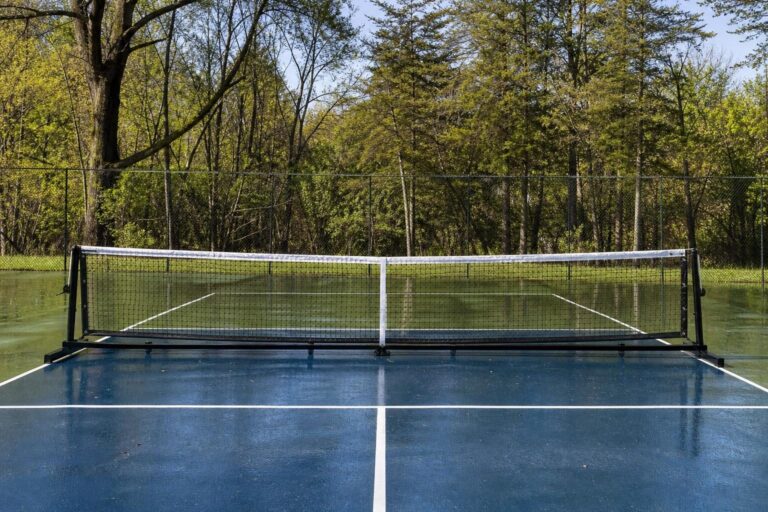
A regulation pickleball court measures 20 feet wide by 44 feet long. The net extends beyond the sidelines, with a regulation net length of at least 22 feet. The net height should be 36 inches at the sidelines and 34 inches at the center.
Those dimensions matter because realistic practice depends on more than clearing a net. Court width affects shot selection, crosscourt angles, recovery positions, and the space you must defend.
Where a Full-Size Net Works Best
A full-size portable net is a strong choice for a shared recreation area, a suitable driveway, or a court space that lacks a permanent net. It also suits players who regularly set up temporary courts on approved hard surfaces.
However, fitting a 22-foot net into a space does not mean you have enough room for a full game. You also need space behind the baselines and outside the sidelines to move safely. Walls, parked vehicles, steps, and landscaping can make an otherwise large area unsuitable.
What You Can Practice
- Serving and returning: With sufficient court length and markings, you can practice depth, placement, and recovery.
- Crosscourt dinking: Full width preserves the angles and distances you encounter during games.
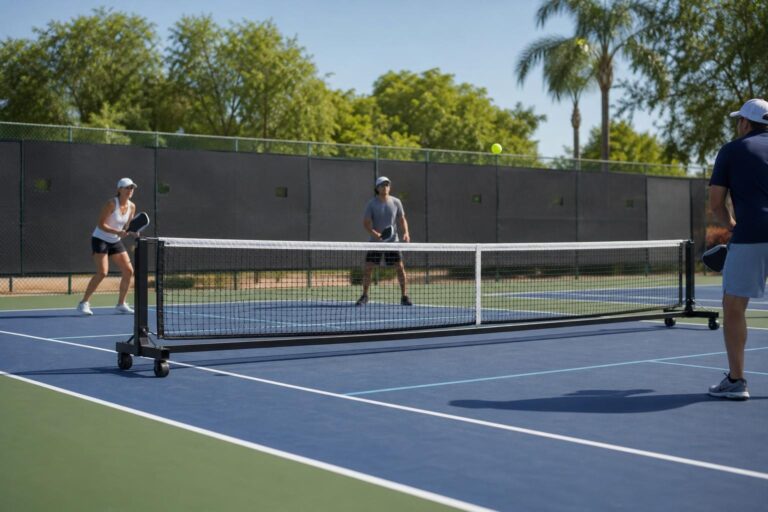
- Doubles movement: Partners can work on spacing, middle coverage, and coordinated movement.
- Transition play: A complete court allows practice moving from the baseline toward the non-volley zone.
- Recreational games: You can play singles or doubles when the surrounding space is suitable.
Trade-Offs to Consider
Full-size systems generally involve more frame material and a larger storage package than compact nets, although weight and packed size vary. Check the carrying-bag dimensions if the net needs to fit in a small vehicle or crowded closet.
Assembly design also matters. Clearly labeled frame sections, secure connections, and effective net tensioning can make regular setup less frustrating. Do not assume a full-size net is automatically more stable; base design, construction, and wind exposure all affect stability.
Half-Court Portable Pickleball Nets: Best for Compact, Focused Practice
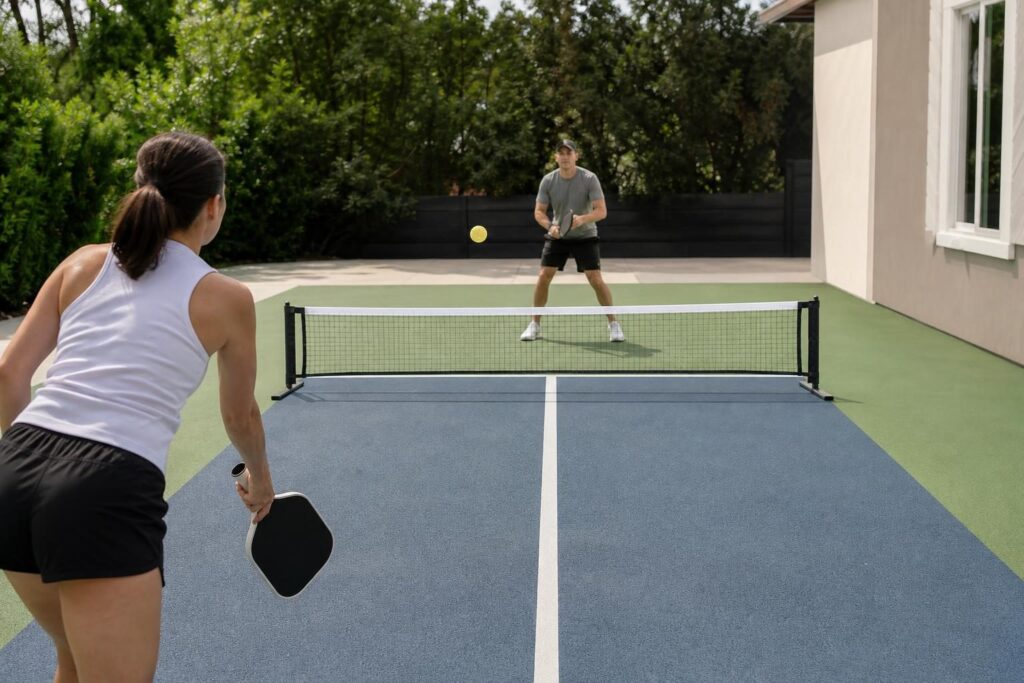
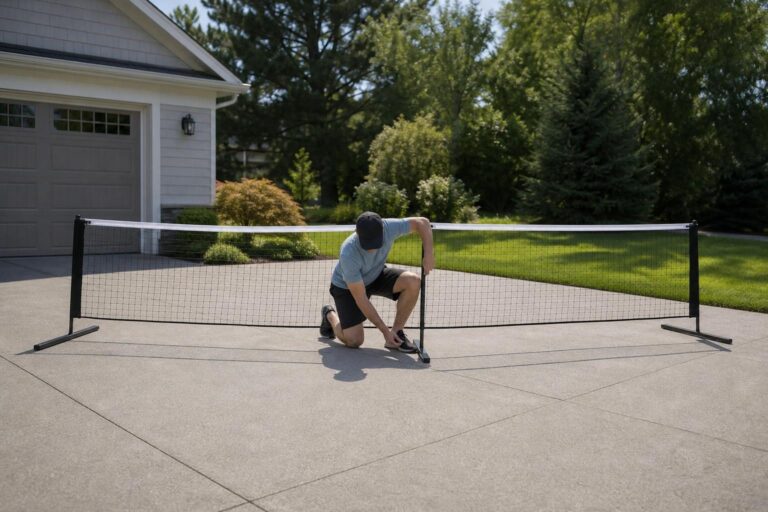
A half-court net provides a shorter barrier for practicing in spaces that cannot accommodate a regulation-width setup. Many compact practice nets are roughly 10–12 feet wide, but dimensions vary considerably.
Think of this option as a training tool rather than a scaled-down replacement for every aspect of pickleball. It can support useful repetition, but it changes the available angles and the amount of court you cover.
Where a Half-Court Net Works Best
Compact nets can work well on a level driveway, a clear garage floor, or a suitable patio. They are particularly useful when your practice area is narrow or when you need to pack everything away after each session.
Width is only one measurement to check. You still need adequate depth on both sides of the net for your intended drills. For practice that preserves the normal non-volley-zone distance, the non-volley-zone line belongs 7 feet from the net on each side, with additional room behind it for players.
What You Can Practice
- Straight-ahead dinking: Work on soft contact, controlled height, and consistent placement.
- Controlled volleys: Practice compact swings and paddle positioning with a partner.
- Resets and touch: Rehearse soft responses at manageable speeds and distances.
- Beginner fundamentals: Introduce ready position, contact point, and basic net clearance.
- Target-based drills: Use safe, flat markers to create placement goals within the available area.
Trade-Offs to Consider
A narrow net cannot reproduce full-width crosscourt dinks, wide passing shots, or realistic doubles positioning. It can improve specific skills, but some habits still need checking on a regulation court.
Pay particular attention to height. A compact multisport net may not provide the height or center shape you want for pickleball. If realistic ball clearance is a priority, choose a model with clearly stated pickleball dimensions and suitable tension adjustment.
Also, avoid turning a cramped practice area into a fast-paced game space. A short net does not remove the need for safe clearance around players.
Measure Your Practice Space Before Buying
Before choosing either option, measure the usable area rather than the total footprint of your driveway, garage, or patio.
- Measure the clear width. Include the net’s supporting feet, which may extend beyond the mesh or uprights.
- Measure the available depth. Decide whether you have room for dinking, longer rallies, or full-court practice.
- Check the surface. Look for cracks, loose gravel, slippery patches, and uneven transitions that could affect footing.
- Identify obstacles. Account for walls, doors, vehicles, overhead fixtures, and nearby pedestrian routes.
- Check storage and transport. Compare packed dimensions, total weight, and whether you can comfortably move the bag.
If you plan to mark a temporary court, use a surface-appropriate method and obtain permission where needed. Keep markings flat and avoid anything that could create a slipping or tripping hazard.
Which Should You Choose?
For Players Who Want Full Games: Choose Full-Size
If you have sufficient court space and safe clearance, a full-size portable net is the better choice for singles, doubles, and match-like practice. It gives you the correct width for shot placement and positioning without requiring a permanent installation.
For Small-Space Home Practice: Choose Half-Court
If your goal is regular dinking or controlled partner drills in a narrow space, choose a half-court net. A compact setup that fits safely and gets used frequently is more useful than a regulation-width net you cannot comfortably deploy.
For Beginners: Choose Based on the Practice Goal
A half-court net can be a practical introduction to touch and coordination. However, beginners who want to learn scoring, serving, court coverage, and doubles positioning will benefit from access to a full-size setup on a properly marked court.
For Coaches and Group Organizers: Prioritize Session Needs
Choose full-size nets for games, court-based instruction, and doubles drills. Compact nets can be useful for separate skill stations, provided each station has enough room and balls are not regularly entering neighboring practice areas.
For Buyers Who Need Both: Consider a Convertible System
Some portable systems offer more than one setup width. This can be helpful if you alternate between home drills and full-court play. Verify the actual configurations, net heights, and included components before buying; “adjustable” may refer only to height, not width.
Conclusion: Match the Net to the Practice You Can Do Safely
Choose a full-size net for realistic games and complete-court training. Choose a half-court net for focused drills in a smaller space. The best portable pickleball net is the one that fits your usable area, supports your goals, and leaves enough room to move safely.