Thermoformed vs Cold-Pressed Pickleball Paddles: What’s the Difference?
This article contains affiliate links. If you buy through them, we may earn a commission at no extra cost to you.
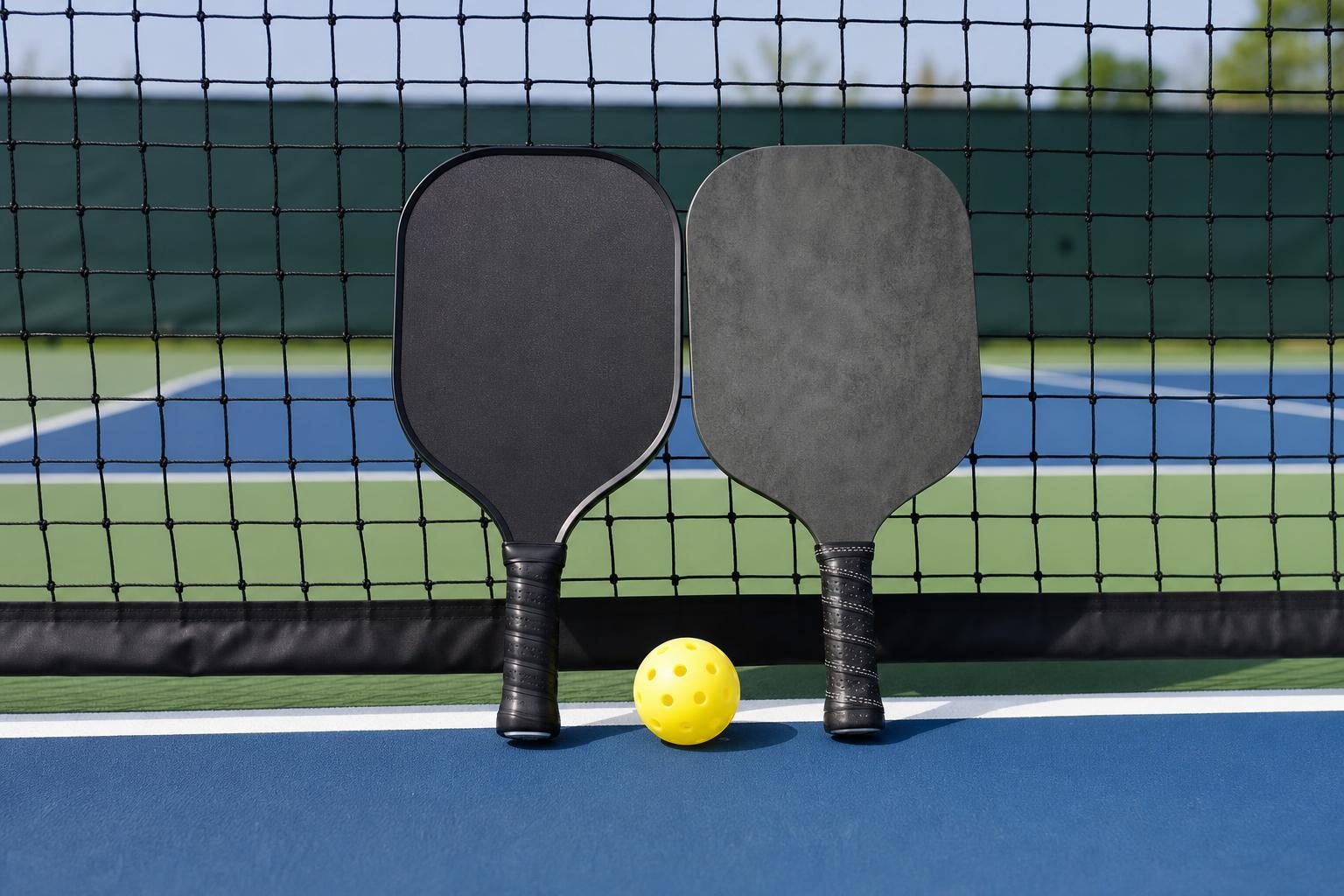
Thermoformed and cold-pressed pickleball paddles can look almost identical, yet feel noticeably different during a rally. Their construction can influence power, touch, stability, and feedback—but neither manufacturing method guarantees a better paddle. When comparing thermoformed vs cold pressed pickleball paddles, the goal is to understand the typical trade-offs, then match the actual paddle to your game.
This article is part of our guide: How to Choose a Pickleball Paddle: Materials, Weight, Shape, and Grip
Thermoformed vs Cold-Pressed Pickleball Paddles at a Glance
The main difference is how the paddle’s components are bonded and shaped during manufacturing. Thermoforming uses heat and pressure, often alongside a reinforced perimeter. Cold-pressed construction generally bonds the face and core layers without the same heated molding process.
These terms describe broad construction approaches, not tightly standardized categories. Materials, core thickness, paddle shape, and weight distribution can matter just as much as the manufacturing label.
| Feature | Thermoformed Paddles | Cold-Pressed Paddles |
|---|---|---|
| Construction | Uses heat and pressure to bond and shape the assembly; often includes perimeter reinforcement | Typically bonds face sheets to a core without the same heated molding process |
| Typical feel | Often firmer, more solid, and more responsive | Often softer or more muted, depending on materials |
| Power and pop | Many models emphasize easy pace and lively counters | Many models emphasize predictable response rather than extra rebound |
| Touch and control | Can require adjustment on resets and short volleys | Often approachable for players who prefer a less lively response |
| Stability | Perimeter reinforcement can help resist twisting on off-center contact | Varies substantially with shape, weight distribution, and construction |
| Spin | Depends heavily on surface texture, materials, and swing technique | Also capable of strong spin; cold pressing does not prevent it |
| Durability considerations | Bonding quality and core integrity remain important despite reinforcement | Face bonding, edge protection, and core integrity remain important |
| Typical buyer appeal | Players seeking a solid response, stability, and accessible offense | Players seeking predictable touch, manageable rebound, or good value |
What Is a Thermoformed Pickleball Paddle?
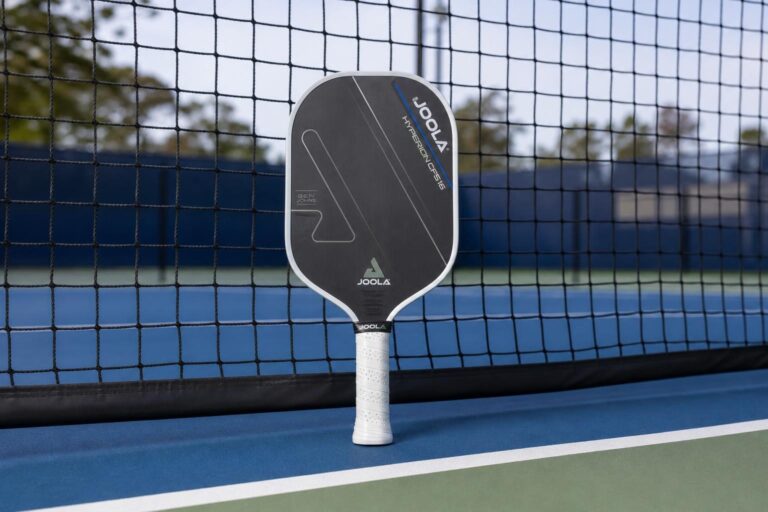
A thermoformed pickleball paddle is made using heat and pressure as part of its molding and bonding process. Many familiar designs combine composite face sheets, a honeycomb core, and reinforcement around the paddle’s perimeter.
You may also see terms such as unibody construction, carbon-wrapped edges, or foam-injected perimeter. These features often appear alongside thermoforming, but they are not interchangeable definitions. Check the manufacturer’s construction details rather than assuming every thermoformed paddle has the same internal design.
How Thermoformed Paddles Typically Play
Many thermoformed paddles have a firm, connected feel at contact. Their construction can produce a stable hitting platform, particularly when perimeter reinforcement helps the paddle resist twisting.
They are also commonly associated with added power and pop. Power usually refers to the pace available on fuller swings, such as drives and serves. Pop describes the lively rebound you notice on shorter strokes, including punch volleys and counters.
Those qualities can help you attack, but they may make the soft game less forgiving. A paddle that sends counters back quickly can also send an imperfect reset farther than intended.
Advantages of Thermoformed Paddles
- Accessible offense: Many designs make it easier to generate pace without taking an oversized swing.
- Solid contact: A reinforced structure can feel stable during fast exchanges.
- Potentially better off-center response: Certain designs maintain more consistent results when contact drifts away from the center.
- Plenty of variety: Thermoformed paddles are available in control-oriented, all-court, and power-focused configurations.
Potential Drawbacks
A lively paddle can take time to manage. Players switching from a softer model may initially pop up dinks, float resets, or hit blocks too deep.
Thermoforming also does not make a paddle indestructible. Poor bonding, face separation, and damaged or crushed core material can still occur. Core breakdown can change rebound behavior, so an unexpectedly hotter response is not necessarily a desirable “break-in.”
What Is a Cold-Pressed Pickleball Paddle?
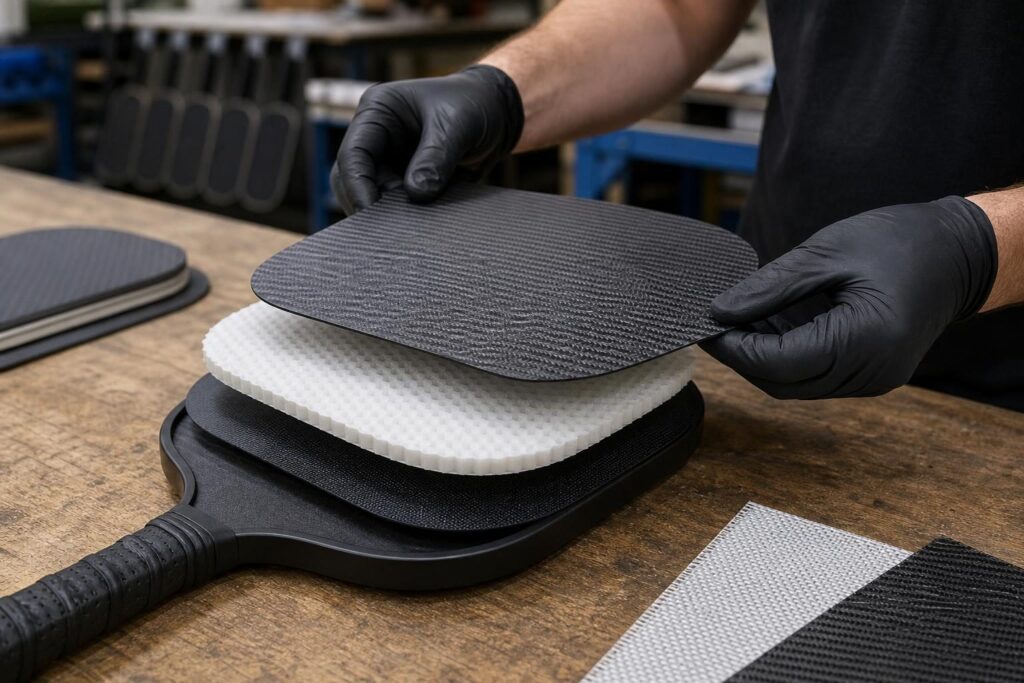
A cold-pressed paddle generally uses an adhesive bonding process to join its face sheets and core without the same heated molding approach associated with thermoforming.
The term does not specify the face material, core thickness, or quality level. A cold-pressed paddle might use carbon fiber, fiberglass, or another composite face, and its playing characteristics will depend on the whole design.
How Cold-Pressed Paddles Typically Play
Many traditional cold-pressed paddles offer a comparatively muted, less springy response. That can make it easier to judge how much pace you are adding to a dink, drop, or defensive reset.
However, cold-pressed does not automatically mean soft or low-powered. A thin core, a lively face material, or a head-heavy design can produce a very different experience. Likewise, a thick thermoformed paddle can be more controllable than an aggressive cold-pressed model.
Advantages of Cold-Pressed Paddles
- Predictable touch: Less lively models can help players regulate depth on short shots.
- Approachable learning curve: Beginners may find a restrained response easier to manage while developing technique.
- Potential value: Simpler construction can offer a useful combination of performance and affordability, although prices overlap.
- Familiar feedback: Players who dislike a stiff, punchy feel may prefer the response of a conventional cold-pressed design.
Potential Drawbacks
Some cold-pressed paddles require more effort to generate finishing pace. Players with compact swings may notice that difference on counters and attacking volleys.
Less perimeter reinforcement can also mean reduced stability in some models. However, that is not universal: paddle width, total weight, and weight distribution can substantially affect resistance to twisting.
Cold-pressed paddles can develop durability problems too, including adhesive failure, loose edge guards, and core damage. Construction quality matters more than assuming one category always lasts longer.
Which Should You Choose?
The best choice depends on what you want the paddle to do—not simply which construction method sounds more advanced.
For Beginners: Prioritize Predictability
Recommendation: Start with a forgiving, control-oriented paddle, often a cold-pressed model with a thicker core and a broad face.
A manageable response can help you learn contact, placement, and the soft game. A control-focused thermoformed paddle can also work well, provided it is not too lively or difficult to swing.
For Power Players: Consider Thermoformed Construction
Recommendation: Look at thermoformed models designed for power or all-court play.
They can suit players who want stronger drives, firmer counters, and a solid feel through contact. Make sure you can still keep return-of-serve depth, resets, and dinks under control.
For Touch-First Players: Favor a Restrained Response
Recommendation: Try a control-oriented cold-pressed paddle first, then compare it with a softer-playing thermoformed option.
If your game revolves around drops, patient dinking, and neutralizing attacks, predictable rebound may matter more than extra pop. Do not rule out either category without evaluating the individual model.
For Improving Intermediate Players: Choose Around Your Weakness
Recommendation: Pick a stable thermoformed all-court paddle if you need easier offense; choose a more muted design if controlling pace is your bigger challenge.
Buying more power will not automatically improve your game. If most of your errors are long volleys and popped-up resets, additional rebound may amplify the problem.
For Budget-Conscious Buyers: Compare the Whole Package
Recommendation: Consider well-made cold-pressed paddles, but compare actual prices, warranties, and specifications across both categories.
Do not pay extra for a manufacturing label alone. A comfortable handle, suitable swing weight, and dependable construction are more useful than a feature you cannot connect to your playing needs.
What to Check Before Buying Either Type
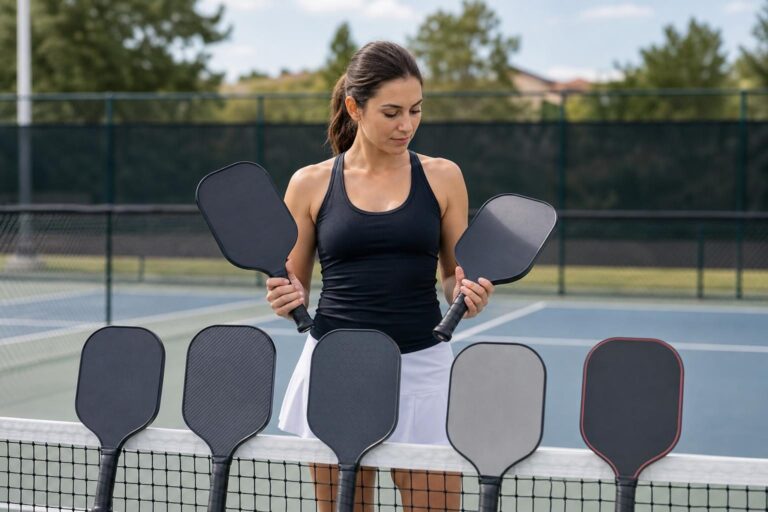
If possible, demo paddles using the same ball and similar court conditions. Compare more than serves and full-power drives.
- Hit dinks and drops: Can you judge depth without constantly adjusting?
- Block hard shots: Does the ball stay low, or launch farther than expected?
- Try quick exchanges: Can you maneuver the paddle comfortably?
- Check off-center contact: Does the face twist or lose substantial response?
- Confirm competition eligibility: If you play sanctioned events, check the exact model against the applicable governing body’s approved list.
Also remember that construction alone does not determine spin. Surface texture, face materials, paddle condition, and your technique all contribute.
Conclusion
Thermoformed paddles often appeal to players seeking solid contact, stability, and accessible power. Cold-pressed paddles often appeal to those who prefer predictable touch and a less lively response. Treat those as starting points, not guarantees: the best paddle is the specific model that lets you attack confidently while keeping your soft game under control.