How Long Does a Pickleball Paddle Last?
This article contains affiliate links. If you buy through them, we may earn a commission at no extra cost to you.
A pickleball paddle can last for years with occasional play and good care, but frequent, hard-hitting use can shorten its useful life considerably. The important distinction is between a paddle that still looks intact and one that still performs consistently. Here are answers to the most common questions about paddle lifespan, wear, and replacement.
This article is part of our guide: How to Choose a Pickleball Paddle: Materials, Weight, Shape, and Grip
Pickleball Paddle Lifespan: Your Questions Answered
1. How long does a pickleball paddle last?
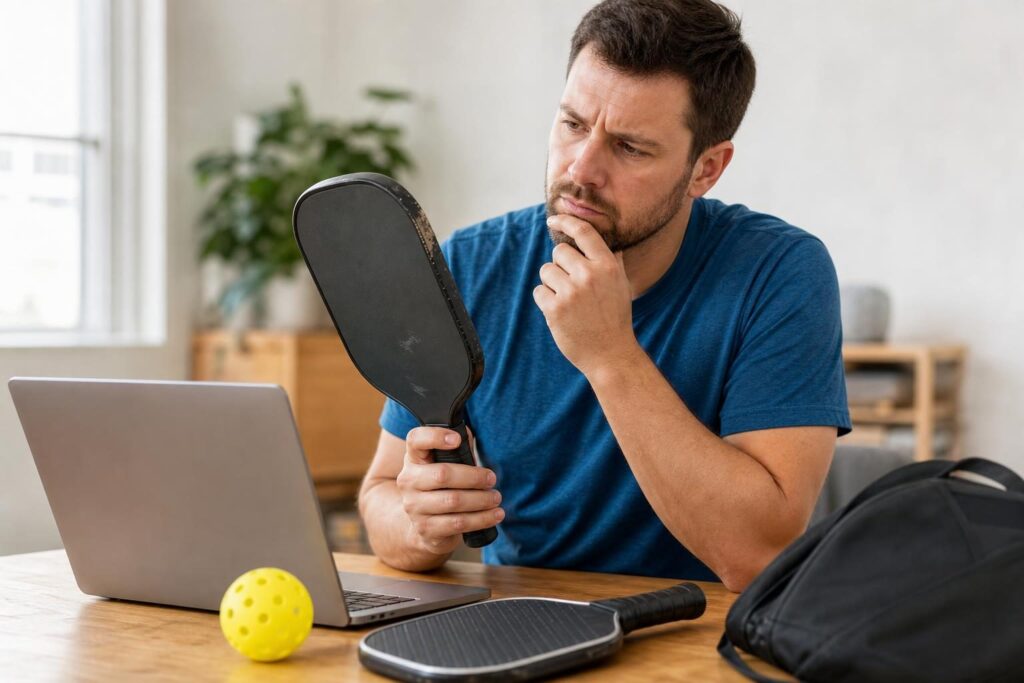
A pickleball paddle can last anywhere from several months under demanding use to several years with lighter play. There is no universal expiration date because construction, playing frequency, storage, and your expectations all affect when it needs replacing.
A recreational player may be happy using the same paddle for years. A competitive player might replace one sooner because reduced spin, inconsistent rebound, or a change in feel affects their game—even if the paddle is still usable.
Think of paddle lifespan in two ways:
- Structural lifespan: How long the paddle remains intact and safe to play with.
- Performance lifespan: How long it delivers the response, control, and surface friction you expect.
Performance can decline before obvious structural damage appears.
2. Does playing more often wear out a paddle faster?
Yes, frequent play generally wears out a paddle faster because it increases ball impacts, surface wear, and stress on the construction. However, hours on court are only part of the picture.
Hard drives and repeated speedups place different demands on a paddle than mostly soft dinking. Drilling can also accumulate impacts quickly, especially when you repeatedly strike the same area of the face.
| Playing pattern | What to watch for |
|---|---|
| Occasional recreational games | Storage damage, aging grips, and accidental impacts |
| Several sessions each week | Face wear, grip deterioration, and changes in rebound |
| Frequent drilling and competitive play | Concentrated surface wear and changes in core or face integrity |
Rather than replacing a paddle on a fixed calendar, check it regularly and pay attention to changes during familiar shots.
3. Do more expensive paddles or different materials last longer?
A higher price or a particular face material does not guarantee a longer-lasting paddle. Overall construction quality, bonding, core design, and care matter alongside the materials listed on the packaging.
Carbon fiber, fiberglass, and other composite faces can all experience wear. On many paddles, the surface texture can change through use even while the face remains structurally sound.
Wood paddles may remain usable for a long time, but their weight and playing characteristics differ from those of many modern composite paddles. That makes durability alone an incomplete comparison.
When choosing a paddle, consider build quality, warranty terms, and whether its playing characteristics suit you—not just the price or a material name.
4. What are the signs that my pickleball paddle is worn out?
The main warning signs are inconsistent rebound, reduced spin, visible damage, unusual noises, or movement in the handle. A cosmetic scuff alone usually is not a reason to replace a paddle.
- Uneven response: Similar, centered shots come off the face differently.
- Reduced spin: Your usual technique produces less spin after the face has been cleaned appropriately.
- Cracks or separation: Damage appears in the face, edge, or handle connection.
- New noises: Rattling, buzzing, or crackling develops.
- Handle movement: The handle feels loose or unstable.
Check other explanations before blaming the paddle. A different ball, colder conditions, fatigue, or inconsistent contact can also change how shots feel.
5. How can I tell if my paddle has a dead spot?
A dead spot is an area that repeatedly produces a noticeably weaker or different rebound than nearby comparable areas. It is not simply the normal drop in performance when you miss the sweet spot.
Start with gentle ball bounces across the face, comparing corresponding areas on either side of the center. Listen and feel for a localized difference, then see whether it also appears during controlled shots.
This is only a screening check, not a definitive diagnosis. Paddles naturally respond differently near the edges, and sound alone cannot prove internal damage.
If the same area consistently behaves differently, contact the manufacturer or retailer for guidance before attempting a repair.
6. What is paddle delamination, and does it mean I need a replacement?
Delamination is separation between bonded layers, and a paddle with suspected delamination should be assessed for replacement. Players sometimes use the term broadly, but not every unusual sound or rebound problem has the same cause.
Face separation, core damage, and bonding failures can produce overlapping symptoms. Depending on the failure, a paddle may feel unusually lively, soft, inconsistent, or noisy.
Do not press, bend, or strike the paddle aggressively to investigate. Document what you notice and ask the manufacturer about inspection or warranty options. Stop using it if there are cracks, sharp edges, or an unstable handle.
7. Does a worn grip mean I need a new paddle?
No, a worn grip usually means you need a new grip or overgrip, not a new paddle. The grip is a replaceable wear item and may deteriorate well before the paddle itself.
Replace or refresh it when it becomes slippery, flattened, torn, or difficult to hold securely. Sweat and frequent play can make this necessary relatively often.
A fresh grip can improve comfort and help you assess whether the paddle itself still feels right. However, distinguish a slippery grip from a loose handle: replacing the wrapping will not fix structural movement beneath it.
8. Can heat, cold, or moisture shorten a paddle’s life?
Yes, extreme temperatures and prolonged moisture exposure can shorten a paddle’s life or damage its components. Heat can affect adhesives and other materials, while cold can change how some materials respond to impacts.
Avoid leaving your paddle in a hot vehicle or storing it for long periods in an unheated outdoor space. Follow any temperature or storage guidance provided by its manufacturer.
After damp play, wipe the paddle dry and let the grip air out before enclosing it. Do not soak the paddle or use direct heat to dry it. A cover helps protect against scratches, but it does not make extreme-temperature storage safe.
9. How can I make my pickleball paddle last longer?
You can extend your paddle’s useful life through careful storage, appropriate cleaning, and avoiding unnecessary impacts. Small habits help protect both the surface and the structure.
- Use a protective cover: Keep the face from rubbing against other equipment in your bag.
- Store it indoors: Choose a dry place away from extreme heat and cold.
- Clean it as directed: Use only methods suitable for that paddle’s face material.
- Avoid abrasive experiments: Household scrubbers, solvents, and unauthorized treatments can damage the surface.
- Keep it off the court: Avoid scraping it along the ground or using it to support your weight.
- Inspect it regularly: Look for developing cracks, edge separation, and handle movement.
If you use a paddle-cleaning eraser, first confirm that the manufacturer recommends it for your specific surface.
10. When should I replace my paddle instead of repairing it?
Replace your paddle when structural damage or persistent performance problems cannot be resolved through routine maintenance or manufacturer-supported service. A dirty face or worn grip calls for maintenance; a cracked face or unstable handle is a different matter.
Before buying another paddle, clean the face appropriately, check the grip, and compare performance under similar conditions. If possible, briefly compare it with a familiar paddle using the same ball.
Check your warranty before attempting repairs. Coverage varies, and normal wear may be treated differently from manufacturing defects. Keep your purchase details and photograph visible damage.
Avoid makeshift structural repairs with household glue, sanding, or added coatings. These can change performance, affect warranty eligibility, and potentially make the paddle unsuitable for sanctioned competition.
Conclusion
How long a pickleball paddle lasts depends more on use, construction, and care than on a fixed replacement schedule. Maintain the grip and face, protect it during storage, and watch for consistent changes in performance. Replace it when damage or unreliable response—not simply its age—makes it time to move on.