How to Choose a Pickleball Paddle: Materials, Weight, Shape, and Grip
This article contains affiliate links. If you buy through them, we may earn a commission at no extra cost to you.
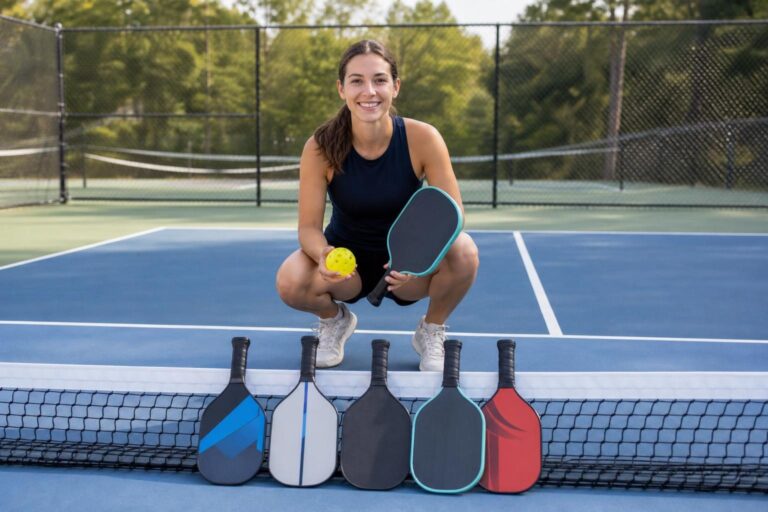
Learning how to choose a pickleball paddle starts with finding a comfortable fit—not chasing the most expensive model or the biggest power claims. The right paddle should feel manageable in your hand, suit the shots you are learning, and give you room to improve. This guide explains materials, weight, shape, grip, construction, and value so you can compare your options with confidence.
1. Start With Your Experience, Priorities, and Playing Conditions
Before comparing specifications, think about what you need the paddle to help you do. Most beginners benefit from a forgiving paddle that makes it easier to contact the ball cleanly and control its direction.
Power matters, but a paddle that launches the ball quickly is not automatically better. If it makes serves, returns, and soft shots harder to keep in play, that extra speed may work against you.
Identify your main priority
- Forgiveness: Look for a generous hitting area and stable feel when contact is slightly off-center.
- Control: Prioritize predictable response on dinks, blocks, and placement shots.
- Power: Consider how easily the paddle produces pace on serves, drives, and overheads.
- Maneuverability: Choose something you can reposition comfortably during quick exchanges.
- Comfort: Pay attention to grip fit, balance, and how the paddle feels during repeated swings.
These qualities overlap, and improving one can involve a trade-off elsewhere. A longer paddle may provide reach, for example, while feeling less maneuverable than a shorter, wider option.
If you plan to enter organized competition, check the paddle requirements for your event. Verify the exact model against the relevant approved-equipment list rather than assuming every paddle from a familiar brand is eligible.
2. Understand Paddle Face Materials, Cores, and Construction
A paddle’s performance comes from the complete design: face material, surface finish, core, thickness, shape, and manufacturing method. No single material label tells you exactly how a paddle will play.
Common paddle face materials
| Material | Typical characteristics | What to consider |
|---|---|---|
| Wood | Simple, durable construction, often found in basic recreational sets | Often heavier and less refined in feel than modern composite designs |
| Fiberglass | Often associated with a lively response and accessible power | Control and forgiveness still depend on the core and overall construction |
| Carbon fiber | Common in paddles designed around consistent response, control, and spin | Carbon type alone does not establish performance or quality |
| Graphite | Often used in thin, stiff paddle faces | Compare the complete paddle rather than treating the label as a separate performance tier |
Graphite and carbon terminology can overlap in product descriptions. Likewise, “raw carbon” describes a surface approach, not a guarantee that one paddle will outperform every coated or textured alternative.
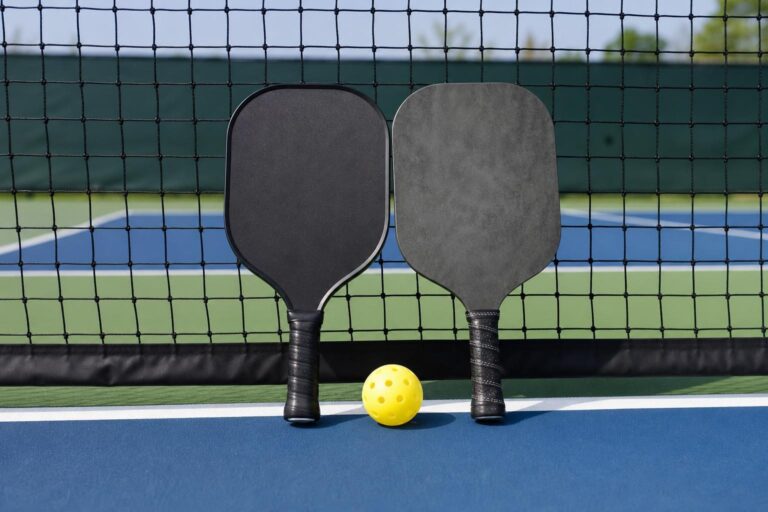
Surface texture can help generate spin, but technique, paddle speed, and contact angle remain essential. Texture may also wear, changing how the paddle grips the ball over time.
What is inside the paddle?
Polymer honeycomb cores are common in modern pickleball paddles. Their cell structure, density, and thickness help influence sound, feel, stability, and response.
Other designs use foam or combine materials in different ways. Foam around the perimeter is not the same as a fully foam-based core, so read descriptions carefully rather than assuming all “foam” paddles share the same construction.
Thermoformed vs. cold-pressed paddles
Thermoforming uses heat and pressure during manufacturing. Many thermoformed designs also incorporate reinforced perimeter structures, although construction varies. Cold-pressed paddles are bonded without the same heat-molding process.
Some thermoformed paddles feel firmer or more powerful, while some cold-pressed designs offer a softer response. Those are tendencies, not rules. When comparing thermoformed vs. cold-pressed pickleball paddles, judge the finished paddle rather than treating either method as automatically superior.
3. Choose a Manageable Weight and Balance
Weight affects how a paddle feels throughout a game, not just when you first pick it up. Many adult composite paddles fall roughly in the 7-to-9-ounce range, although options exist outside it.
A middleweight paddle is a sensible starting point for many beginners. However, the number on the scale does not tell the whole story.
Static weight, swingweight, and balance
- Static weight: The paddle’s total weight when placed on a scale.
- Swingweight: Its resistance to being rotated through a swing. Higher swingweight generally requires more effort to accelerate and stop.
- Balance: How weight is distributed between the handle and head.
Two paddles with the same static weight can feel noticeably different. A head-heavy paddle may feel slower in fast exchanges, while a more handle-balanced paddle may feel easier to maneuver.
Lighter is not always more comfortable
A lighter paddle can be easier to move, but it may feel less stable against hard shots. Some players then grip tighter or swing harder to compensate. A heavier paddle may provide stability, but excessive weight can cause fatigue.
Choose a weight you can use with a relaxed grip and controlled swing. If you have persistent wrist, elbow, or shoulder pain, do not assume an equipment change alone will solve it; seek appropriate clinical advice.
4. Match Paddle Shape and Thickness to Your Game
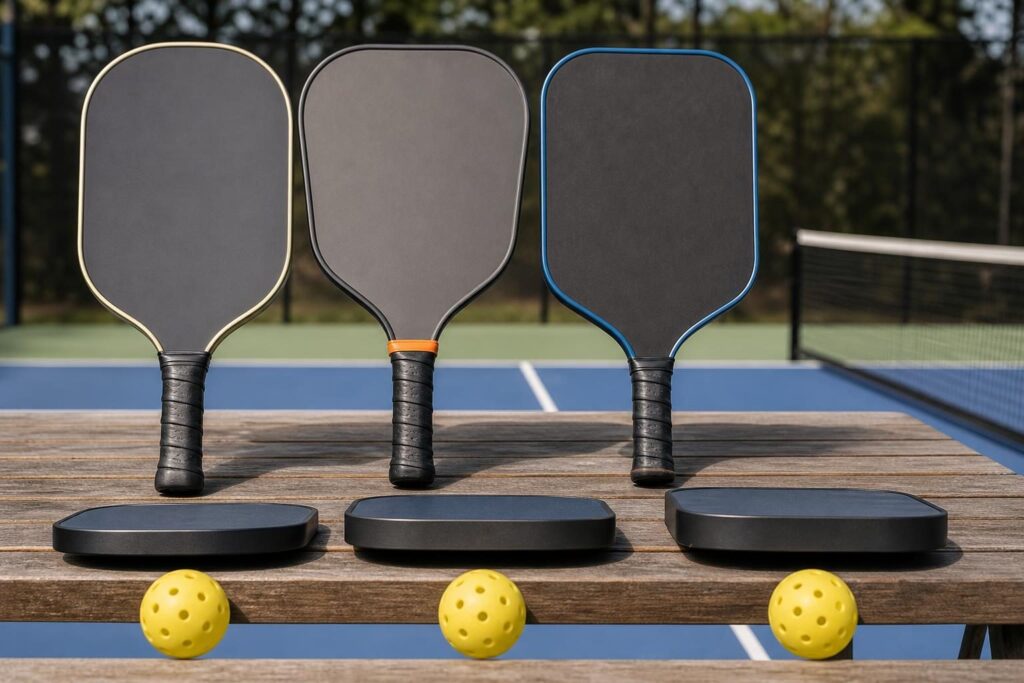
Shape influences reach, hitting-area width, and handling. Thickness influences response and feel, although it must be considered alongside the rest of the construction.
Standard, elongated, and hybrid shapes
- Standard or widebody: Usually provides a wider face and a forgiving target for beginners.
- Elongated: Trades some width for additional length, which can help with reach and leverage.
- Hybrid: Aims for a middle ground between width, reach, and maneuverability.
“Hybrid” is not a precise universal specification. Compare actual dimensions and handle length instead of relying only on the category name.
A longer handle can accommodate a two-handed backhand, but it may leave less room for the paddle face within a given overall length. Make sure your second hand fits comfortably if that stroke matters to you.
Thin vs. thick cores
Thicker cores often provide a more cushioned response and can support control and stability. Thinner cores often feel more direct or lively. Common options include paddles around 14 mm and 16 mm thick, but neither measurement guarantees a particular playing style.
A powerful thick paddle can play faster than a control-oriented thin paddle. Use thickness as a comparison point, not a shortcut around evaluating the full design.
For many beginners, a wider shape with a moderately thick core is a useful starting point because it emphasizes consistent contact and manageable response.
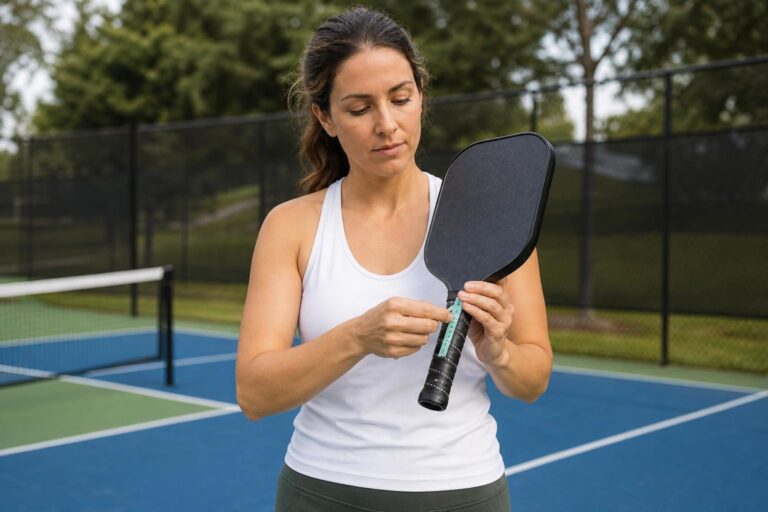
5. Get the Grip Size and Handle Fit Right
A poorly fitting grip can make an otherwise suitable paddle uncomfortable. Grip size usually refers to the handle’s circumference, not its length.
Too large a grip may make it difficult to wrap your fingers naturally around the handle. Too small a grip may encourage unnecessary squeezing or allow the paddle to shift in your hand.
How to assess your grip size
- Hold the paddle with a relaxed, handshake-style grip.
- Check that your fingers wrap naturally without feeling crowded or stretched.
- Use the space between your fingertips and palm as a rough check; room for the opposite index finger is a common starting guideline, not a strict rule.
- Make several controlled swings and notice whether the handle slips or requires constant squeezing.
Hand measurements can help narrow your options, but they cannot fully account for handle shape, grip compression, or personal preference. When learning how to measure your pickleball paddle grip size, combine a measurement guide with an actual comfort check whenever possible.
Adjusting the grip
An overgrip can increase circumference slightly and improve traction or sweat absorption. If you are between sizes, the smaller option may offer more adjustment room, provided it is still comfortable.
Remember that an overgrip also adds weight and changes the handle’s feel. Handle length, shape, and the flare at the butt cap deserve attention too, especially for two-handed players.
6. Set a Budget and Compare Paddles Sensibly
You do not need a premium paddle to learn sound technique. A dependable beginner paddle with suitable weight, a comfortable grip, and predictable response can support substantial improvement.
What to prioritize under $100
When comparing the best pickleball paddles under $100 for beginners, focus on useful fundamentals rather than impressive-sounding material claims:
- A manageable weight and forgiving shape.
- Clearly stated dimensions, thickness, and grip circumference.
- Sound construction and a secure handle.
- A clear return policy and understandable warranty terms.
- The required approval status if you intend to compete.
Prices and availability vary, so compare current offers without assuming a higher original price proves better value.
How to read a specific paddle review
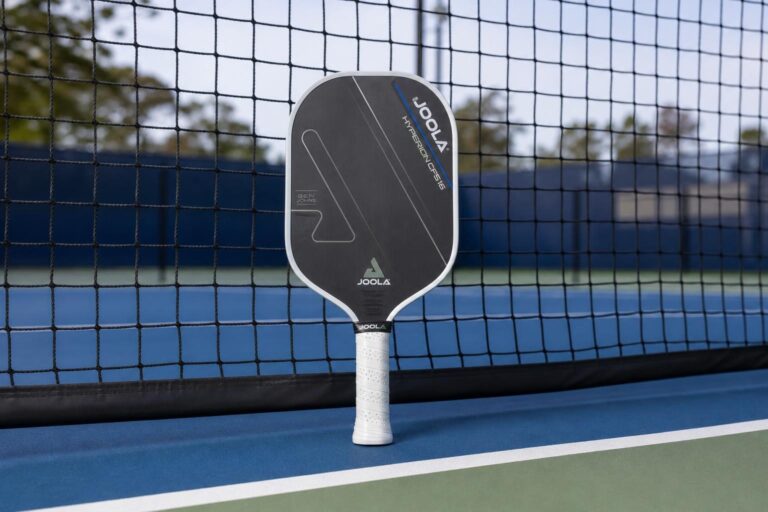
A model-specific review should explain who benefits from a paddle’s trade-offs. For example, the JOOLA Ben Johns Hyperion CFS 16 is an elongated, carbon-faced paddle with a 16 mm core. Those specifications make reach, handle fit, maneuverability, and response useful points to investigate.
When reading a JOOLA Ben Johns Hyperion CFS 16 review, ask whether the reviewer describes a playing profile similar to yours. Its association with an elite player does not make it the automatic choice for a beginner. Also confirm the exact model, since similarly named versions may differ.
Demo before buying when possible
Try a borrowed paddle, club demo, or retailer demo program. Test more than powerful drives: include serves, returns, dinks, blocks, volleys, and resets.
Notice whether you can keep a relaxed hand, recover after each shot, and control the ball without constant adjustment. A paddle that impresses during five hard swings may feel very different after a full game.
7. Consider Durability, Care, and Replacement
There is no universal answer to how long a pickleball paddle lasts. Playing frequency, construction, surface wear, storage, and impacts all affect its useful life.
A paddle may remain structurally usable after losing some surface texture or changing in response. Conversely, visible cosmetic wear does not always mean it needs replacing.
Signs worth investigating
- Cracks, a loose handle, or a separating edge guard.
- New rattling or a noticeable change in sound.
- Dead spots or unusually lively areas on the face.
- A sudden, unexplained change in control or response.
These symptoms do not identify a specific defect by themselves. Stop using a paddle with structural damage, and contact the seller or manufacturer if you suspect a warranty issue.
Simple care habits
Keep the paddle out of prolonged extreme heat, avoid leaving it in a hot vehicle, and use a cover during transport. Follow the manufacturer’s cleaning instructions, especially for textured faces.
Replace worn grips as needed, and avoid striking the court or tapping paddles forcefully. Basic care can help preserve the handle, edge, and playing surface.
8. Conclusion: Choose Fit Before Features
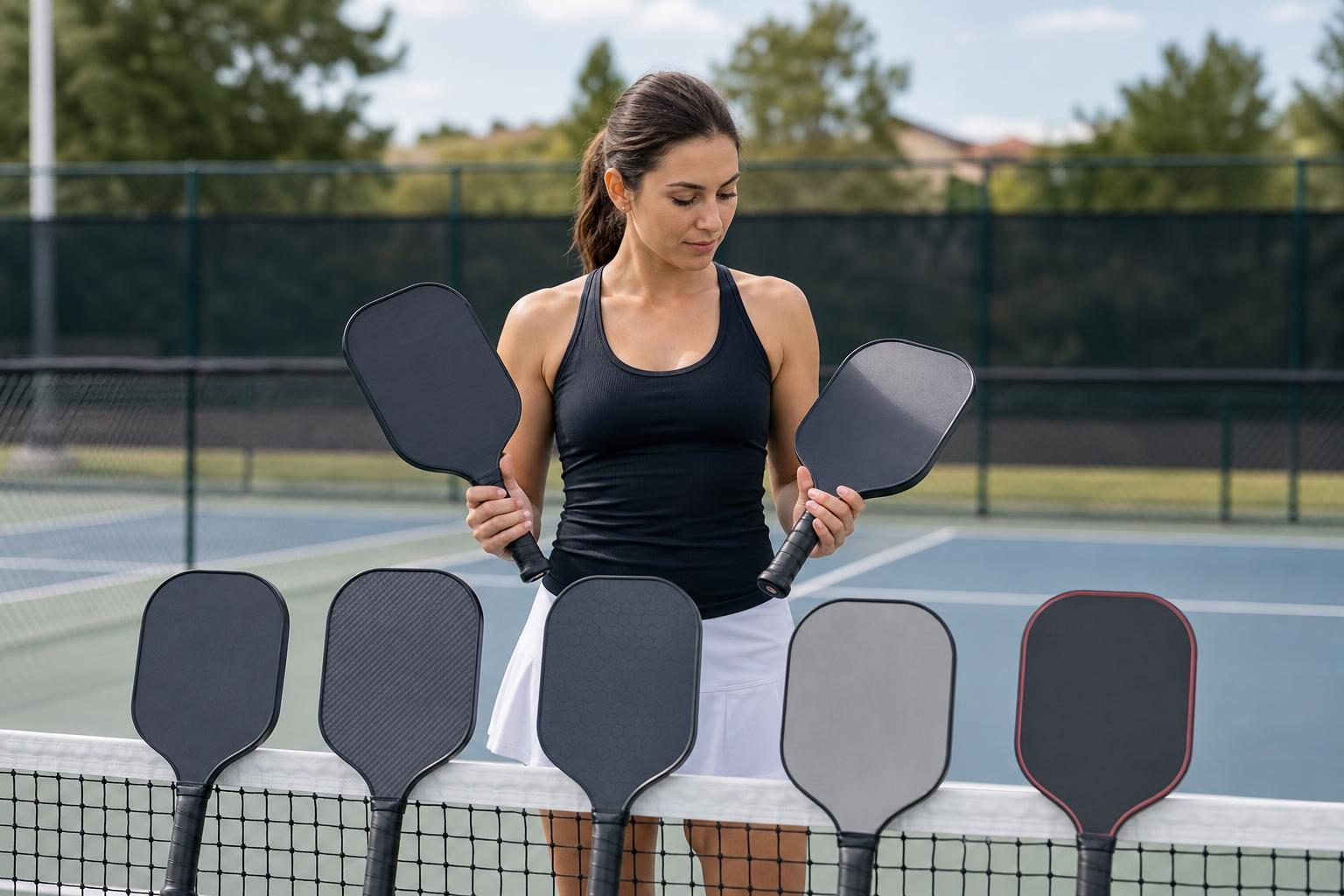
The best way to choose a pickleball paddle is to start with comfort, forgiveness, and manageable weight, then refine your choice through shape, thickness, materials, and construction. Set a realistic budget and test the paddle whenever possible.
Your first paddle does not need to be your forever paddle. It needs to help you make consistent contact, build confidence, and enjoy learning the game.