Power vs. Control Pickleball Paddles: Which Suits Your Game?
This article contains affiliate links. If you buy through them, we may earn a commission at no extra cost to you.
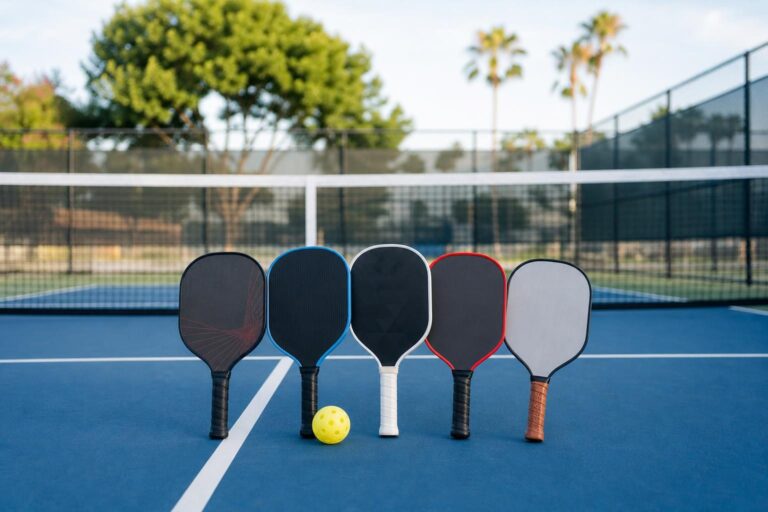
Choosing between power vs control pickleball paddles comes down to how you create offense, handle pace, and manage mistakes. A power paddle can add speed to drives and putaways, while a control paddle generally emphasizes predictable placement and easier touch. Neither is automatically better: the right choice supports your strengths without making your weaknesses harder to manage.
This article is part of our guide: How to Choose a Pickleball Paddle: Weight, Shape, Materials, and Grip
Power vs Control Pickleball Paddles: Key Differences
Power and control are useful categories, but they are not strict technical standards. Two paddles marketed for control can feel quite different, and many modern designs combine elements of both. Think of these labels as starting points rather than guarantees.
| Feature | Power Paddles | Control Paddles |
|---|---|---|
| Main priority | More ball speed and offensive pressure | Predictable response and precise placement |
| Typical feel | Livelier or more responsive, though construction varies | Often softer or more muted, though not always |
| Common construction tendencies | May use thinner cores, stiffer faces, or designs that increase rebound | Often use thicker cores and designs that moderate rebound |
| Shots they may support | Drives, aggressive counters, overheads, and putaways | Dinks, drops, resets, and placement-focused volleys |
| Main adjustment | Managing rebound on soft shots and blocks | Generating enough speed to finish attacking shots |
| Often suits | Players seeking easier pace or stronger attacking shots | Players seeking consistency, touch, and more manageable defense |
Power Pickleball Paddles: Easier Pace and Offensive Pressure
A power paddle is designed to help produce faster shots. Depending on its construction, that benefit may show up most clearly on full swings, compact punches, or both.
It helps to distinguish power from pop. Power usually describes the speed available on a fuller swing, such as a drive or overhead. Pop describes how readily the ball rebounds on a short stroke, such as a punch volley. A paddle can be strong in one area without being equally lively in the other.
Where Power Paddles Can Help
- Baseline drives: Extra pace can pressure opponents and make their next shot more difficult.
- Putaways: A powerful paddle can help you capitalize on a high ball rather than giving opponents another defensive chance.
- Counterattacks: A lively response can add speed during quick exchanges at the kitchen line.
- Limited swing length: Some players appreciate getting useful pace without taking a large backswing.
Power paddles can suit aggressive doubles players and singles players who rely on drives and passing shots. They can also help a player who places the ball well but struggles to generate enough pace to finish points.
The Trade-Offs to Consider
The main challenge is managing the paddle’s response. A ball that leaves the face quickly can be harder to soften on a reset, block, or delicate dink. If your contact or paddle angle is inconsistent, extra rebound may turn a manageable shot into a high ball or an out ball.
That does not mean power paddles cannot play a soft game. Skilled players can control lively paddles with relaxed grip pressure, good positioning, and compact technique. The question is whether that adjustment feels natural or demands more precision than you want.
- Check whether defensive blocks stay low or float up.
- Notice whether routine volleys travel deeper than intended.
- Test drops and resets, not just impressive drives.
- Make sure the paddle is maneuverable enough for fast exchanges.
Control Pickleball Paddles: Placement, Touch, and Consistency
A control paddle aims to make the ball’s response easier to manage. Many have a more muted feel that helps players judge distance on softer shots, although feel alone does not determine accuracy.
Control is not the same as a lack of power. You can still hit firm drives and overheads with a control-oriented paddle. You may simply need to supply more of the acceleration through your swing rather than relying on the paddle’s rebound.
Where Control Paddles Can Help
- Dinks: A manageable response can help you place the ball without sending it too high or too deep.
- Third-shot drops: Predictable depth makes it easier to work toward consistent landing spots.
- Resets: Moderating incoming pace can help you return an attacking ball softly into the kitchen.
- Defensive volleys: A less lively response may make blocks easier to keep in play.
Control-oriented designs are often a sensible starting point for players developing their soft game. They can also suit experienced doubles players who prefer to build points through patience, placement, and selective attacks.
The Trade-Offs to Consider
If you already struggle to create ball speed, a very low-powered paddle may leave your attacks easier to defend. You might find yourself swinging harder than is comfortable, which can reduce consistency or slow your recovery.
Also, a control label does not guarantee forgiveness. A paddle with a small effective hitting area or limited stability can still punish off-center contact. Look for predictable results across the part of the face you commonly use, not merely a soft sensation on perfect contact.
What Matters Beyond the Power or Control Label?
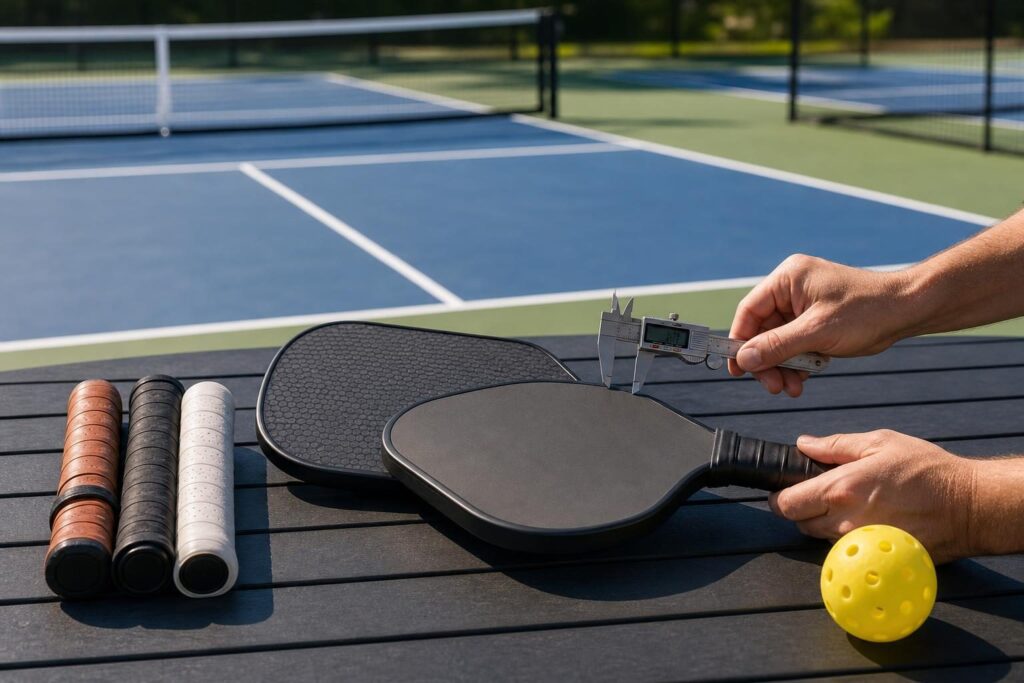
When comparing power vs control pickleball paddles, construction and handling deserve as much attention as the category printed in the product description.
Core Thickness and Materials
Thicker cores are commonly associated with control, while thinner cores often feel more direct or lively. However, core material, face construction, internal structure, and perimeter design can change that relationship substantially.
Likewise, a carbon-fiber face does not automatically make a paddle control-focused, and a fiberglass face does not tell the whole power story. Evaluate the complete design rather than choosing by one material claim.
Shape, Swingweight, and Stability
Elongated paddles can offer reach and leverage, but their handling depends on weight distribution. Wider shapes may provide a more forgiving hitting area, although individual designs vary.
Swingweight describes resistance to swinging the paddle. Higher swingweight can support forceful shots but may make quick repositioning harder. Twistweight relates to resistance to twisting on off-center contact, which can affect stability and forgiveness.
A paddle that feels too cumbersome can undermine both power and control by making you late to contact. Comfortable handling should be a priority, not an afterthought.
Which Should You Choose?
For Beginners: Start With Forgiveness and Manageable Control
Choose a control-oriented or balanced paddle with comfortable handling and a forgiving hitting area. This gives you room to develop reliable contact, placement, and soft shots without fighting an overly lively response.
Avoid assuming that the softest or thickest paddle is automatically best. You still need enough accessible pace to serve, return, and attack comfortably.
For Aggressive Players: Consider Power, but Check Your Error Pattern
Choose a power paddle if you attack confidently, keep your soft shots under control, and want more pressure from drives, counters, or overheads. It makes particular sense when your attacks consistently land in but lack penetration.
If your main problem is already hitting long or popping up volleys, extra power may amplify it. A balanced paddle could be the better match.
For Placement-Focused Doubles Players: Lean Toward Control
Choose a control paddle if your game depends on dinking, resetting, and waiting for a clear attacking opportunity. Prioritize a predictable response and stable contact over maximum shot speed.
Make sure you can still finish high balls. Control should support your offense, not remove it.
For Players Who Struggle to Generate Pace: Try Accessible Power
Consider a power-oriented or balanced paddle if your shots routinely sit up without challenging opponents. Look for added pace in a paddle you can swing comfortably, rather than simply choosing a heavier option.
If extra rebound makes touch shots difficult, step back toward a middle-ground design.
For All-Court Players: Choose a Balanced Paddle
A balanced or all-court paddle is often the most practical choice when you want useful pace without giving up too much touch. This category is worth exploring if your style changes between singles and doubles or if you are still discovering your preferences.
How to Compare Paddles Before Buying
If you can demo paddles, compare them using the same ball and similar playing conditions. Judge repeatable outcomes rather than the single hardest shot you hit.
- Start with dinks and drops: Check whether you can control height and depth without constant adjustment.
- Test defensive resets: Notice how easily you can soften incoming pace.
- Play quick volleys: Assess maneuverability, stability, and unintended pop-ups.
- Hit drives and overheads: Look for useful speed that stays within your normal technique.
- Finish with game play: Track which paddle helps you make better decisions and fewer costly errors under pressure.
Conclusion
The best choice between power and control is the paddle that improves your overall game, not just your favorite shot. Lean toward power if you need easier pace and can manage the response. Lean toward control if placement, resets, and consistency are your priorities. If both matter equally, a balanced paddle is a sensible place to start.