Best Pickleball Paddles for Beginners Who Want Room to Improve
This article contains affiliate links. If you buy through them, we may earn a commission at no extra cost to you.
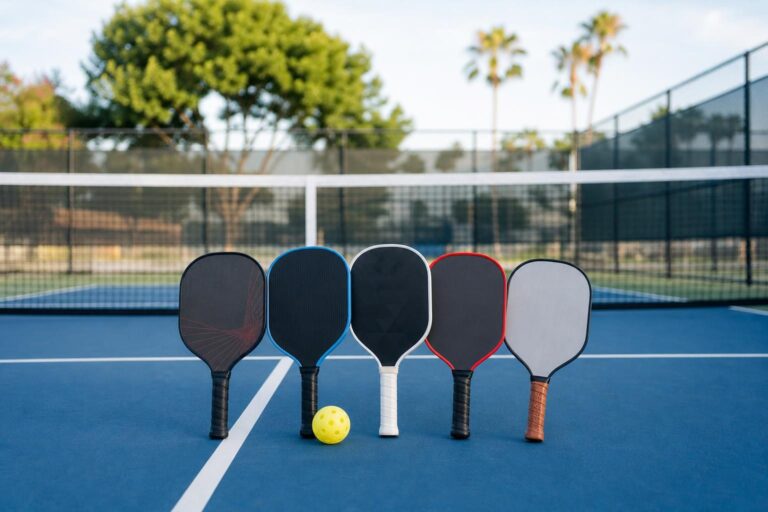
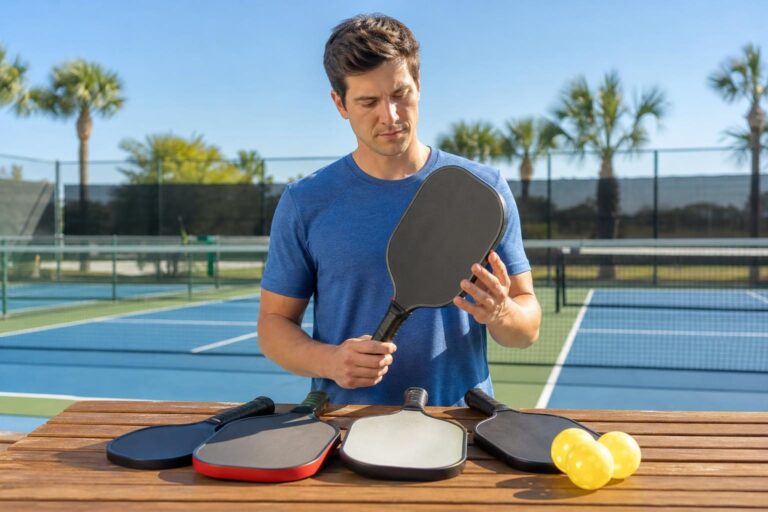
The best pickleball paddles for beginners make it easier to learn today without feeling limiting as your game improves. These five picks suit different priorities, from forgiving control to easier power. The right choice depends on your swing, comfort preferences, and how much help you want keeping the ball in play.
This article is part of our guide: How to Choose a Pickleball Paddle: Weight, Shape, Materials, and Grip
- Best all-around starting point: SLK HALO Control — a control-focused option with room to develop touch and spin.
- Best for developing a soft game: Vatic Pro PRISM Flash — a strong choice for learning resets, drops, and controlled placement.
- Best for accessible power: Paddletek Bantam EX-L — useful for beginners who want a lively response without choosing an extreme paddle.
- Best straightforward entry-level option: HEAD Radical Elite — a practical starting point for recreational players building their fundamentals.
- Best for a crisp, traditional feel: ONIX Graphite Z5 — a widebody option for players who prefer clear feedback at contact.
SLK HALO Control: Best All-Around Starting Point
The SLK HALO Control is a good starting point for beginners who want to develop a complete game rather than buy a paddle mainly for power. Its control-oriented design suits players learning to balance drives with softer shots near the kitchen.
The HALO Control uses a raw carbon fiber face and a thicker core configuration. For a newer player, that combination makes it worth considering for placement and spin development. A textured face can support spin, but paddle angle, swing path, and clean contact still do most of the work.
Strengths
- Versatile learning platform: Suitable for practicing dinks, blocks, drops, and controlled drives.
- Shape options: The Max shape is the more natural starting point for many beginners seeking a broader hitting area.
- Room to improve: Its appeal extends beyond the first few lessons, particularly for players developing a patient doubles game.
Drawbacks
Players who want the paddle to supply substantial put-away power may prefer a livelier option. Be careful when shopping, too: HALO versions and shapes differ, so confirm that the listing is for the Control model you intend to buy.
Vatic Pro PRISM Flash: Best for Developing a Soft Game
The Vatic Pro PRISM Flash is particularly worth considering if your goal is to become comfortable with the shots that slow rallies down. Resets, third-shot drops, and kitchen exchanges reward controlled contact rather than simply swinging harder.
The PRISM Flash has a raw carbon fiber face and a hybrid shape, sitting between a conventional widebody outline and a more elongated design. The 16 mm version is a sensible option for beginners prioritizing a softer, more controlled response.
Strengths
- Control-focused character: A useful match for players learning to absorb pace and keep balls low.
- Balanced shape: Offers a compromise between hitting-area width and reach.
- Skill-development potential: Supports touch and spin work as your technique becomes more consistent.
Drawbacks
Its restrained power will not suit everyone. Beginners with short swings who struggle to reach the baseline may prefer something livelier. Also, do not confuse the PRISM Flash with other Vatic Pro Flash models; similar names do not mean identical construction or feel.
Paddletek Bantam EX-L: Best for Accessible Power
The Paddletek Bantam EX-L is a useful alternative for beginners who find softer control paddles difficult to generate depth with. Its fiberglass face and polymer core give it a livelier character than the control-first options above.
This is a more natural fit for a player who enjoys driving the ball, attacking openings, and building points around firm contact. It can also appeal to someone coming from another racket sport who already has a reasonably repeatable swing.
Strengths
- Helpful offensive response: Worth considering if deep returns and firm volleys are priorities.
- Conventional shape: Does not require beginners to adjust to an especially narrow hitting surface.
- Longer-term usefulness: Can remain a suitable recreational paddle as consistency and shot selection improve.
Drawbacks
The lively response requires care on dinks and defensive blocks. If you already tend to pop the ball up or hit beyond the baseline, a more control-oriented paddle may make the learning process easier. Check the listed weight of the individual paddle rather than assuming every EX-L will feel identical.
HEAD Radical Elite: Best Straightforward Entry-Level Option
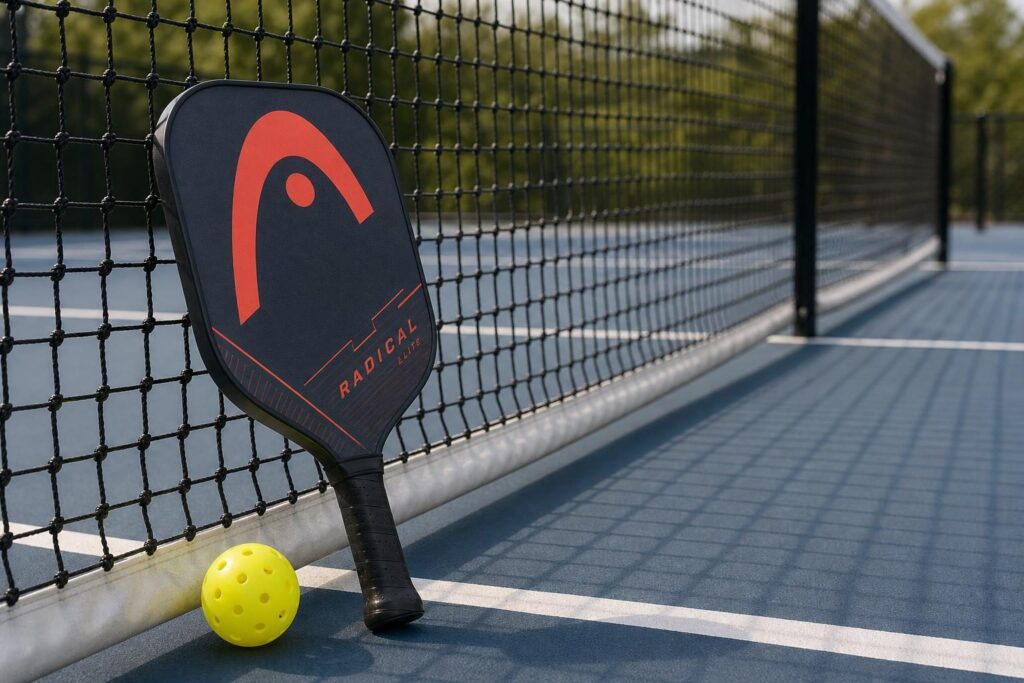
The HEAD Radical Elite is a practical choice for someone who wants a recognizable, uncomplicated paddle for lessons and recreational play. Its fiberglass hitting surface and polymer honeycomb core provide a conventional introduction to modern pickleball paddles.
It makes sense for a beginner who is still discovering their preferences. Rather than selecting a specialized power or spin-focused design immediately, you can use this type of paddle to learn positioning, contact, and basic shot selection.
Strengths
- Approachable design: Suitable for general recreational play and early skill development.
- Useful starting point: Helps you establish what you want from your next paddle, if you eventually decide to upgrade.
- Less specialization: A reasonable match for players who are not yet committed to a particular playing style.
Drawbacks
Players who become serious about spin and a highly refined touch response may eventually want a different paddle. Compare its actual selling price with the other options here: an entry-level label does not automatically make a paddle the best value.
ONIX Graphite Z5: Best for a Crisp, Traditional Feel
The ONIX Graphite Z5 is a widebody paddle with a graphite face and Nomex honeycomb core. It stands apart from the polymer-core options in this roundup, making it worth considering for beginners who prefer a firmer, more immediate response.
Its broad shape is appealing when contact consistency is still developing. The crisp feedback can also help players recognize the difference between a clean strike and an off-center hit.
Strengths
- Widebody outline: Provides a broad hitting area without emphasizing extra reach.
- Distinct contact feedback: Suits players who dislike a soft or muted sensation.
- Direct response: Can appeal to beginners who enjoy punch volleys and straightforward attacking play.
Drawbacks
The firmer feel can demand a lighter hand during soft exchanges. Its Nomex construction can also produce a sharper sound than many polymer-core paddles, which matters at noise-sensitive courts. Make sure you are comparing the Graphite Z5, since similarly named versions can differ.
Buying Guide: What to Look for in a Beginner Paddle
Choose Forgiveness Before Specialized Performance
A broad or moderately hybrid shape is usually an easier starting point than a narrow, heavily elongated paddle. Extra reach can be useful, but it is not a substitute for reliable contact. For most beginners, keeping routine shots in play matters more than maximizing one performance trait.
Check Weight and Maneuverability Together
Static weight is only part of how a paddle feels. Weight distribution also affects how easily you can prepare for volleys and change direction. Choose something you can move comfortably throughout a session, not merely something that feels powerful on one swing.
Make Grip Fit a Priority
A grip should feel secure without forcing you to squeeze constantly. If it feels too large, relaxing your hand and adjusting the paddle face can become harder. A slightly smaller grip can often be built up with an overgrip, although that also changes weight and feel.
Do Not Treat Thickness as a Guarantee
Thicker cores often lean toward control, while thinner designs often feel more direct. However, face material, construction, shape, and weight all influence the result. Compare complete paddles rather than buying on thickness alone.
Buy for Your Next Stage, Not Just Your First Game
The best pickleball paddles for beginners offer enough consistency to learn with and enough capability to keep using as skills improve. Avoid paying extra for a feature you cannot explain how you will use. If possible, borrow or demo different paddle types before choosing.
If sanctioned tournaments are part of your plans, check the exact model against the approval requirements of the event’s governing organization. Do not assume approval based only on the brand or product family.
Conclusion
Start with the SLK HALO Control for an all-around learning option or the Vatic Pro PRISM Flash if soft-game development is your priority. The Bantam EX-L, Radical Elite, and Graphite Z5 offer worthwhile alternatives for different preferences. Above all, choose comfortable handling and predictable contact: those qualities give you the most useful room to improve.