Pickleball Shoes vs. Running Shoes: Traction and Stability Differences
This article contains affiliate links. If you buy through them, we may earn a commission at no extra cost to you.
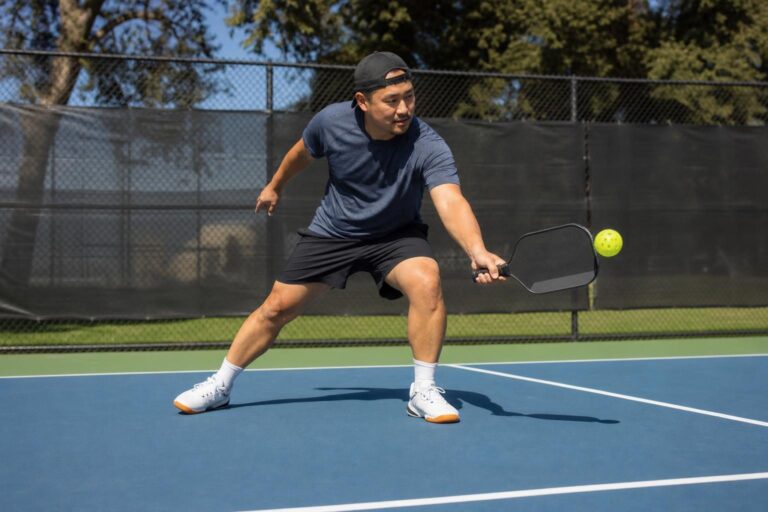
Running shoes may feel comfortable on the walk to the court, but pickleball asks your feet to do more than move forward. Quick shuffles, sudden stops, and changes of direction make traction and lateral stability especially important. When comparing pickleball shoes vs running shoes, the biggest difference is how each design handles those movements—not simply how much cushioning it offers.
This article is part of our guide: How to Choose Pickleball Shoes for Fit, Support, and Court Surface
Pickleball Shoes vs Running Shoes: Key Differences
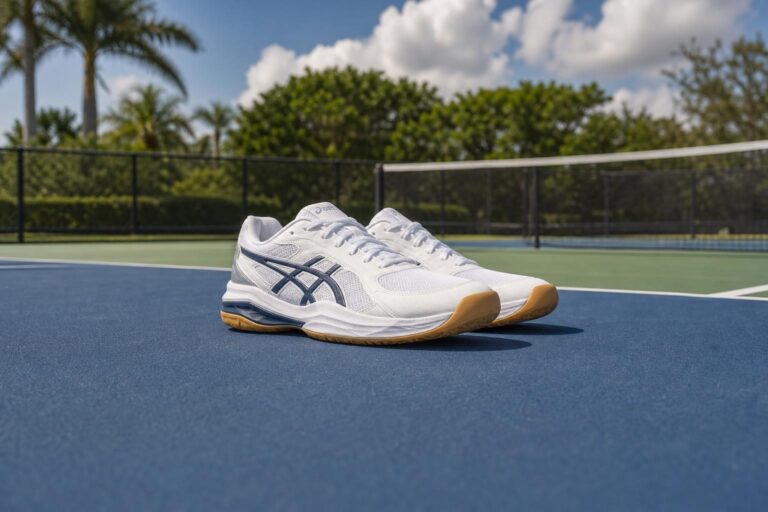
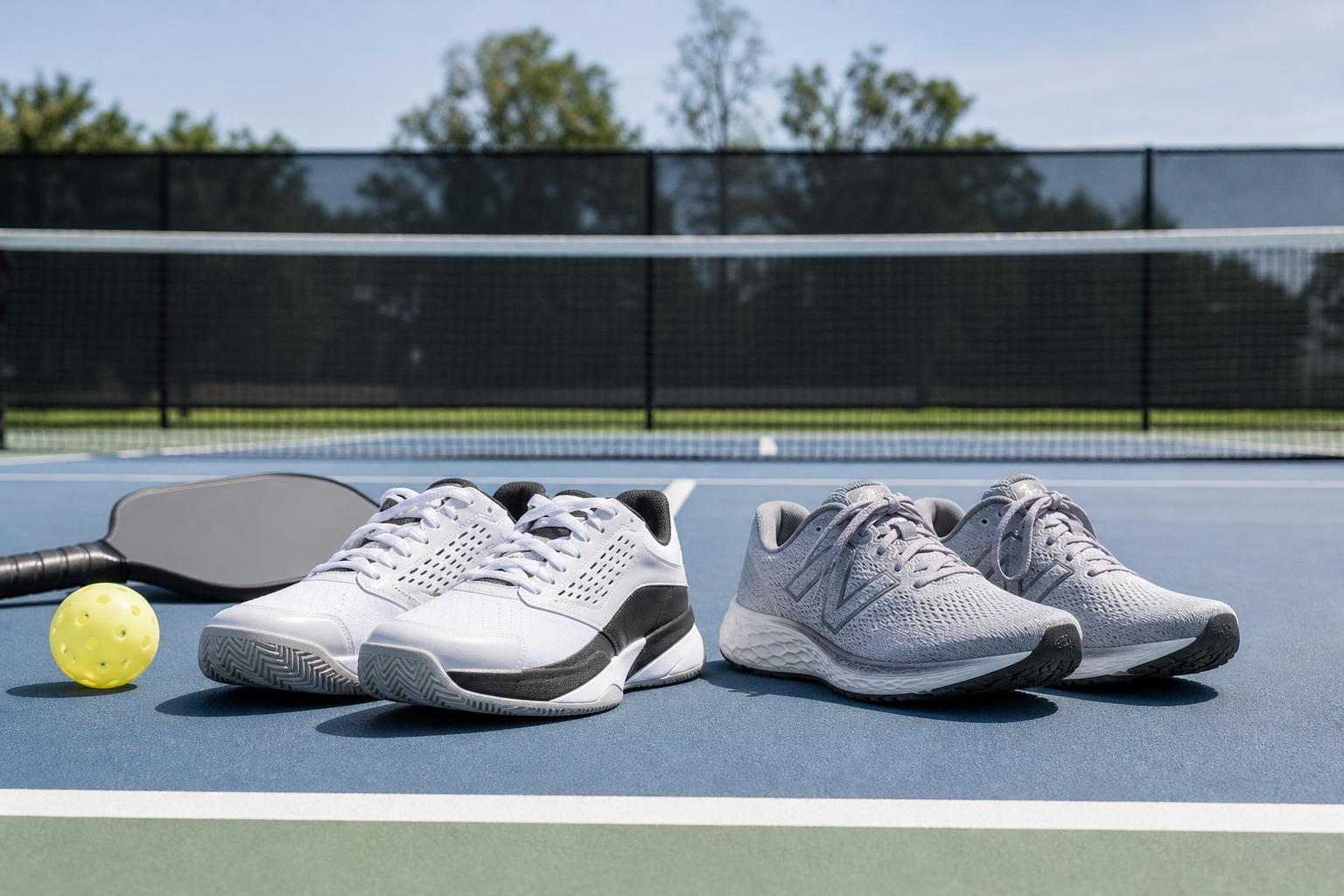
Pickleball shoes are built around court movement, while most everyday running shoes prioritize repeated forward strides. Individual models vary, but these are the main differences to look for.
| Feature | Pickleball Shoes | Running Shoes |
|---|---|---|
| Primary movement | Side-to-side shuffles, stops, pivots, and short bursts | Repeated forward motion |
| Traction | Outsole designed for multidirectional court grip | Outsole designed for road, track, or trail running |
| Lateral stability | Typically includes construction that supports sideways movement | Usually prioritizes support during a running stride |
| Platform | Often uses a broad base and reinforced edges for court stability | Varies widely; some models have tall, soft cushioning |
| Upper construction | Often reinforced to help contain the foot during direction changes | Often emphasizes flexibility, breathability, and running comfort |
| Cushioning | Balances impact comfort with a stable court feel | Often emphasizes comfort through repeated running impacts |
| Durability | Court-focused models often reinforce high-wear areas | Wear protection generally follows running-specific contact patterns |
| Best use | Pickleball play on the surface the shoe is designed for | Running, walking, and general everyday wear |
Pickleball Shoes: Built for Court Movement
A pickleball rally can send you forward to the kitchen line, sideways to cover a dink, and backward to reset your position. Court footwear is designed to help manage that changing movement pattern.
Traction for Stopping and Changing Direction
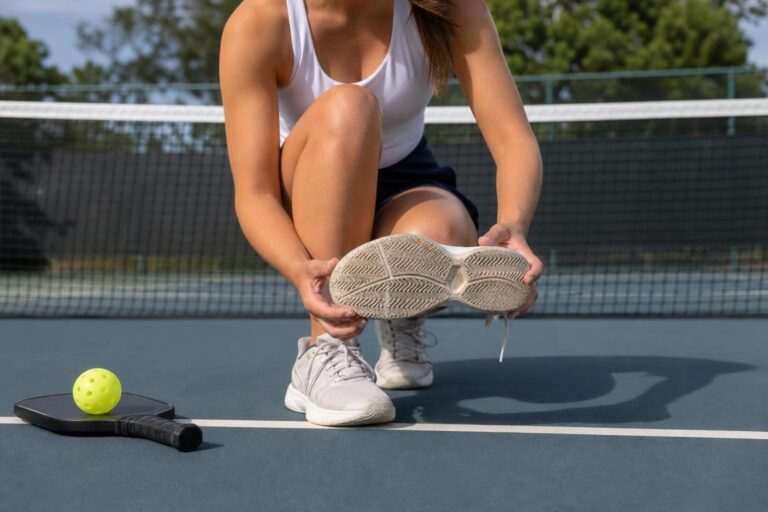
Pickleball shoes typically use outsole rubber and tread patterns intended to grip during movement in several directions. That matters when you plant a foot to reach a wide ball or stop after a short sprint.
Good traction is not simply the stickiest outsole available. The shoe needs to work with the playing surface, allowing reliable stops and controlled changes of direction. Dust, moisture, worn rubber, and court condition can all affect grip.
- Outdoor courts: Look for an outsole suited to hard courts, with durability appropriate for abrasive surfaces.
- Indoor gym floors: Look for indoor-court compatibility and non-marking soles where the facility requires them.
- Mixed-surface play: Check the manufacturer’s intended use rather than assuming every pickleball shoe suits every court.
Lateral Support and Foot Containment
During a sideways stop, your foot pushes against the side of the shoe. A court shoe’s upper, base, and sidewall construction work together to help keep your foot positioned over the platform.
Depending on the model, this may involve reinforced upper panels, a wider forefoot base, or structural elements that resist excessive twisting. These details can make the shoe feel more controlled during lateral movement.
Fit remains essential. A supportive design cannot compensate for substantial heel slip or a foot sliding inside an oversized shoe. Equally, a shoe that squeezes your forefoot is not a good fit simply because it feels secure.
Trade-Offs to Expect
Some pickleball shoes feel firmer, heavier, or less flexible than lightweight running shoes. That can be noticeable during walking, even when the court shoe feels more stable during play.
Cushioning also varies. You do not need to choose the firmest shoe available; aim for enough impact comfort without a wobbly feel during sideways movement.
Running Shoes: Comfortable for Forward Motion
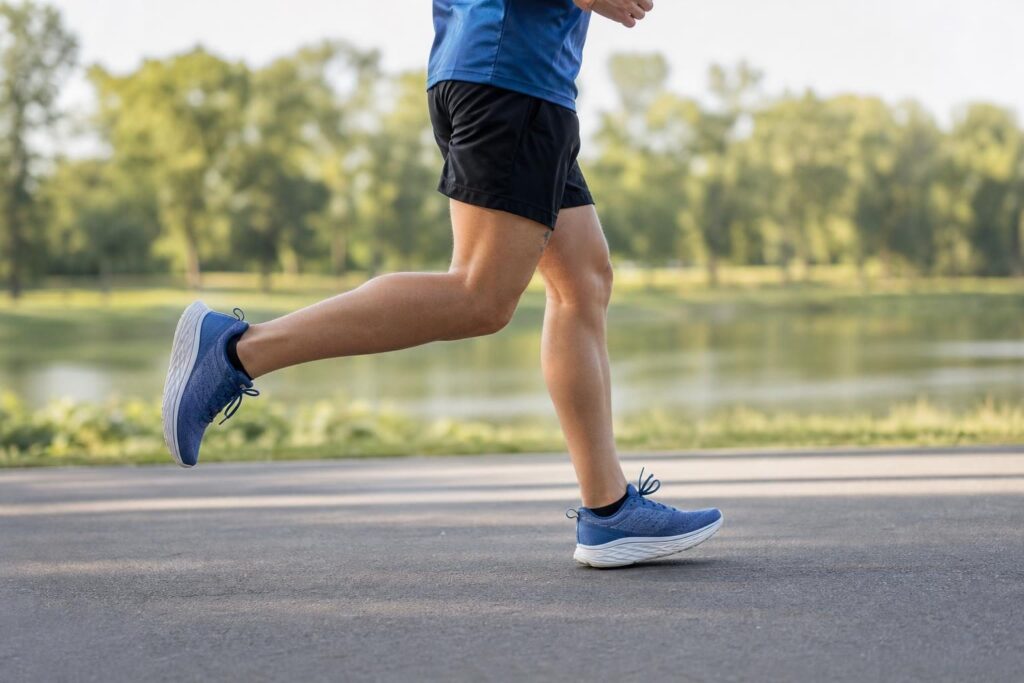
Running shoes are designed primarily around the mechanics of running. Many offer comfortable cushioning, breathable uppers, and a smooth transition through each stride. Those qualities are useful for their intended activity, but they do not automatically translate into court performance.
Why Running Traction Is Different
A road-running outsole may grip pavement well while still lacking the court-specific combination of tread, rubber, and edge support used for repeated lateral stops.
Trail-running shoes are not a straightforward alternative, either. Their lugs are intended for surfaces such as dirt and loose ground, not smooth court floors. Aggressive tread does not necessarily mean better pickleball traction.
Cushioning Does Not Equal Lateral Stability
Some running shoes have tall, soft midsoles that feel excellent during easy forward movement. During a hard sideways plant, however, that cushioning may feel less settled than a court-focused platform.
Not all running shoes are tall or soft, and not all court shoes are low or firm. The important distinction is the shoe’s overall design. A running shoe labeled “stability” is not necessarily built for lateral court support. That term generally refers to features intended to guide or support the running stride.
Where Running Shoes Still Make Sense
Keep running shoes for running, walking, and traveling to the court. If you already own a comfortable pair, you can continue using them for those activities while reserving court shoes for play.
For someone trying pickleball for the first time, borrowing or renting properly fitting court shoes is worth considering. Running shoes may be convenient, but they are not the preferred choice for active rallies involving quick direction changes.
Which Should You Choose?
For actual pickleball play, a properly fitting shoe designed for the relevant court surface is generally the better choice. It does not have to carry a pickleball-specific label: a suitable tennis or indoor court shoe may also work, depending on where you play.
For Beginners and Occasional Players
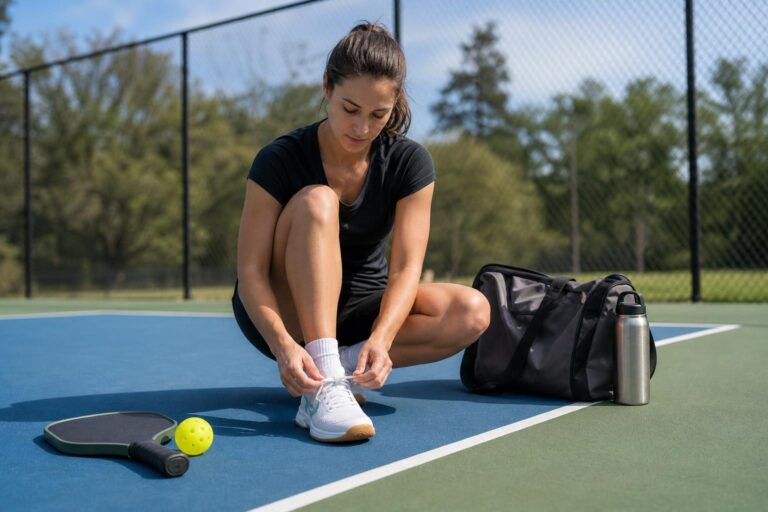
Choose a comfortable court shoe with secure heel hold, adequate toe room, and an outsole suited to your venue. You do not need a premium model to prioritize appropriate footwear.
If you already have tennis shoes in good condition, check their fit and surface suitability before buying another pair.
For Frequent or Competitive Players
Prioritize lateral containment, dependable traction, and outsole durability. Look for wear along the outsole edges and areas where you push off. Replace shoes when grip, structure, or comfort has noticeably deteriorated rather than relying only on their appearance from above.
For Budget-Conscious Buyers
Compare entry-level court shoes and discounted established models. Focus on fit and intended use rather than choosing a running shoe solely because it costs less. A pickleball label alone is not a reason to pay more.
For Players Who Value Soft Cushioning
Look for a cushioned court shoe rather than assuming a plush running shoe is the best solution. Try gentle lateral steps during fitting, where permitted, and check whether your heel stays secure and your foot remains centered over the sole.
For Players With Foot Pain or Previous Injuries
Choose footwear around your individual needs, including room for any prescribed orthotics. Seek advice from a qualified healthcare professional if pain persists or an injury affects your movement. No shoe can guarantee injury prevention.
Conclusion
The pickleball shoes vs running shoes decision comes down to movement: court shoes prioritize multidirectional traction and lateral support, while running shoes prioritize forward strides. For pickleball, choose a well-fitting, surface-appropriate court shoe that feels secure during stops and side steps. Save your running shoes for the activities they were designed to handle.