When Should You Replace Pickleball Shoes?
This article contains affiliate links. If you buy through them, we may earn a commission at no extra cost to you.
Pickleball shoes can look presentable long after they stop providing dependable grip, cushioning, and lateral support. Knowing when to replace pickleball shoes means checking how they perform—not just whether they have holes. These common questions will help you recognize meaningful wear and decide when a new pair makes sense.
This article is part of our guide: How to Choose Pickleball Shoes for Fit, Support, and Court Surface
Pickleball Shoe Replacement FAQs
1. How often should I replace my pickleball shoes?
Replace your pickleball shoes when their traction, cushioning, fit, or lateral support noticeably deteriorates, rather than following a fixed calendar schedule.
There is no single replacement interval that works for everyone. Someone playing frequent, competitive outdoor games may wear out shoes much sooner than someone playing casually indoors. Court texture, movement patterns, shoe construction, and use away from the court all affect longevity.
Check your shoes regularly and compare their current performance with how they felt when they were newer. Needing to lace them unusually tightly, feeling more impact underfoot, or slipping during familiar movements can all signal that replacement is approaching.
2. What are the clearest signs that my pickleball shoes need replacing?
The clearest replacement signs are worn-through outsoles, persistent loss of grip, reduced cushioning, and damage that allows your foot to move around inside the shoe.
Look at the entire shoe, not just the most visible scuff marks. Cosmetic wear does not necessarily affect performance, while less obvious structural wear can matter considerably.
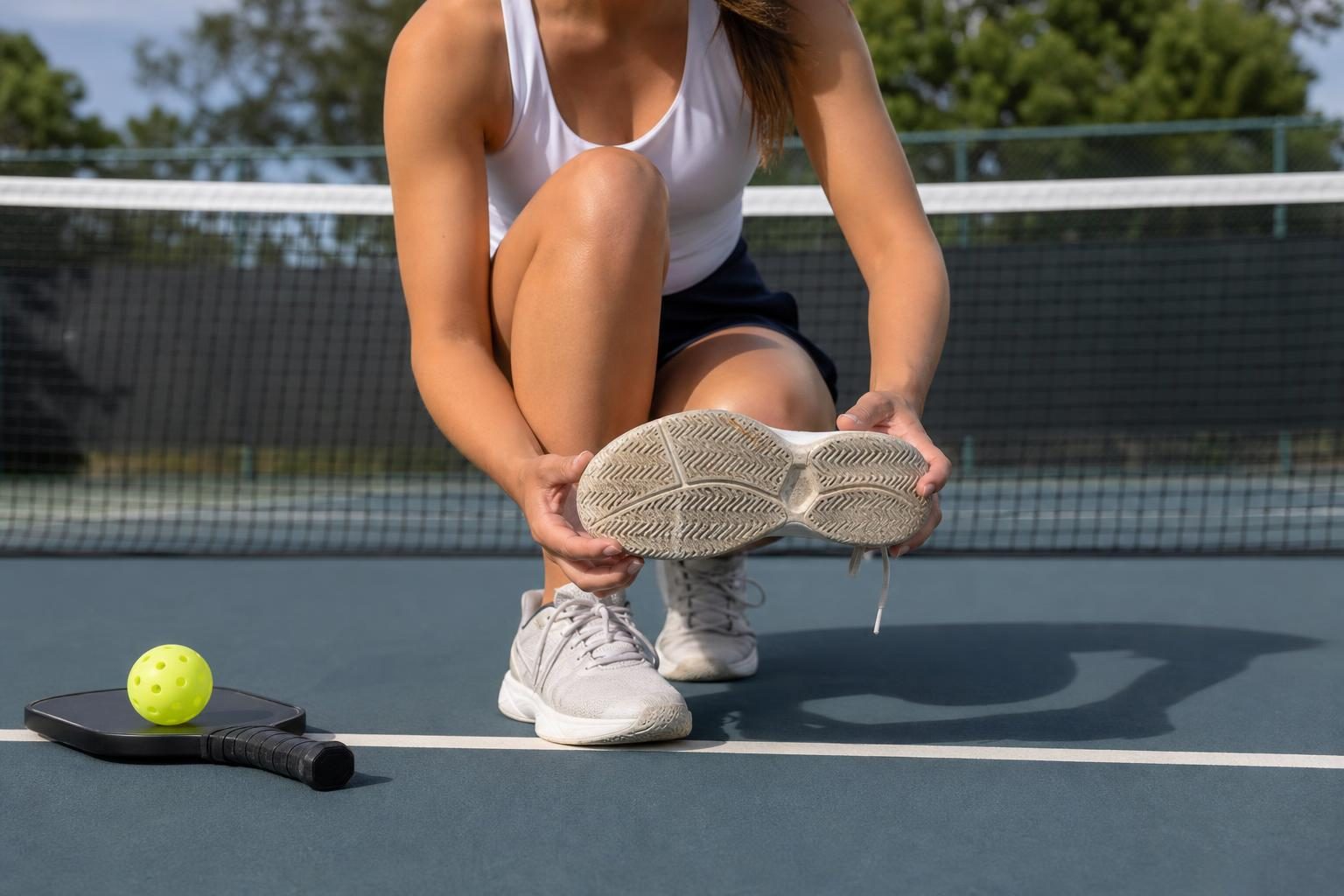
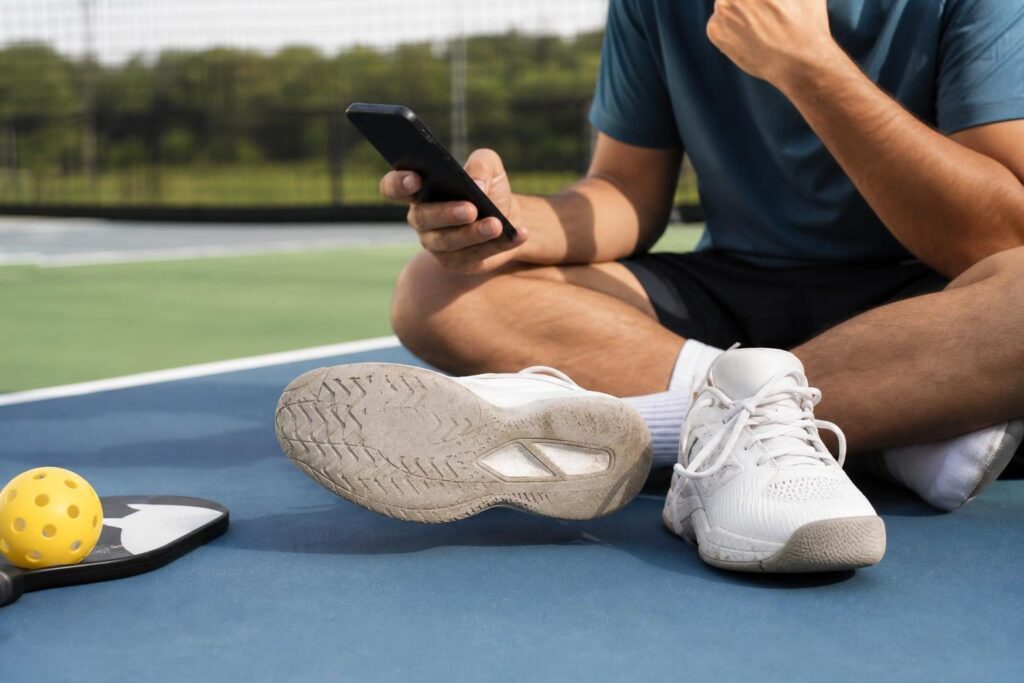
- Smooth traction zones: The tread has disappeared in areas you rely on for stopping and pushing off.
- Exposed midsole foam: The rubber outsole has worn through.
- Uneven wear: One side is substantially lower or more compressed than the other.
- Damaged uppers: Tears or stretched material reduce foot containment.
- Unstable heel fit: Your heel lifts or shifts despite appropriate lacing.
- A changed underfoot feel: The shoes feel flatter, harsher, or less stable than before.
Severe damage does not need a second warning sign. An outsole coming apart or a torn upper that compromises support is enough reason to stop using that pair for play.
3. Should I replace my shoes if the tread is worn but they still feel comfortable?
Yes, replace comfortable shoes if outsole wear has compromised their grip or stability.
Comfort and traction are different things. A soft, familiar shoe can still slide unexpectedly when you brake, change direction, or recover after a wide shot.
Pay particular attention to the forefoot, heel, and edges used during lateral movement. Some outsole designs have shallow patterns when new, so compare worn areas with less-used sections rather than judging tread depth alone.
Do not wait until the entire sole is smooth. Significant wear in a critical stopping or push-off area can justify replacement even when other sections look almost untouched.
4. Can pickleball shoe cushioning wear out before the sole does?
Yes, the midsole cushioning can lose its effectiveness before the outsole shows major wear.
The midsole is the cushioning layer between your foot and the rubber outsole. Repeated loading can compress it, changing how the shoe absorbs impact and supports movement.
Possible clues include a noticeably harsher landing sensation, a persistent flattened feel, or uneven compression. Visible foam creases alone do not prove that a shoe is worn out; some creasing is normal.
Compare both shoes and consider changes across several sessions. If the rubber still looks good but the shoes consistently feel less protective or stable, they may still need replacing.
5. Are my shoes worn out if I keep slipping on the court?
Repeated slipping can indicate worn-out shoes, but first check for dust, moisture, debris, or an unsuitable outsole.
Even relatively new shoes can lose traction on a dirty or damp surface. Stop playing long enough to inspect both the court and your soles rather than testing their grip with aggressive cuts.
- Check the playing area for moisture, dust, sand, or loose debris.
- Remove debris from the outsole and clean it according to the manufacturer’s instructions.
- Confirm that the shoes are intended for that type of court surface.
- Inspect the rubber for smooth patches, damage, or deterioration.
If slipping continues on a clean, dry, suitable court, replace the shoes. New footwear is not a solution for an unsafe playing surface, however.
6. Does foot, ankle, or knee pain mean I need new pickleball shoes?
New discomfort can be a reason to inspect your shoes, but pain alone does not prove they need replacing.
Worn cushioning, poor fit, or reduced support may contribute to discomfort. However, changes in playing time, movement technique, court surface, or an injury can also be involved.
Notice whether discomfort appeared alongside a clear change in your shoes, such as uneven compression or a loose heel. Do not assume that buying another pair will resolve the problem.
Stop playing if pain changes your movement. Persistent pain, swelling, or difficulty bearing weight warrants assessment by a qualified healthcare professional.
7. Do outdoor pickleball shoes wear out faster than indoor shoes?
Outdoor pickleball shoes often experience more abrasive outsole wear, but their actual lifespan depends on the surface and shoe construction.
Rough outdoor courts can wear down rubber during stops, pivots, and lateral pushes. Indoor shoes may face less abrasion on smooth floors, although their cushioning and uppers still experience repeated loading.
Use shoes suited to your playing surface. Indoor facilities may require non-marking outsoles, while outdoor play calls for rubber designed to tolerate abrasive courts.
If you play in both settings, separate pairs can help keep outdoor grit off indoor floors. Track each pair’s condition independently rather than assuming both will need replacement together.
8. Should I replace both shoes if only one is worn out?
Yes, replace the pair when one shoe has performance-limiting wear.
Uneven wear is common because players do not load both feet identically. Repeated push-offs, stops, and movement habits can wear one shoe faster.
Pairing one new shoe with one old shoe can create differences in cushioning, sole height, grip, and fit. Replacing both provides a more consistent platform.
Before discarding the old pair, note where the wear is concentrated. A recurring pattern may be useful to discuss with a coach or qualified clinician, especially if it accompanies discomfort. Wear patterns alone cannot diagnose a movement problem.
9. Can new insoles or repairs make my pickleball shoes last longer?
New insoles or minor repairs may improve comfort and fit, but they cannot restore worn outsole traction or a broken-down midsole.
A replacement insole may help when the removable footbed is flattened or damaged while the rest of the shoe remains sound. Replacing worn laces can also restore more secure fastening.
These fixes have limits. An insole will not rebuild missing outsole rubber, repair a collapsed heel structure, or restore an upper that no longer holds your foot securely during lateral movement.
Make sure any replacement insole leaves enough room for your foot and does not cause heel slippage. Avoid relying on improvised repairs for structural damage in shoes used for quick direction changes.
10. How can I make my pickleball shoes last longer?
You can extend their useful life by reserving them for court play, cleaning them appropriately, and letting them dry fully between sessions.
- Limit off-court use: Walking on pavement adds wear without adding playing time.
- Remove trapped debris: Check outsole grooves for grit and small stones.
- Air-dry after play: Loosen the laces and follow the manufacturer’s drying guidance.
- Avoid excessive heat: Do not use a heater or hot dryer unless the care instructions explicitly permit it.
- Rotate pairs if practical: This gives each pair more drying time, but does not make either pair wear-proof.
- Inspect regularly: Check grip, cushioning, seams, and heel security before small problems become serious.
Good care helps, but it does not make worn shoes safe indefinitely. Retire them from pickleball once their performance is compromised.
Conclusion
The best guide to when to replace pickleball shoes is their condition on the court. Check traction, cushioning, fit, and lateral support—not appearance alone. When a clean, properly fitted pair no longer gives you dependable grip and stability, it is time to move on.