Indoor vs. Outdoor Pickleball Shoes: Which Soles Do You Need?
This article contains affiliate links. If you buy through them, we may earn a commission at no extra cost to you.
The biggest difference between indoor vs outdoor pickleball shoes is not the roof over the court. It is the surface under your feet. Smooth gym flooring and rough outdoor hard courts place different demands on a shoe’s outsole, so choosing the right sole can improve traction, comfort, and durability.
This article is part of our guide: How to Choose Pickleball Shoes for Fit, Support, and Court Surface
The simple starting point: choose a non-marking indoor court outsole for a wood or synthetic gym floor, and a durable hard-court outsole for asphalt or concrete courts. If your indoor facility has an acrylic hard-court surface, you may need the same type of shoe you would wear outdoors.
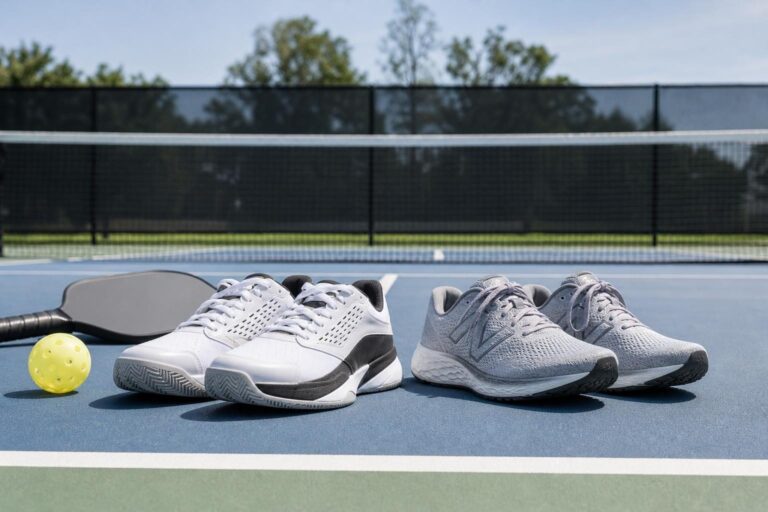
Indoor vs Outdoor Pickleball Shoes: Key Differences
Indoor and outdoor court shoes both need to support quick stops, lateral movement, and controlled changes of direction. Their main differences involve the outsole rubber, tread, and protection against surface wear. These are general tendencies, not rules that apply to every shoe.
| Feature | Indoor Court Shoes | Outdoor Hard-Court Shoes |
|---|---|---|
| Best-matched surface | Wood and smooth synthetic gym floors | Acrylic-coated asphalt or concrete courts, indoors or outdoors |
| Outsole priority | Grip on relatively smooth flooring | Grip plus resistance to abrasive court surfaces |
| Rubber characteristics | Often uses a softer, grippy compound | Typically emphasizes abrasion-resistant rubber |
| Tread design | Often uses multidirectional patterns suited to gym floors | Often uses herringbone or modified patterns suited to hard courts |
| Non-marking requirement | Commonly required by indoor facilities | May also be non-marking; check the shoe specification |
| Wear protection | May wear quickly on rough outdoor courts | Often includes reinforced outsole areas and toe protection |
| Main buying consideration | Reliable grip and floor compatibility | Outsole durability, stability, and comfort on hard surfaces |
Indoor Pickleball Shoes: Soles for Gym Floors
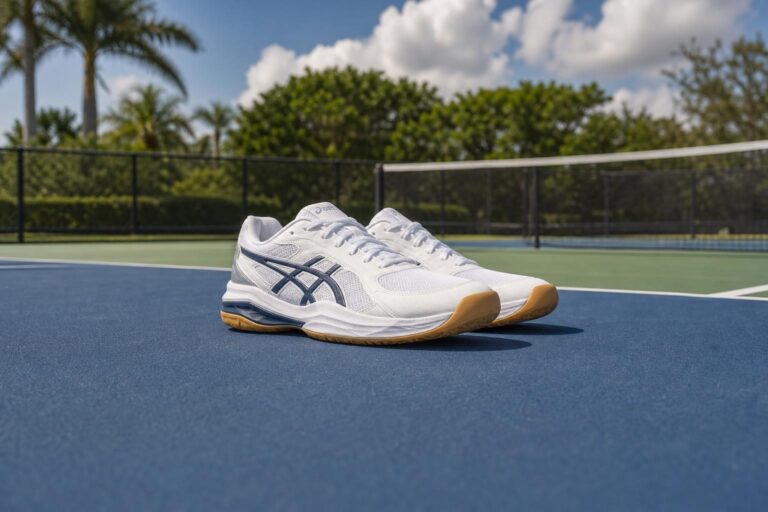
If you play on a basketball-style wood floor or a smooth synthetic sports floor, look for shoes designed for indoor court movement. Suitable options may include indoor pickleball, volleyball, badminton, or other indoor court shoes, provided they fit securely and offer adequate lateral support.
What Makes an Indoor Sole Different?
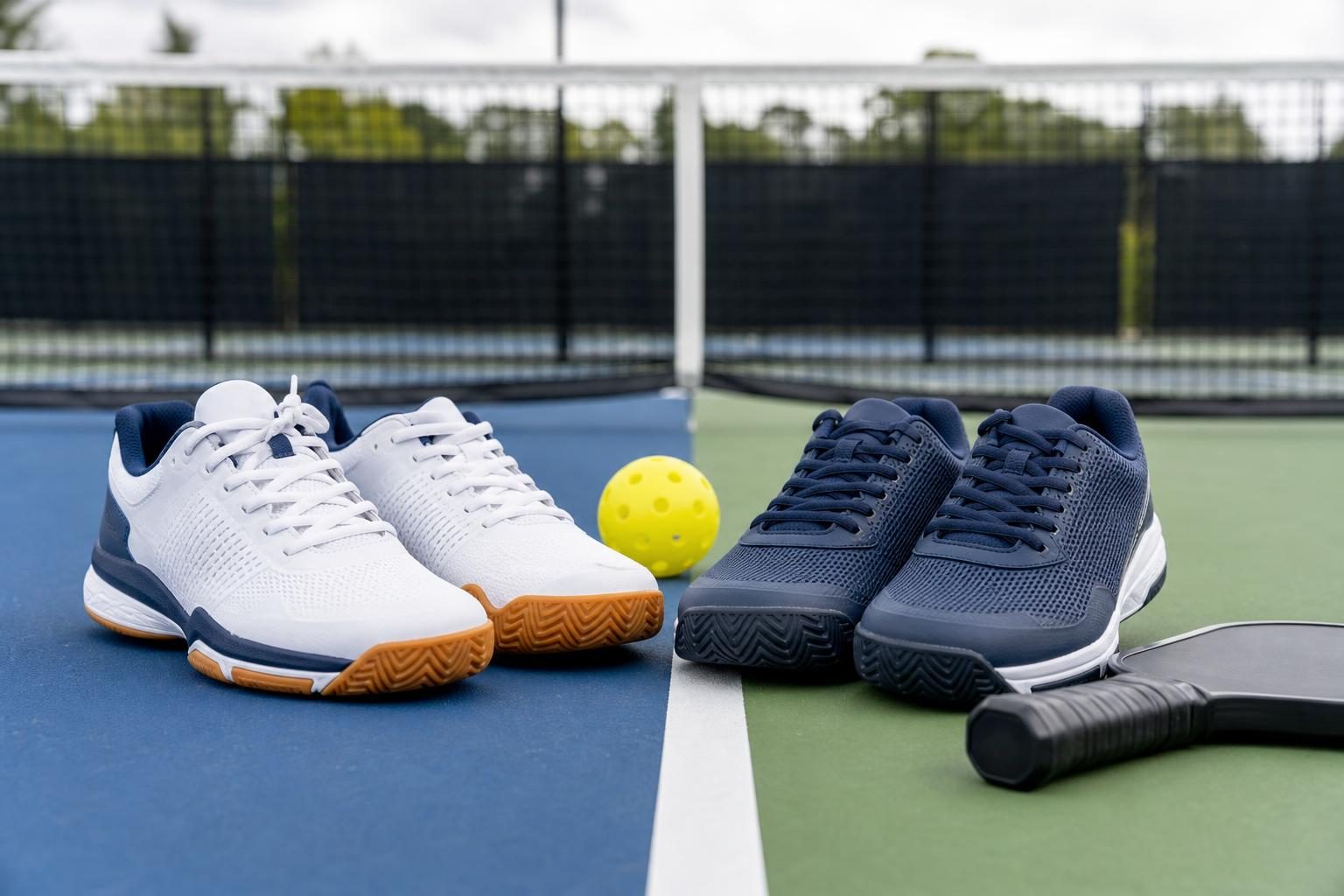
Indoor outsoles commonly use rubber compounds intended to grip smooth flooring. Gum rubber is a familiar example, but outsole color alone does not tell you whether a shoe is appropriate. A light-colored sole is not automatically non-marking, and a dark sole is not automatically unsuitable.
Check for an explicit non-marking specification. Many gyms require it to help prevent floor scuffs. Non-marking describes how the outsole interacts with the floor; it does not guarantee strong traction or good support.
Tread patterns vary, but an indoor court outsole should support forward, backward, and side-to-side movement. Reliable contact matters when you shuffle at the kitchen line or brake after moving toward a short ball.
Advantages of Indoor Court Soles
- Surface-appropriate traction: They are designed with smooth indoor playing surfaces in mind.
- Floor compatibility: Non-marking models meet a common indoor facility requirement.
- Court-focused movement: Suitable indoor court shoes combine traction with a platform built for changes of direction.
Limitations to Consider
A softer indoor outsole can wear quickly on abrasive outdoor courts. Regular outdoor use may smooth the tread or wear through high-contact areas before the rest of the shoe feels worn out.
Indoor grip also depends on floor cleanliness. Dust can reduce traction even with an appropriate shoe. Keep your soles clean and follow the facility’s floor-care guidance rather than assuming a different tread pattern will solve every slipping problem.
Outdoor Pickleball Shoes: Soles for Hard Courts
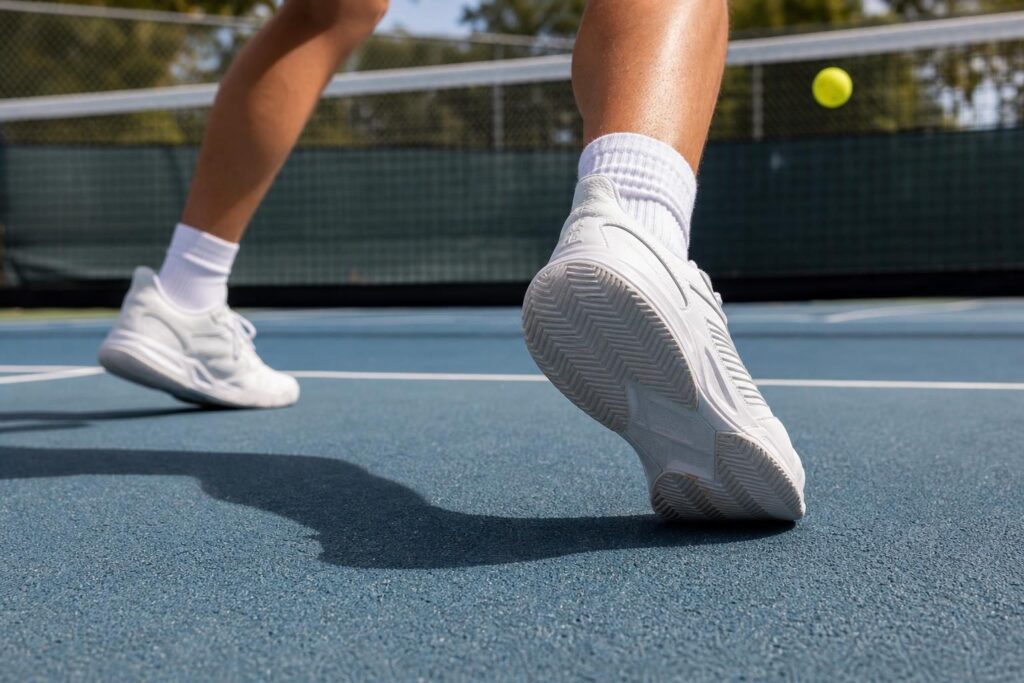
Outdoor pickleball commonly takes place on textured acrylic coatings over asphalt or concrete. These surfaces can be abrasive, especially during repeated push-offs, abrupt stops, and toe dragging.
A hard-court pickleball shoe or a suitable hard-court tennis shoe is usually the practical choice. Both categories can offer the lateral stability and outsole durability this style of play requires.
What Makes an Outdoor Sole Different?
Outdoor hard-court outsoles generally prioritize abrasion resistance while maintaining usable traction. Many feature herringbone or modified tread patterns, although the pattern alone does not determine performance. Rubber compound, contact area, shoe fit, and court condition all matter.
Look for durable rubber coverage in areas where you tend to wear shoes down. Players who drag a toe during serves or defensive movements may also benefit from reinforced toe areas.
A deeper or chunkier tread is not automatically better. Trail-running lugs are designed for different terrain and are not a substitute for a court-specific outsole.
Advantages of Outdoor Hard-Court Soles
- Better resistance to rough surfaces: Abrasion-resistant rubber helps manage hard-court wear.
- Targeted protection: Some shoes reinforce the toe and other high-wear zones.
- Useful surface crossover: They can also suit indoor facilities with acrylic hard courts.
Limitations to Consider
Some durability-focused shoes feel heavier or firmer than lighter indoor court models, although this varies by design. Do not assume that every outdoor shoe has more cushioning or better support than every indoor shoe.
An outdoor hard-court outsole may work on a gym floor, but compatibility is not guaranteed. Confirm that it is non-marking, check facility rules, and assess traction carefully before playing at full speed.
Which Should You Choose?
Start with your usual playing surface, then consider fit, stability, comfort, and wear patterns. The best choice is not necessarily the shoe labeled “pickleball”; it is the court shoe that suits both your feet and your court.
For Players Who Use Wood or Synthetic Gym Floors
Choose a non-marking indoor court shoe. Prioritize secure heel hold, lateral support, and dependable traction on that floor. Ask your facility about footwear restrictions before buying.
For Players Who Mostly Play Outdoors
Choose a durable hard-court pickleball or tennis shoe. Look for abrasion-resistant outsole rubber and suitable reinforcement if you regularly drag your toes. Make sure the shoe feels stable during lateral movement, not just comfortable while walking.
For Players at Indoor Hard-Court Facilities
Choose according to the court coating, not the building. An indoor acrylic court generally calls for a hard-court outsole. An indoor-only gum sole is not automatically the better choice simply because you are playing under a roof.
For Players Who Split Time Between Gym Floors and Outdoor Courts
Two surface-specific pairs are the most straightforward option if you play regularly. Keeping your gym shoes separate also helps prevent outdoor dirt and grit from being carried onto indoor floors.
If you can buy only one pair, start with the surface you use most. A non-marking hard-court shoe may be a workable compromise, provided your gym permits it and it delivers reliable traction there. Clean the soles before bringing them indoors.
For Beginners and Budget-Conscious Buyers
Prioritize surface suitability and fit over specialized branding. A well-fitting court shoe appropriate for your main venue is a better starting point than a running shoe. Running shoes are generally designed around forward movement rather than the repeated lateral loading of pickleball.
Avoid buying an indoor outsole for regular outdoor play simply because it costs less initially. Faster outsole wear may undermine that saving.
Check More Than the Sole Before Buying
The right outsole is essential, but it cannot compensate for poor fit. When trying on shoes, wear your usual playing socks and check the following:
- Heel security: Your heel should not lift excessively when you move.
- Toe room: Your toes should not hit the front during controlled stops.
- Lateral stability: Your foot should not slide over the edge of the platform during side steps.
- Comfort: Avoid persistent pinching, pressure points, or numbness.
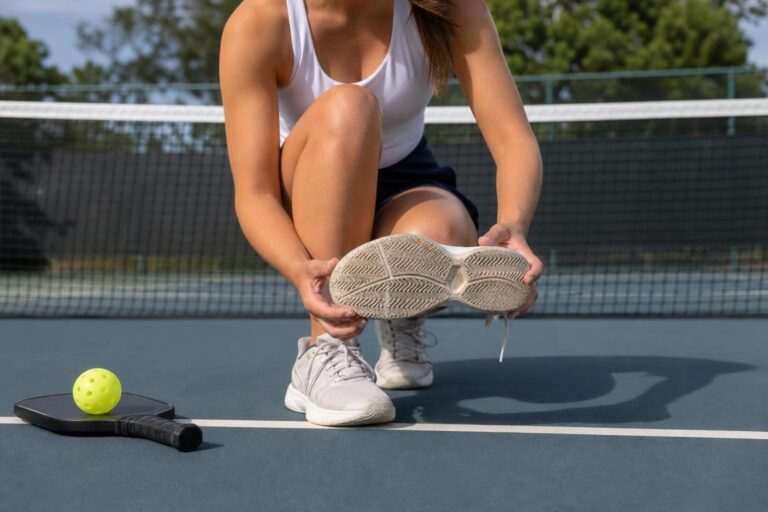
- Outsole condition: Replace shoes when wear or deteriorating traction makes movement less dependable, even if the upper still looks good.
Conclusion
For indoor vs outdoor pickleball shoes, match the sole to the surface first. Choose non-marking indoor court soles for smooth gym floors and durable hard-court soles for acrylic-coated asphalt or concrete, whether indoors or out. Then confirm fit and lateral stability so your shoes support the way you actually play.