Pickleball Ball Machine vs. Rebounder: Which Is Better for Solo Practice?
This article contains affiliate links. If you buy through them, we may earn a commission at no extra cost to you.
Solo pickleball practice can build better contact, steadier footwork, and more confidence between games. But the right equipment depends on what you want to improve. In the pickleball ball machine vs rebounder comparison, the biggest difference is simple: a machine delivers programmed feeds, while a rebounder returns the balls you hit into it.
This article is part of our guide: How to Practice Pickleball: A Guide to Drills, Skills, and Training Equipment
Neither option replaces live opponents. Both can make solo sessions more productive, though, especially when you match the equipment to your space, budget, and training goals.
Pickleball Ball Machine vs Rebounder: Key Differences
| Feature | Pickleball Ball Machine | Pickleball Rebounder |
|---|---|---|
| How it works | Launches balls from a hopper at selected intervals | Returns your shots from a rebounding surface |
| Best training uses | Returns, drives, drops, movement patterns, and selected volley drills | Compact swings, touch, hand-eye coordination, and reaction drills |
| Control over the incoming ball | Speed, interval, direction, elevation, and spin may be adjustable, depending on the machine | Return depends on your shot, distance, surface, and any available angle adjustments |
| Practice rhythm | Separate feeds that can allow time to recover between shots | A continuous exchange that depends on keeping the ball going |
| Space requirements | Usually most useful on a court or in a large, suitable practice area | Can suit smaller spaces if there is enough safe hitting clearance |
| Power requirements | Requires a battery or electrical supply | Typically requires no power |
| Setup and maintenance | Requires loading balls, managing power, and caring for moving parts | Generally simpler, although frames, surfaces, and tension systems need attention |
| Typical cost position | Usually the higher-cost option | Usually the lower-cost option, with substantial variation between designs |
| Main limitation | Does not respond to your shot or recreate an opponent’s decisions | Does not fully reproduce realistic opponent feeds or court geometry |
Pickleball Ball Machines: Better for Controlled, Court-Based Repetitions
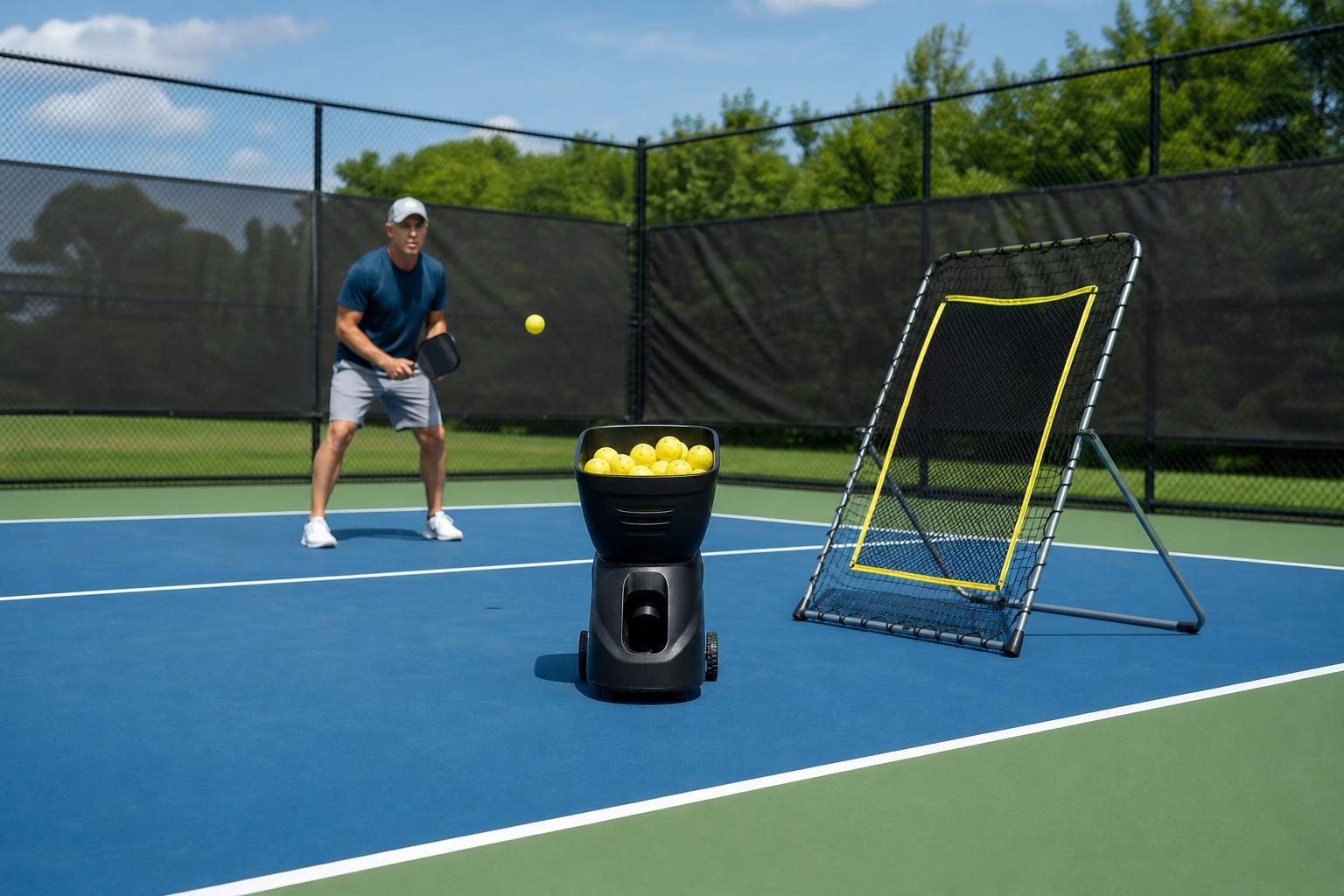
A pickleball ball machine sends individual balls toward you, usually from the opposite side of the net. You choose the available settings, get into position, and work through a sequence of shots.
The main advantage is control over the incoming feed. Rather than relying on your previous shot to generate the next ball, you can practice against a relatively consistent delivery.
What a Ball Machine Does Well
- Grooving technique: Repeated feeds help you focus on contact point, paddle preparation, and balance.
- Practicing court-length shots: Returns, drives, and third-shot drops benefit from seeing the ball travel across a real net.
- Training movement: Machines with suitable directional controls can feed different locations for footwork drills.
- Separating repetitions: A manageable feed interval gives you time to finish your stroke and recover before the next ball.
For example, a player struggling with third-shot drops can arrange feeds that approximate the incoming return, then aim into a marked section of the kitchen. The goal is not simply to land the ball short, but to develop a trajectory that clears the net and descends into the target area.
Available controls vary widely. Do not assume every machine offers oscillation, adjustable spin, programmable sequences, or the elevation needed for every drill.
Where a Ball Machine Falls Short
A machine does not care where you hit your shot. It will deliver the next ball according to its settings, not according to whether your last drop was attackable or your drive pulled an opponent wide.
That makes it useful for repetition but limited for tactical learning. Even variable feeds cannot fully reproduce an opponent reading your position and choosing a response.
There is also more logistics to manage. You need suitable balls, a way to transport the equipment, enough power for the session, and time to collect balls. Check court rules before bringing a machine, and keep loose balls out of your movement path.
A Simple Ball Machine Practice Session
- Begin with comfortable feeds to establish balanced contact.
- Choose one shot and one target, such as deep crosscourt returns.
- Work in short sets, tracking target accuracy rather than just total hits.
- Add movement or feed variation only when your technique stays stable.
- Finish with a challenge that requires a full recovery position after every shot.
Pickleball Rebounders: Better for Convenient, Frequent Practice
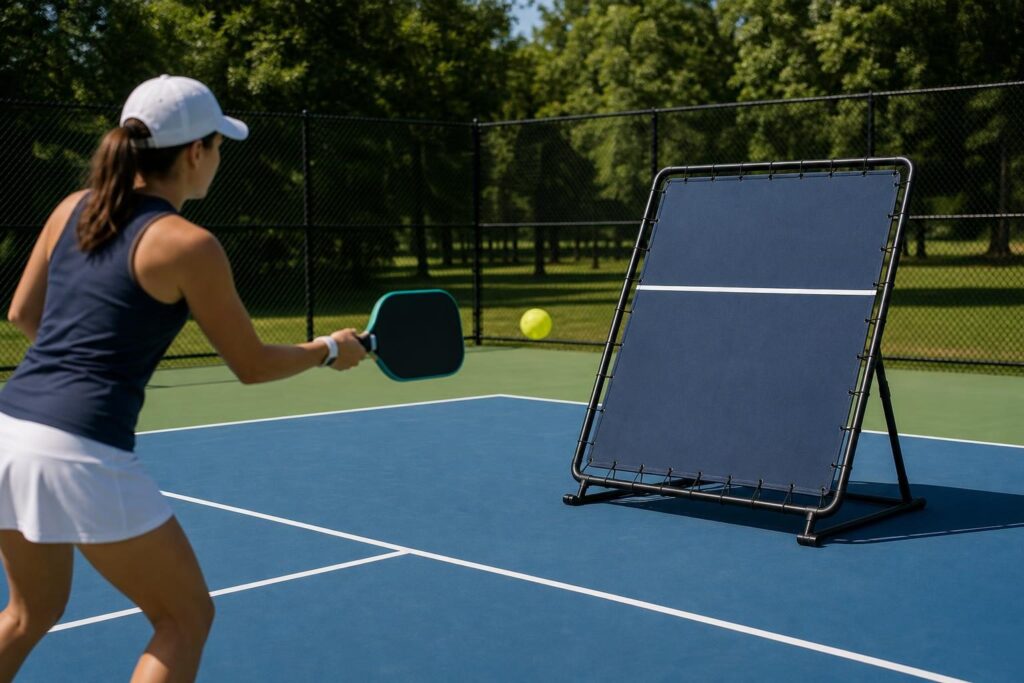
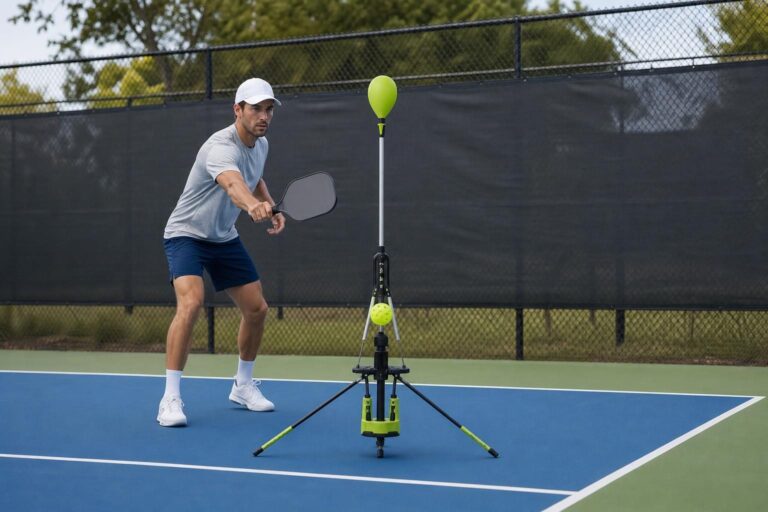
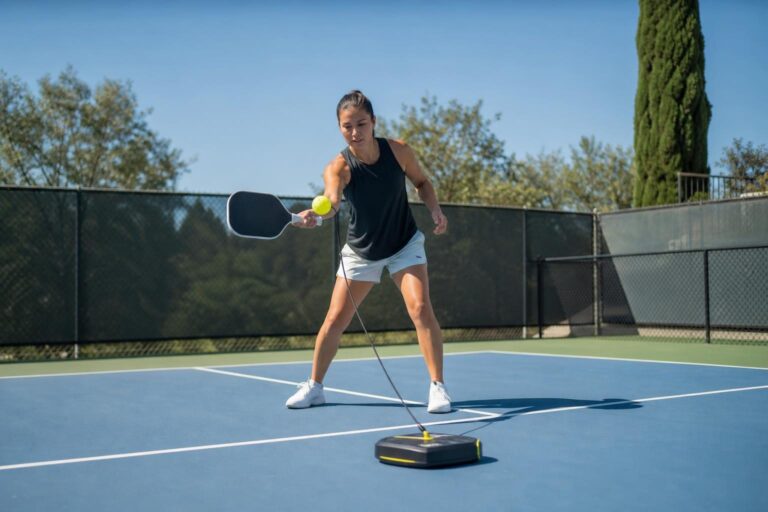
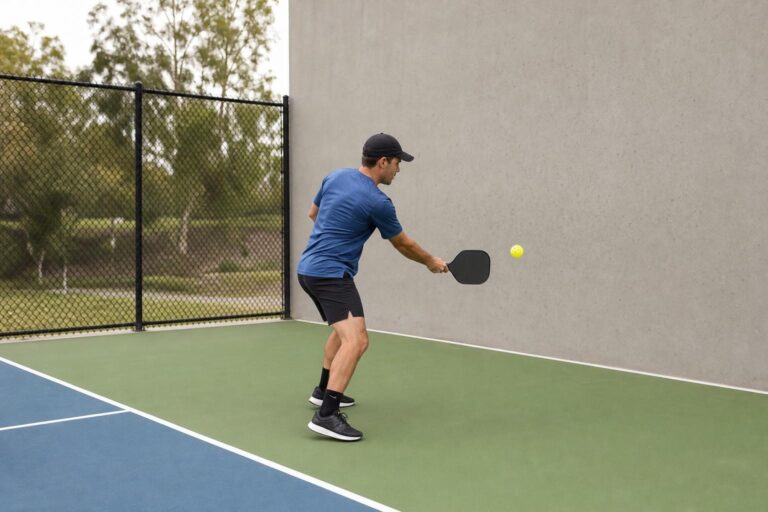
A rebounder gives your own shot back to you. Depending on the design, it may use a rigid panel or a tensioned surface, sometimes with an adjustable angle. Those differences matter: not every rebounder produces the same pace, bounce, or return trajectory.
Its biggest strength is low-friction practice. If you can leave it safely set up, it may be easier to fit in a short session than to travel to a court and prepare a ball machine.
What a Rebounder Does Well
- Developing compact strokes: Short exchanges can encourage efficient paddle preparation instead of oversized swings.
- Improving coordination: You repeatedly track the ball, adjust your feet, and find the paddle’s sweet spot.
- Providing immediate feedback: An off-center or poorly controlled shot often disrupts the next return.
- Supporting frequent sessions: A simple setup can make brief, regular practice more practical.
For players working on soft hands or controlled volleys, an appropriate rebounder can provide useful repetitions. Start at a manageable pace and use a distance recommended for the equipment rather than standing close simply to make the drill harder.
Some designs also support bounce-based touch drills. However, a ball returning from a nearby surface is not the same as a dink traveling over a net from an opponent’s paddle.
Where a Rebounder Falls Short
Your next ball depends on your previous shot. That is useful feedback, but it can make isolating a specific technique difficult. One poor contact may send you chasing the ball instead of getting another clean repetition.
A rebounder can also reward patterns that do not transfer well to games. Standing still and tapping continuously may build rhythm without teaching recovery, shot selection, or realistic spacing.
To improve transfer, reset your stance between contacts and give each drill a purpose. For volley work, stay balanced and use legal non-volley-zone positioning when practicing on a marked court.
Before buying, check the required clearance, stability, storage dimensions, and suitability for your intended surface. For home practice, consider noise and the risk of stray balls reaching windows, vehicles, or other people.
A Simple Rebounder Practice Session
- Begin with gentle contacts and a stable, balanced stance.
- Choose either forehands or backhands before alternating sides.
- Aim at a defined area rather than merely keeping the rally alive.
- Add small adjustment steps while keeping the paddle ready.
- Stop and reset when the exchange becomes rushed or your mechanics deteriorate.
Which Should You Choose?
Choose a Ball Machine If You Want Structured Court Training
A ball machine is usually the better fit for players with regular court access who want to improve specific shots against controlled feeds. It is especially useful when your priorities are returns, drives, drops, and moving into position before contact.
Before buying, confirm that the machine can produce the feeds your drills require. Portability, ball capacity, battery arrangements, and ease of adjusting settings may matter more than a long list of features.
Choose a Rebounder If Convenience Is Your Priority
A rebounder is usually the stronger choice for a player who wants frequent, short practice sessions without a powered machine. It can be particularly helpful for coordination, compact strokes, and controlled hand-speed work.
This recommendation assumes you have a safe place to use it. A compact product still needs room for the ball’s return path, your movement, and occasional mishits.
For Beginners: Favor Simplicity and Good Habits
A rebounder can be an accessible starting point if your main goal is getting comfortable making contact. Keep the pace slow enough to maintain balance and avoid turning every session into a frantic reaction drill.
If you have court access and need help learning full-court shot trajectories, a ball machine may be more useful. In either case, occasional coaching can help prevent repeated practice from reinforcing the wrong movement.
For Competitive Players: Match the Tool to the Weakness
Choose a ball machine if your weak link is executing a particular shot from a particular court position. Choose a rebounder if you need a convenient way to sharpen compact contact and paddle readiness between court sessions.
If you already own one, the other may complement it rather than replace it. Neither should take the place of partner drills and games that require reading opponents and making decisions.
Conclusion
The best choice in the pickleball ball machine vs rebounder debate depends on the practice you will actually do. Choose a ball machine for controlled feeds and court-based shot development; choose a rebounder for convenient repetition and compact-stroke work. Give every session a clear target, maintain sound footwork, and use live play to check whether those repetitions are improving your game.