Home Pickleball Court Setup Guide: Space, Surfaces, Nets, and Balls
This article contains affiliate links. If you buy through them, we may earn a commission at no extra cost to you.
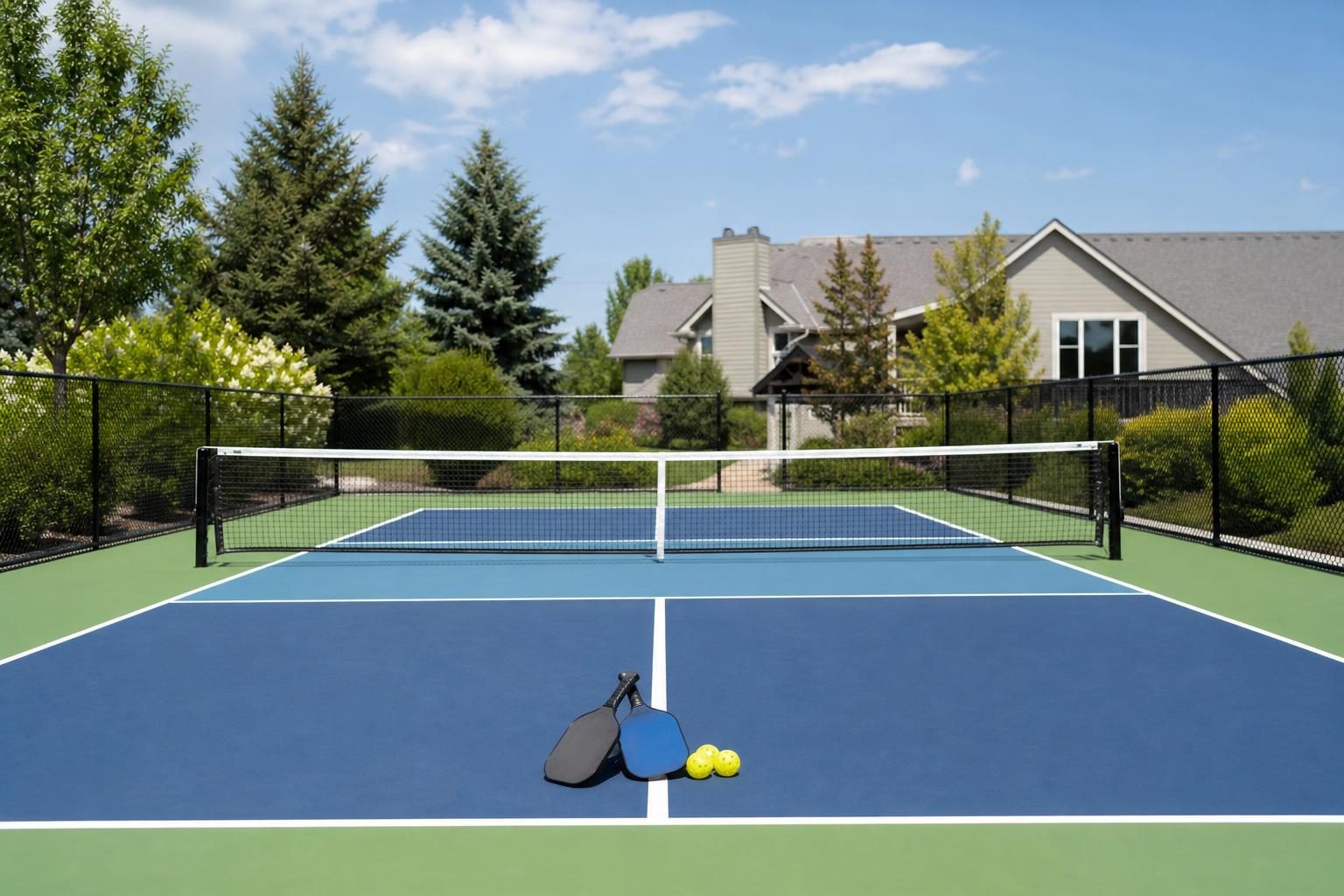
A home pickleball court setup can be as simple as a portable net on a suitable driveway or as involved as a dedicated backyard court. The best approach depends on your available space, the condition of the surface, your budget, and whether the area needs to serve other purposes. Start with safety and layout, then choose a net and balls that match where you will play.
1. Plan Your Space Before Buying Equipment
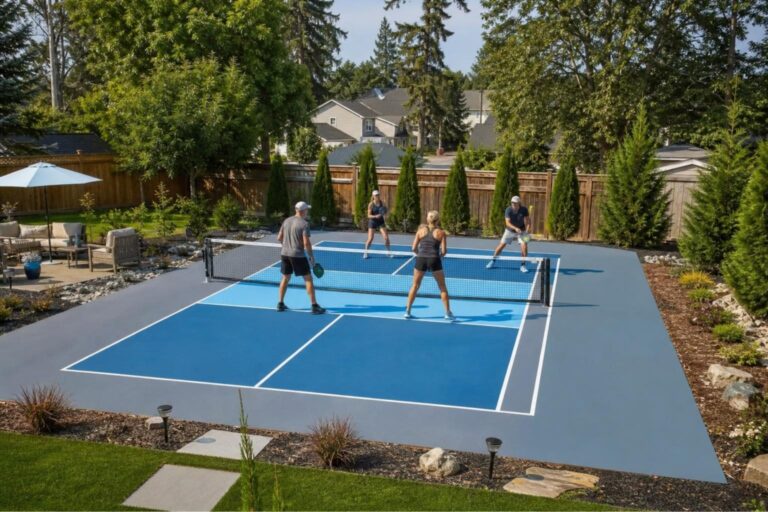
A regulation pickleball court measures 20 feet wide by 44 feet long for both singles and doubles. However, those measurements describe the playing lines, not the full space needed to move safely around them.
Players need room behind the baselines to return deep shots and beyond the sidelines to chase angled balls. Fences, walls, steps, landscaping, and parked vehicles should sit outside that movement area.
| Space | Dimensions | What It Means |
|---|---|---|
| Marked playing court | 20 by 44 feet | The area inside the court boundaries, without surrounding runoff. |
| Common minimum recommended playing area | 30 by 60 feet | Provides 5 feet beyond each sideline and 8 feet behind each baseline. |
| Preferred playing area | 34 by 64 feet | Provides more room for movement, with 7 feet beyond each sideline and 10 feet behind each baseline. |
Measure the Usable Area, Not Just the Property
For a backyard pickleball court, measure the clear, usable footprint after accounting for structures, drainage features, access paths, and local setback requirements. A yard that looks large enough may still have limitations once these are considered.
Driveways need particular attention. Check for garage doors, retaining walls, basketball equipment, street traffic, and steep changes in grade. A driveway can fit court lines without providing a safe place to play a full-speed game.
Be Realistic About Smaller Spaces
If a full court and safe runoff will not fit, use the area for controlled dinking, serving practice, or other modified drills. Clearly distinguish a practice area from a regulation court, and avoid chasing balls toward roads or obstacles.
For a dedicated outdoor court, consider sun exposure and prevailing winds. A generally north–south orientation can help reduce direct low-sun glare, although the best placement also depends on the property and surrounding shade.
2. Choose a Suitable Surface and Solve Drainage First
The surface affects bounce, traction, comfort, and maintenance. For most home courts, the practical starting point is either an existing paved area or a professionally built concrete or asphalt base.
Using an Existing Driveway or Patio
An existing hard surface can keep a home pickleball court setup relatively simple. Before adding lines, inspect it for:
- Cracks and uneven joints: These can interrupt ball bounce and create trip hazards.
- Loose material: Gravel, flaking coatings, and crumbling pavement reduce traction.
- Standing water: Puddles suggest drainage problems that should be addressed.
- Excessive slope: A steep driveway changes play and makes movement less predictable.
- Slick finishes: Smooth decorative concrete may be unsuitable for athletic use, especially when damp.
Grass, loose gravel, and uneven pavers do not provide the consistent bounce expected for standard pickleball. They may support casual paddle activities, but they are not substitutes for a suitable court surface.
Building a Dedicated Court
Concrete and asphalt can both support outdoor pickleball courts when properly designed and installed. Neither is automatically the right choice for every property; soil conditions, climate, drainage, and local construction expertise matter.
A sport-court acrylic coating provides court color and a textured playing finish over a suitable base. It does not fix structural movement, major cracking, or poor drainage. Some systems include cushioning layers, but these still need a sound foundation.
Have a qualified court contractor assess grading and drainage before construction. A court needs controlled drainage rather than a perfectly level surface that holds water, but the appropriate slope and construction details should be specified for the site.
3. Lay Out and Mark the Court Accurately
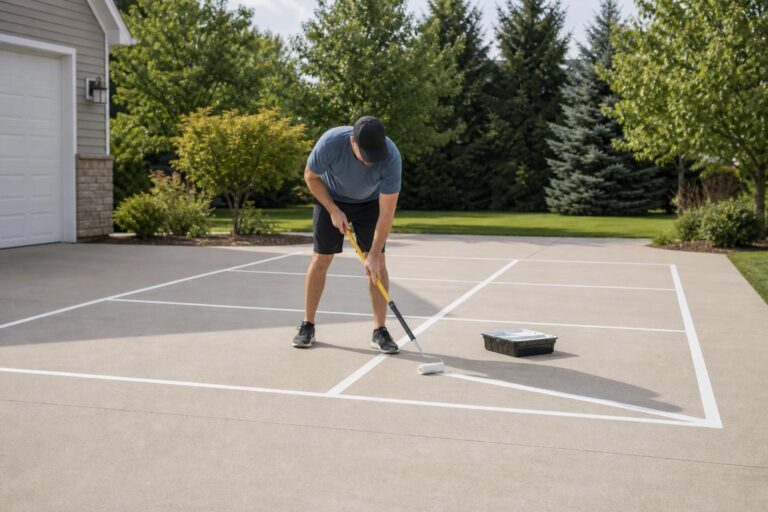
Accurate lines make play easier and prevent arguments over boundaries. For a temporary driveway court, removable court-marking tape or suitable chalk may be enough. A dedicated court usually calls for compatible sports-surface paint.
Understand the Main Measurements
- Overall court: 20 feet wide and 44 feet long.
- Net location: Across the middle, 22 feet from each baseline.
- Non-volley zone: Extends 7 feet from the net on each side, across the full court width.
- Service areas: The area between each non-volley-zone line and baseline is divided into two equal service courts by a centerline.
- Line width: Court lines are 2 inches wide.
The non-volley zone is commonly called the kitchen. Its boundary line is part of that zone. Other court boundary lines generally count as in, but a serve touching the non-volley-zone line is a fault.
Use a Careful Marking Process
- Clean and dry the surface.
- Establish the court corners and measure the full rectangle.
- Compare diagonal measurements to check that the rectangle is square.
- Mark the net location, non-volley-zone lines, and centerlines.
- Confirm measurements using a reliable court diagram before applying final markings.
For a driveway, test any tape or marking material on a small, inconspicuous area first. Some products can leave residue, stain the surface, or damage an existing coating during removal. Tape must also lie flat without creating a slippery or raised edge.
If you are painting permanent lines, follow the coating manufacturer’s surface-preparation and curing instructions. Avoid assuming that ordinary household paint will provide suitable grip or long-term compatibility.
4. Select a Net That Fits Your Setup
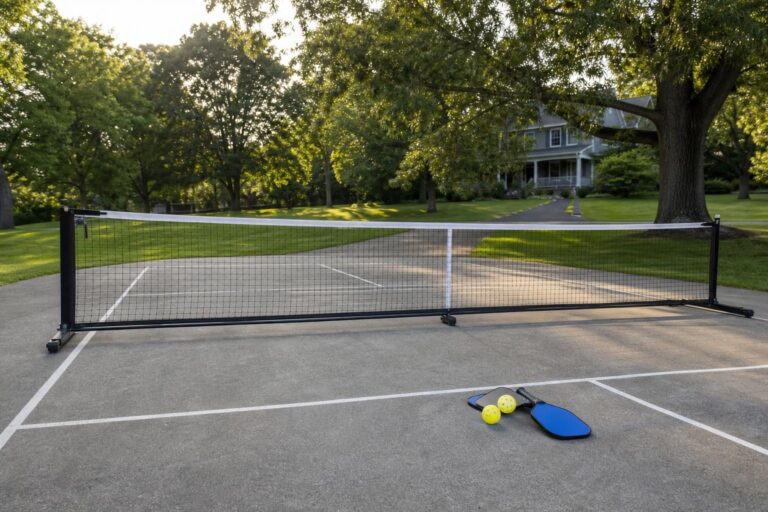
The right net depends on whether the court is permanent, temporary, or shared with other activities. For most driveways and multipurpose spaces, a full-size portable pickleball net is the easiest starting point.
Check Height and Stability
A regulation pickleball net is 36 inches high at the sidelines and 34 inches high at the center. Check these heights after assembly rather than assuming the frame automatically sets them correctly.
When comparing portable nets for driveways and shared courts, prioritize:
- A stable frame that stays upright during normal play.
- A dependable center support and tensioning system.
- Manageable packed size and weight.
- Replacement-part availability.
- Clear storage instructions and suitable weather resistance.
Small practice nets are useful for drills, but they are not full-court replacements. Also inspect where the frame feet sit, particularly on uneven pavement or where players enter and leave the court.
Portable Versus Permanent Nets
A portable net lets you reclaim the space for parking or other activities. Models with wheels can simplify movement, although storage dimensions and wheel-locking features deserve attention.
Permanent posts suit dedicated courts but require proper placement and installation. Plan their position before the base is built, and keep posts and other hardware out of player movement paths. Do not treat a portable net as stormproof; follow its instructions for wind, storage, and outdoor exposure.
5. Match Your Pickleballs to the Playing Conditions
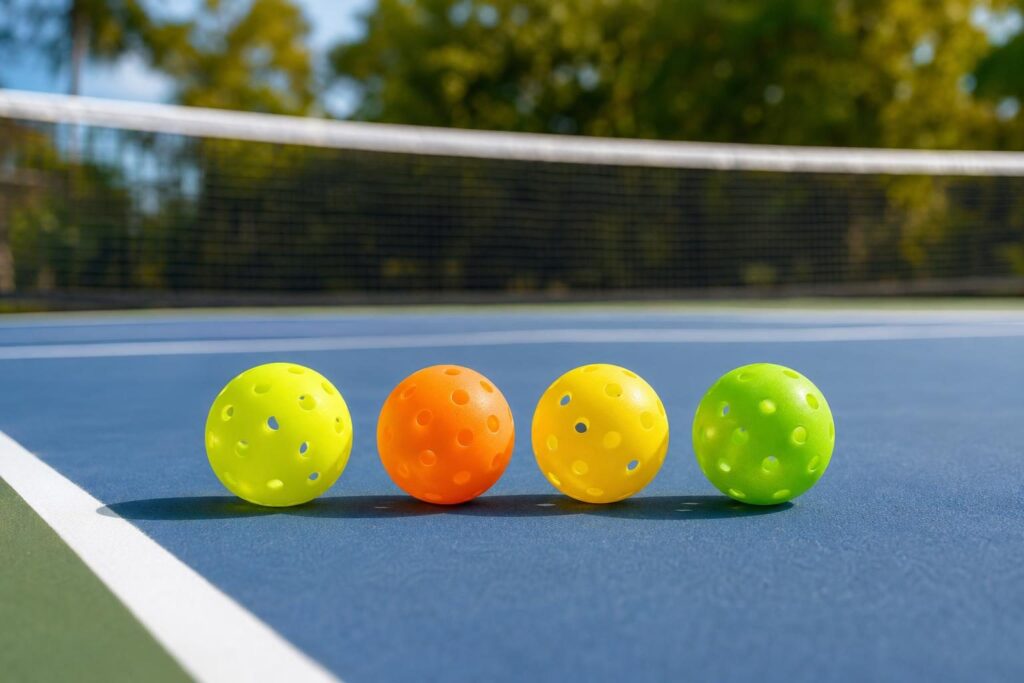
Pickleballs are not interchangeable in every setting. Construction affects flight, bounce, feel, and how well a ball holds up on a particular surface.
Indoor Versus Outdoor Pickleballs
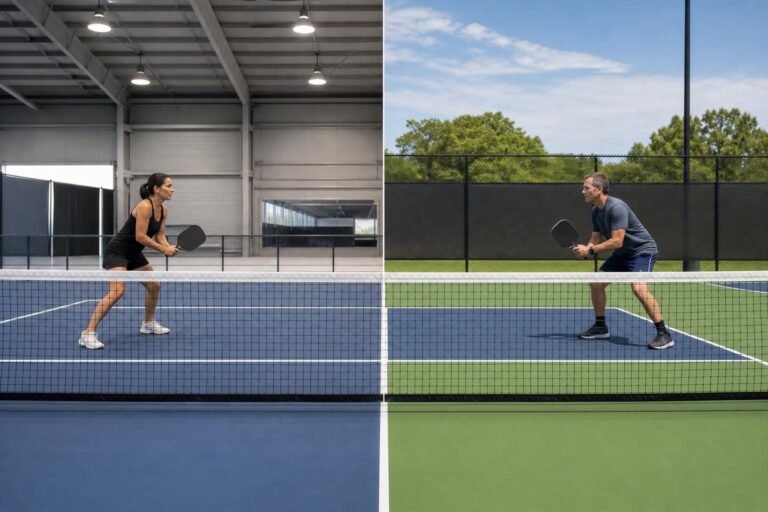
Indoor balls typically have fewer, larger holes and a softer feel. They are commonly used on smooth indoor floors, where control and traction differ from outdoor hard courts.
Outdoor balls typically have more, smaller holes and a firmer construction suited to outdoor play. The familiar pattern is 26 holes for many indoor models and 40 for many outdoor models, but check the individual product rather than relying only on hole count.
Choose primarily for the playing surface and conditions, not simply whether there is a roof overhead. A covered outdoor hard court may still play best with an outdoor ball.
Where the Franklin X-40 Fits
The Franklin X-40 is a widely used outdoor pickleball and a useful model to consider for a home hard court. Its 40-hole design places it in the outdoor-ball category.
When evaluating it, consider bounce consistency, visibility against your court and surroundings, and durability in your conditions. No ball lasts indefinitely, and surface roughness, temperature, and style of play can all affect its useful life.
Choosing Balls for Cold Weather
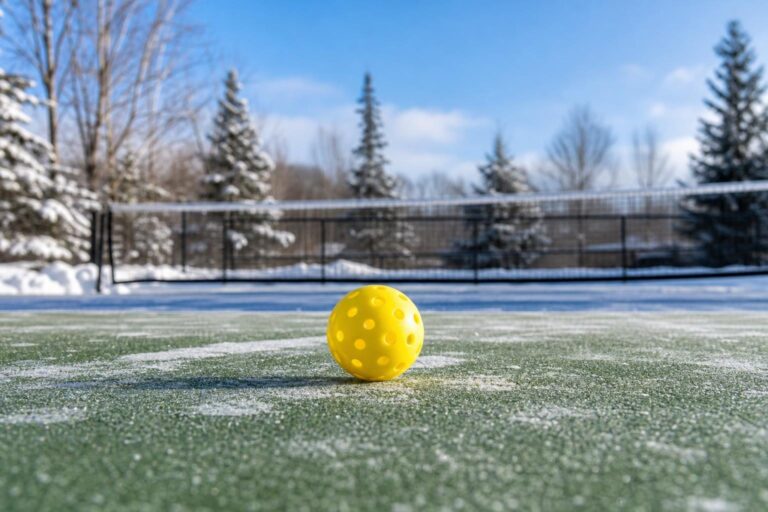
Cold conditions can make plastic balls less forgiving and more prone to cracking. If you regularly play in low temperatures, look for outdoor balls specifically described by their manufacturer as suitable for cold-weather play.
Keep spare balls available, avoid leaving them in freezing storage between sessions, and inspect them frequently. Do not assume a cold-weather ball is unbreakable or that improvised heating methods are safe.
6. Add Safety, Visibility, and Neighbor-Friendly Features
A playable court needs more than correct dimensions. The surrounding environment should let players move, see the ball, and retrieve it without unnecessary risk.
- Footwear: Wear court shoes suited to lateral movement and the playing surface.
- Clear surroundings: Remove hoses, tools, leaves, and loose stones before play.
- Ball containment: Use appropriately placed fencing or barriers where balls could reach roads, pools, or neighboring properties.
- Lighting: For evening play, seek even court illumination without glare or excessive spill onto nearby homes.
- Rest space: Keep seating, drinks, bags, and spare equipment outside the runoff area.
Pickleball sound also deserves early attention. Talk with nearby neighbors, establish reasonable playing hours, and check applicable noise rules. Quieter equipment may help, but it does not eliminate the need for thoughtful court placement.
Before permanent construction, check local permits, zoning, setbacks, lighting restrictions, and homeowners association requirements. Fencing and electrical work may involve separate approvals.
7. Build Your Budget Around the Whole Project
The net and balls are only part of the cost. For a permanent court, site preparation and construction can matter far more than accessories.
A Simple Temporary Setup
If you already have suitable pavement and enough safe space, the basic shopping list is short:
- A full-size portable net.
- Paddles and surface-appropriate balls.
- Measuring tools and temporary court markings.
- A broom or other surface-cleaning equipment.
This approach lets you evaluate how often the space gets used before committing to permanent changes.
A Dedicated Backyard Court
Request itemized estimates covering site access, excavation, base construction, drainage, surfacing, lines, net installation, and cleanup. Include fencing, lighting, landscaping repairs, and permit-related expenses where relevant.
Ask contractors about their court-building experience, material specifications, curing requirements, maintenance guidance, and warranty terms. Compare the scope of work rather than choosing on the total alone.
Plan upgrades in a sensible order: safe space and drainage first, sound surface second, equipment third, optional extras last.
8. Maintain the Court and Check It Before Play
Routine care protects both the playing surface and your equipment. A short inspection before each session can catch problems before they interrupt a game.
- Sweep away grit, leaves, and other debris.
- Check for moisture, algae, ice, or slippery patches.
- Inspect temporary lines for lifting edges.
- Confirm net height, alignment, and frame stability.
- Replace cracked or noticeably misshapen balls.
- Keep gates, access routes, and runoff areas clear.
Clean coated surfaces according to the surface manufacturer’s guidance. Aggressive pressure washing, unsuitable chemicals, or metal tools can damage some finishes.
Store portable nets and other equipment as directed, particularly during severe weather or long periods without play. Monitor cracks and recurring puddles rather than repeatedly covering them with fresh paint. Dedicated courts eventually need maintenance or resurfacing, so allow for that in your long-term plan.
Conclusion: Start With a Safe, Playable Foundation
The best home pickleball court setup is one that fits your property and supports safe, enjoyable play. Measure the full playing area, address surface and drainage issues, mark the court accurately, and choose a stable net and suitable balls. Whether you begin with a temporary driveway court or build a dedicated backyard space, get the fundamentals right before adding extras.
In this guide
- Franklin X-40 Pickleball Review: Bounce, Visibility, and Durability
- Indoor vs. Outdoor Pickleballs: How Construction Affects Play
- Best Portable Pickleball Nets for Driveways and Shared Courts
- Best Outdoor Pickleballs for Cold Weather
- How to Mark Pickleball Court Lines on a Driveway
- How Much Space Do You Need for a Backyard Pickleball Court?