Best Outdoor Pickleballs for Cold Weather
This article contains affiliate links. If you buy through them, we may earn a commission at no extra cost to you.
The best outdoor pickleballs for cold weather balance crack resistance, a predictable bounce, and the feel you want during play. No plastic ball is immune to cold-weather damage, so the smartest choice depends on whether you prioritize durability, recreational comfort, or practicing with your usual competition ball.
This article is part of our guide: Home Pickleball Court Setup Guide: Space, Surfaces, Nets, and Balls
- Best starting point for recreational play: ONIX Fuse G2 Outdoor
- Best familiar all-around option: Franklin X-40
- Best durability-focused alternative: Selkirk Pro S1
- Best cold-weather-focused option to consider: PCKL Elite 40
- Best for maintaining a firm competition feel: Dura Fast 40
These picks offer different compromises rather than one guaranteed winner at every temperature. Conditions, court surfaces, and how hard you hit all affect ball life. In near-freezing weather, buying a small pack before committing to a bulk order is especially worthwhile.
ONIX Fuse G2 Outdoor: Best Starting Point for Recreational Play
The ONIX Fuse G2 Outdoor is a sensible first option for players who want an outdoor ball with a more forgiving feel than particularly hard, competition-oriented alternatives. That makes it worth considering for casual doubles, recreational groups, and players who dislike a harsh response on chilly mornings.
Its appeal is balance: you still get an outdoor-specific ball, without making the firmest possible feel your top priority. Cold can change that feel, however, and a ball that seems comfortable in mild conditions will not necessarily behave the same way near freezing.
Strengths
- A practical option for recreational outdoor sessions.
- Worth considering when comfort and manageable pace matter more than matching a particular tournament ball.
- Available as a clearly identified outdoor version, making selection straightforward.
Drawbacks
- Players accustomed to a firmer ball may need to adjust their touch and timing.
- It can still crack in cold conditions; a more forgiving feel is not a durability guarantee.
Best fit: Recreational players looking for a balanced starting point rather than the hardest, fastest-feeling option.
Franklin X-40: Best Familiar All-Around Option
The Franklin X-40 is a widely encountered outdoor pickleball, making it a practical choice when your regular group already uses it. Keeping the same ball can reduce the adjustment required for serves, drops, drives, and resets as temperatures change.
Its main advantage here is familiarity, not immunity to cold. X-40 balls can crack during chilly play, so they are better viewed as a convenient all-around option than a specialist solution for freezing conditions.
Strengths
- A familiar reference point for many outdoor players.
- Useful for groups that want to keep their equipment consistent across sessions.
- Different color options let players choose what stands out against their court background.
Drawbacks
- Cold-weather cracking remains a concern, especially during hard-hitting play.
- Sticking with a familiar ball may mean accepting more replacements when temperatures drop.
Best fit: Players whose local games already revolve around the X-40 and who value consistency over switching to a different ball for winter.
Selkirk Pro S1: Best Durability-Focused Alternative
The Selkirk Pro S1 is worth shortlisting if durability is your main shopping priority. It is positioned around durability and consistent performance, making it a relevant alternative for players frustrated by frequently replacing outdoor balls.
That positioning should not be mistaken for proof that it will outlast every competitor in your particular conditions. Cold-weather lifespan depends on more than the product name, and the Pro S1 has its own playing characteristics that may require an adjustment.
Strengths
- A relevant option for buyers prioritizing resistance to cracking and deformation.
- Suitable for players who want a performance-oriented outdoor ball rather than switching to a softer indoor ball.
- Worth comparing directly with your regular ball over several similar sessions.
Drawbacks
- Its response may feel different from the ball your group normally uses.
- Durability-focused design does not make a plastic ball crack-proof in winter.
Best fit: Frequent players willing to try a different ball in pursuit of better replacement value.
PCKL Elite 40: Best Cold-Weather-Focused Option to Consider
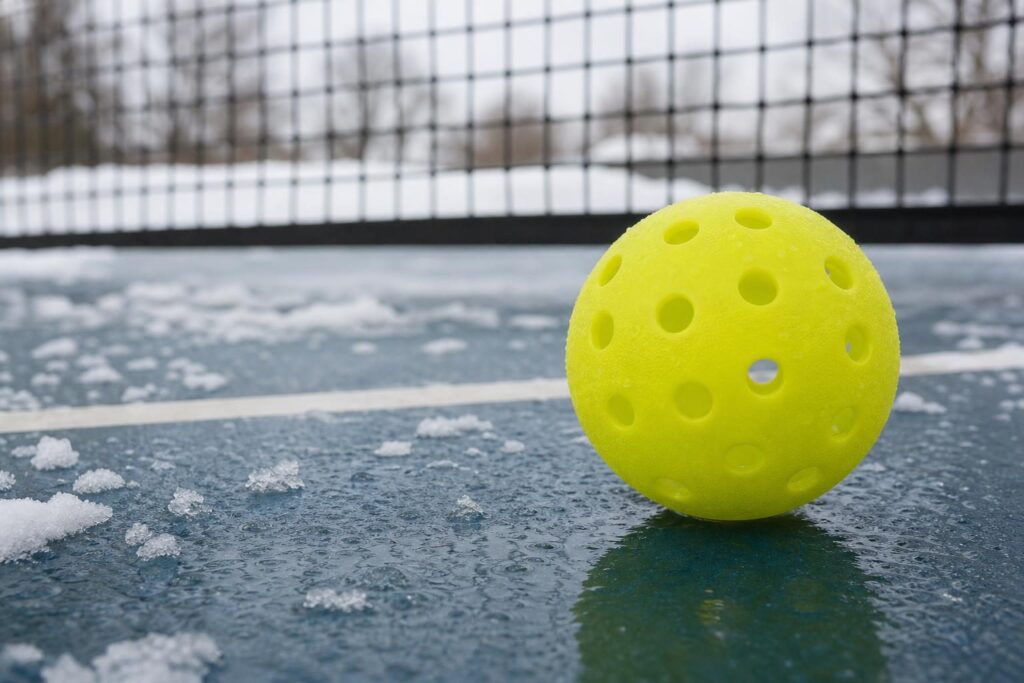
The PCKL Elite 40 deserves a place on a cold-weather shortlist because its product positioning specifically emphasizes crack resistance, including in colder conditions. That is a more relevant starting point than choosing an outdoor ball solely by color or pack size.
As with any manufacturer performance claim, treat that emphasis as a reason to investigate, not a promise of unlimited life. Try it in the temperatures you actually play in and assess both durability and bounce consistency.
Strengths
- A particularly relevant candidate for players shopping specifically for colder outdoor sessions.
- Designed as an outdoor performance ball, rather than an indoor substitute.
- A useful comparison option when your usual ball repeatedly splits.
Drawbacks
- Manufacturer claims do not establish that it is the longest-lasting ball in every setting.
- Your group may need time to adjust if it normally uses another model.
Best fit: Players who want to try a ball explicitly positioned around cold-weather crack resistance.
Dura Fast 40: Best for Maintaining a Firm Competition Feel
The Dura Fast 40 is the specialist pick in this roundup. Choose it when maintaining its distinctive firm, fast-playing response matters more than maximizing cold-weather lifespan.
It is not the first recommendation for someone whose only goal is avoiding cracks. Hard outdoor balls can become unforgiving in low temperatures, and the Dura Fast 40 can require frequent replacement during cold play. Its inclusion is about practice relevance, particularly when an upcoming event specifies it.
Strengths
- A useful practice choice when you need to prepare for this exact ball.
- Appeals to players who prefer a firm, lively outdoor response.
- Avoids adding an unfamiliar ball to an already challenging change in weather.
Drawbacks
- A weaker choice when cold-weather durability is the overriding priority.
- Replacement needs can make it less economical for routine winter recreation.
Best fit: Competitive players practicing with a specified ball in cool conditions, with spares available.
Buying Guide: What to Look for in Cold-Weather Outdoor Pickleballs
Prioritize durability without ignoring bounce
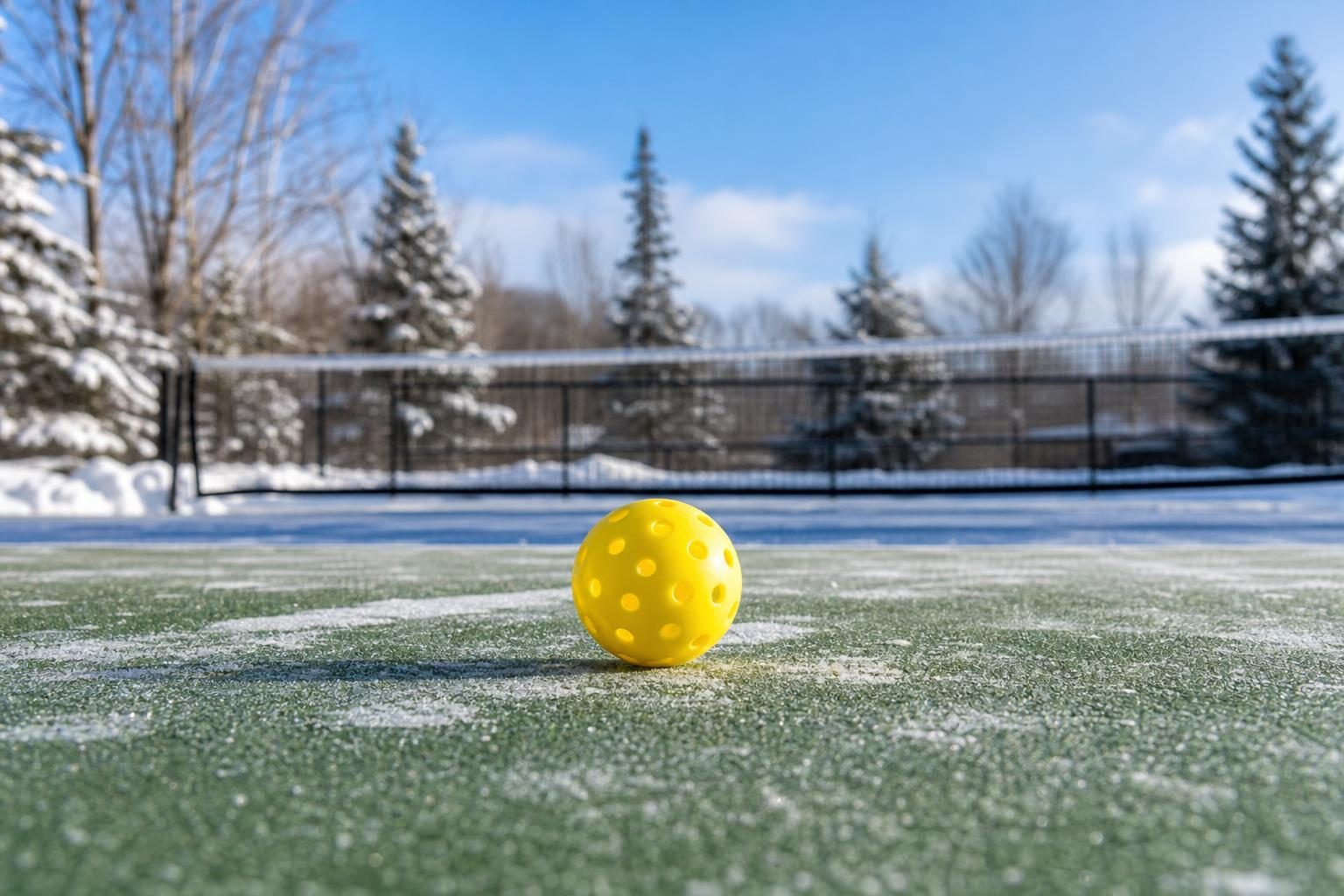
Cold can make plastic more brittle and change how a ball responds. Look for crack resistance, but also check whether the ball stays round and bounces predictably. A ball that survives without cracking is not useful if it wobbles or develops an inconsistent bounce.
Choose an outdoor ball, not just a softer ball
An indoor pickleball may feel gentler, but that does not automatically make it a better winter outdoor choice. Indoor designs generally handle wind and outdoor surfaces differently. Start with an outdoor model suited to your preferred pace and feel.
Test small packs in comparable conditions
Before buying in bulk, compare a few balls across sessions with similar temperatures, court surfaces, and playing intensity. Track cracks, loss of shape, and changes in bounce. This gives you more useful information than comparing one mild afternoon with one freezing morning.
Consider visibility and replacement cost
Choose a color that contrasts with your court, fencing, and surroundings. For value, think in terms of usable playing time rather than pack price alone. Keep spare balls available so one crack does not end a session.
Store and inspect balls sensibly
Keep balls indoors between sessions rather than leaving them in a cold vehicle. Let them warm naturally; avoid microwaves, ovens, or direct heaters. During play, inspect for splits and retire balls that wobble or bounce unevenly. If an event specifies a ball, confirm that requirement before buying practice supplies.
Conclusion
For recreational cold-weather play, start by considering the ONIX Fuse G2 Outdoor or PCKL Elite 40. The Franklin X-40 offers familiarity, while the Selkirk Pro S1 is a useful durability-focused alternative. Reserve the Dura Fast 40 for situations where its specific playing feel matters most. Whichever you choose, test a small pack in your local conditions and carry spares.